
Forza Horizon 6 has finally taken the Horizon Festival to Japan, delivering the setting fans have wanted for years while making a familiar promise: collect outrageous cars, explore a beautiful open world, and race whenever the mood strikes. It is a huge, polished, remarkably accessible driving game—but after more than 30 hours, it is also clear that Playground Games still has no real interest in pushing the series beyond its comfortable car-collecting identity.
That is not necessarily a criticism. Forza Horizon has become one of gaming’s most dependable comfort-food franchises precisely because it understands how to make driving feel exciting without demanding that every player become a racing specialist. Horizon 6 continues that tradition almost perfectly. The question is whether longtime fans were hoping for something a little more ambitious.
Japan is the star, and the map earns its place
Horizon 6 opens with the same confident rhythm that has defined the series for years. A carefully chosen song sets the mood, the familiar festival presentation introduces a succession of very cool cars, and then you are sent into an opening drive through a slice of Japan that blends Tokyo-inspired streets with rural roads and mountain scenery.
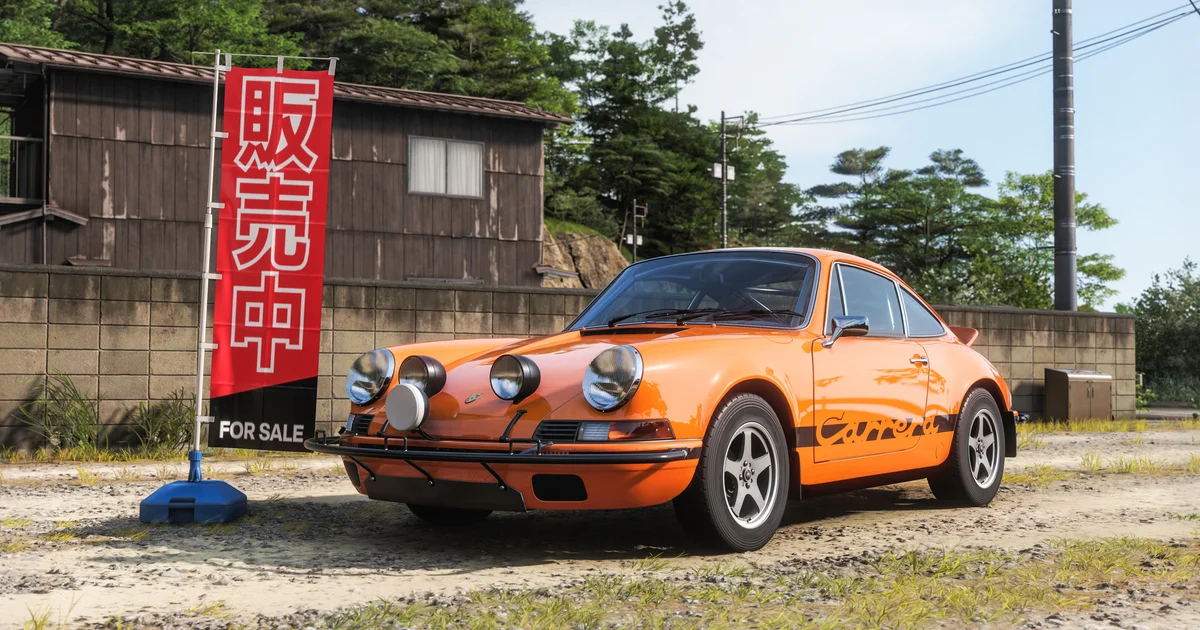
The setting is immediately convincing. Tokyo City is the largest urban area Playground Games has created for the series, while the wider map moves through suburbs, industrial districts, countryside, forests, coastlines, and mountain passes. It is a location built around contrast, and the game understands that Japan’s appeal is not limited to neon streets or drift culture. Some of the best drives are quiet tours through rural landscapes where the destination matters less than the road getting there.
Technically, the world can be astonishing. Ray tracing and dense foliage give certain areas a near-photographic quality, particularly when a car is framed against a forest or winding mountain road. On powerful PC hardware, Horizon 6 can look like someone has composited a real vehicle into a travel photograph. The effect is less dramatic in motion, but the overall presentation remains one of the game’s strongest achievements.
A new progression structure gives the festival more shape
Horizon 6 introduces Wristbands as its main progression system. Rather than simply handing you access to every major activity, the game asks you to earn points through Qualifiers and festival events before moving into higher tiers. Winning provides the biggest rewards, although podium finishes are often enough during the opening stages.
Progress can also be supplemented with the usual Horizon distractions: speed cameras, drift zones, speed zones, XP boards, and other roadside challenges. The system is not revolutionary, but it gives the early game a stronger sense of direction than some previous entries. You are not simply arriving as an established superstar with every toy immediately within reach; you are gradually proving yourself and unlocking access to faster, more demanding competition.
The structure still feels forgiving. If a race gives you trouble, Horizon 6 rarely asks you to understand every detail of weight transfer, braking technique, or vehicle tuning. Lowering the difficulty is an option, while recommended cars and community-created tunes can often solve problems more efficiently than learning the intricacies of the event. This is a game about getting back on the road, not punishing players for failing to master it.
Discover Japan is where the fantasy works best
Running alongside the Wristband system is Discover Japan, a separate progression track focused on touring the map and meeting the game’s lightly sketched cast of characters. The writing is functional rather than memorable, but the activities attached to this campaign are often more interesting than the conventional races.
You might deliver food, test a recently restored vehicle, travel as part of a convoy, or explore one of the game’s regions at a relaxed pace. These events are less concerned with shaving seconds from a lap and more interested in selling the fantasy of driving cars you will probably never own through places you may never visit. That makes them an excellent match for Horizon’s broader appeal.
Discover Japan also gives older series features a fresh presentation. Barn Finds return in spirit, but Treasure Cars ask you to study a photograph, identify the landmarks in the background, and work out where the image was taken. The idea is clever, even if the execution can be inconsistent. Locating a car parked somewhere in the world is usually easier than searching through forests for a concealed barn, but both activities reinforce the pleasure of exploring without a strict objective.
Horizon Rush finally asks you to respect the car
The most successful new activity is Horizon Rush, a collection of obstacle-course-style races built around sharp corners, improvised routes, and an often uncertain sense of what lies beyond the next turn. These events are time trials with little room for casual driving, and they are noticeably more demanding than the game’s standard festival races.
Part of that challenge comes from using predetermined vehicles. Without the option to simply choose a more powerful car or install a community tune, you are forced to understand how the vehicle handles. Rush is the rare part of Horizon 6 that encourages genuine engagement with braking points, corner exits, and momentum rather than letting you solve every problem with a faster machine.
Unfortunately, the rest of the racing remains less consistent. Opponent behavior can swing from chaotic ramming to seemingly flawless racing lines, sometimes within the same session. Catch-up dynamics are equally unpredictable: some races are effectively decided by the third corner, while others make the leading car feel impossible to reach regardless of how cleanly you drive.
That unpredictability creates much of the game’s difficulty, but it does not always feel like meaningful challenge. Horizon 6 is at its best when it tests your decisions. It is less satisfying when the outcome seems determined by inconsistent artificial intelligence or rubber-banding.
Accessible, spectacular, and still deliberately safe
Playground Games continues to make Horizon unusually welcoming. A large suite of accessibility options carries forward from earlier games, while Car Proximity Radar adds a useful 360-degree warning system for nearby vehicles. It is especially valuable in first-person view, whether you want extra awareness during close racing or simply want to defend your position with slightly more confidence.
Official information also confirms support for features such as AutoDrive and customizable High Contrast mode, alongside the series’ existing accessibility tools. That commitment reinforces the central design philosophy: Horizon 6 should be playable on your terms, whether you want serious competition, relaxed sightseeing, multiplayer chaos, or a long evening spent modifying cars.
That broad appeal is also the game’s greatest limitation. Early reviews have consistently praised the visuals, the quality of the Japanese setting, the amount of content, and the sheer polish of the driving. Critics have also repeatedly described it as familiar or safe, with the series’ huge collection of activities sometimes feeling more like an expertly arranged catalogue than a bold new direction.
Forza Horizon 6 launched on Xbox Series X|S and PC on May 19, 2026, with Premium Edition early access beginning May 15. It is included with Game Pass Ultimate and PC Game Pass, while a PlayStation 5 version is planned for later in 2026. At launch, Playground Games advertised more than 550 cars, making the game’s collector-focused identity impossible to miss.
That identity is exactly why Horizon 6 will work for so many players. It is a virtual automotive holiday, an enormous photo mode, a casual racer, a social sandbox, and a collection game disguised as an open-world driving adventure. No other game delivers that combination with quite the same confidence.
But if you wanted Forza Horizon 6 to demand more from its audience—to make tuning, racing lines, and mastery feel essential rather than optional—you may come away disappointed. Japan gives the series a spectacular new canvas, and Horizon Rush hints at a more focused future. For now, though, Horizon 6 remains what Forza Horizon has always been: the driving game for everyone, even when “everyone” means sacrificing a little edge along the way.
Sources
vg247.com
forza.net
pcgamer.com
gamespot.com
gamesradar.com
xbox.com