
WARDOGS has turned a disastrous launch window into one of the most closely watched multiplayer shooter stories of September. BULKHEAD’s large-scale FPS attracted an enormous audience when it entered Steam Early Access on September 10, 2026, only for queues, disconnects, and server instability to dominate the conversation. Within days, the game’s public reception began to shift as the studio responded to the crisis and players finally got a chance to experience the shooter itself.
That recovery matters because WARDOGS is not trying to win attention with a battle pass, a celebrity collaboration, or a free-to-play model. BULKHEAD is positioning it as a single-purchase military sandbox for players who miss the scale of Battlefield and the tactical ambition of Arma. The formula is familiar, but the market is hungry for alternatives to increasingly standardized live-service shooters.
A huge audience arrived before the servers were ready
WARDOGS had already built momentum through its beta and playtest periods, where players responded positively to its combination of infantry combat, vehicles, building, and destruction. That interest became overwhelming when the Early Access version launched. Third-party Steam tracking sites recorded a peak of more than 300,000 concurrent players, an extraordinary figure for an independent multiplayer shooter.
The launch-day demand quickly became a problem. BULKHEAD said the game was also targeted by repeated distributed denial-of-service attacks, further complicating efforts to keep players connected. Even after those attacks subsided, server congestion left many players waiting in enormous queues, getting disconnected before matches began, or struggling to join stable lobbies.
For an online-only multiplayer game, that kind of first impression can be particularly damaging. Players cannot evaluate gunplay, map design, or teamwork if they are spending their evening staring at a queue screen. Early Steam reviews reflected that frustration, pushing WARDOGS into Mixed territory despite strong enthusiasm from players who had managed to get into the game.
The recovery came from communication as much as infrastructure
BULKHEAD’s response helped prevent the launch problems from becoming the entire story. The studio issued stability updates, communicated directly with the community, and worked to address the server pressure instead of allowing the game to disappear behind vague statements about future improvements.
That distinction is important. Players are often willing to forgive a rough launch when they can see meaningful progress, particularly in Early Access. They are much less forgiving when developers appear unprepared, defensive, or silent. In WARDOGS’ case, the visible response helped create a second conversation around the game: not whether the launch was broken, but whether the underlying shooter was worth the wait.
At one point, the game’s recent Steam reviews climbed as high as Very Positive, driven by players praising BULKHEAD’s reaction to the crisis. However, the broader review picture has continued to fluctuate as thousands of new players have added their experiences. By September 13, 2026, WARDOGS’ overall user reception remained considerably more mixed than the temporary rebound suggested, illustrating how quickly Steam sentiment can change during a turbulent Early Access launch.
Battlefield scale with a more deliberate pace
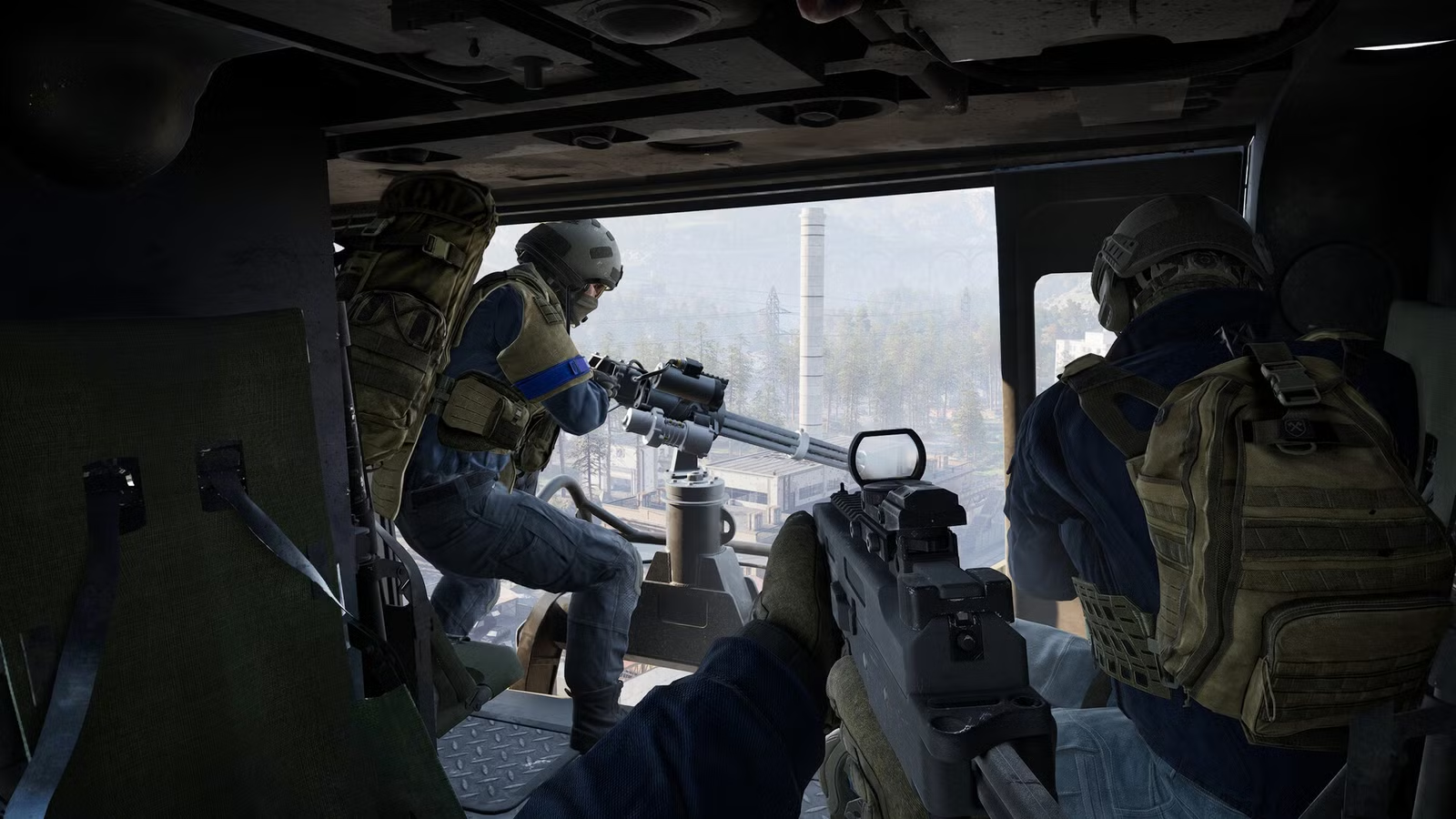
WARDOGS’ appeal comes from its attempt to occupy the space between an accessible military shooter and a more demanding tactical sandbox. The game features three active teams fighting across large battlefields, with objectives that encourage players to think beyond individual kill counts. Infantry, vehicles, construction, and destruction are intended to operate within the same combat ecosystem rather than as disconnected modes.
The result is less about tightly choreographed competitive rounds and more about emergent battlefield stories. A squad can establish a position, lose it to an armored push, rebuild elsewhere, and turn a failed assault into a counterattack. That structure should appeal to players who enjoy the unpredictable momentum of Battlefield but want more consequence and coordination than a conventional arcade shooter provides.
WARDOGS also benefits from its relatively straightforward presentation. It is not buried under years of seasonal content, hero abilities, crossover cosmetics, or a sprawling progression menu. The game’s identity is rooted in military combat and large-scale objectives, which gives it a clearer pitch than many contemporary shooters.
The single-purchase model is part of the appeal
One of WARDOGS’ strongest selling points is its rejection of the conventional free-to-play formula. The game does not appear to be built around a constant stream of microtransactions, and players have responded positively to the idea of paying once for a multiplayer shooter without immediately being pushed toward a premium currency store.
That does not guarantee long-term success. A paid multiplayer game still needs reliable matchmaking, a healthy player population, strong moderation, and a steady flow of meaningful updates. Without those foundations, the absence of microtransactions becomes a footnote rather than a competitive advantage.
The early signs are encouraging but not conclusive. The game’s huge launch audience gives BULKHEAD a valuable starting point, yet maintaining that audience will be more difficult than attracting it. WARDOGS must now prove that its maps, progression, combat balance, and server performance can support a community beyond the novelty of its release week.
A promising shooter still carrying launch-day baggage
Critical and player reactions have generally focused on the same tension: WARDOGS can deliver exciting, chaotic military combat when everything works, but its technical problems have repeatedly interrupted that experience. Players have highlighted the Battlefield-and-Arma blend, tactical teamwork, and the satisfaction of operating as part of a larger war effort. At the same time, queues, disconnects, inconsistent matchmaking, and rough Early Access edges remain significant concerns.
That makes WARDOGS a difficult game to judge by its opening week alone. The launch infrastructure was clearly not prepared for the audience that arrived, but the studio’s response suggests that BULKHEAD understands the seriousness of the situation. The more important question is whether the developer can convert emergency fixes into a reliable foundation for future updates.
For PC players looking for a large-scale shooter outside the usual blockbuster franchises, WARDOGS is already worth watching. It offers a promising alternative to the increasingly crowded live-service field, but its long-term prospects will depend on sustained support rather than one successful recovery. BULKHEAD has survived the first battle. Now it has to win the war for player retention.
Sources
dualshockers.com
bulkhead.com
store.steampowered.com
pcgamer.com
gamesradar.com