
Marvel is sending Wolverine back into one of the least explored chapters of his life. Wolverine: Origin III – The Dark Age, a five-issue limited series from original Wolverine: Origin writer Paul Jenkins and artist CAFU, will launch on December 16, 2026.
The new series matters because it is not another trip back to Logan’s childhood. Instead, it will examine a lost period in the 1950s and begin connecting the scars of his earlier life to the events that eventually lead to Weapon X.
A missing chapter between war and Weapon X
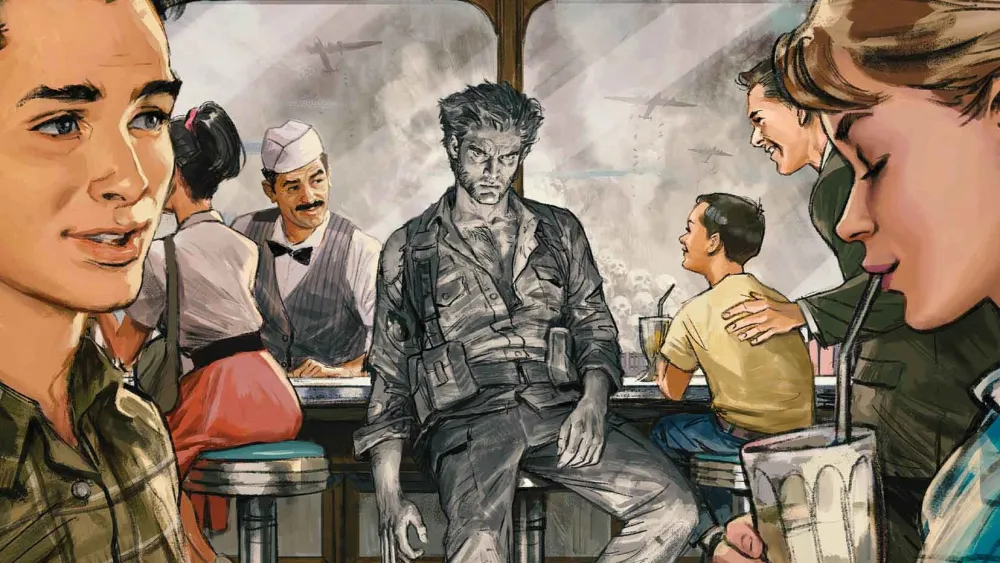
Marvel’s announcement positions The Dark Age as a psychological story about what happens when Logan briefly escapes the cycle of violence that has defined his existence. After years of trauma and service during the first two World Wars, Logan has apparently found something almost impossible for him to hold on to: peace.
His familiar berserker rage has seemingly faded, allowing him to build a quieter life focused on tranquility and service. The story will introduce new friends and allies, including a passionate young doctor who helps Logan examine his behavior and better understand the forces shaping his mind.
That calm, naturally, is not expected to last. Marvel is promising tragedy, terror, and heartbreak, with the mystery behind Logan’s sudden happiness serving as a central part of the plot. The series will also explore his unreliable memories and the possibility that his understanding of this period is deeply compromised.
Rather than simply adding another wartime adventure to Wolverine’s timeline, the premise suggests a story about identity, repression, and the dangerous gap between what Logan remembers and what actually happened. The title’s “Dark Age” may refer not only to the era itself, but also to a particularly troubled state of mind.
Paul Jenkins returns to the story he began
Jenkins co-created the original Wolverine: Origin with artist Andy Kubert and colorist Richard Isanove. The six-issue series, published from 2001 to 2002, revealed the childhood of James Howlett and dramatized the traumatic events that sent him away from his family and toward the life of the man called Logan.
Marvel’s original Origin collected issues #1–6 and established the emotional foundation for Wolverine’s backstory. Its focus was not merely on when Logan’s powers appeared, but on the loss of innocence and the consequences of violence. That emphasis makes Jenkins’ return especially notable, since the new series appears to continue the same character-driven approach in a later period of Logan’s life.
The connection to Weapon X is also significant. Wolverine’s transformation into an adamantium-bonded operative has been explored in several stories, most famously Barry Windsor-Smith’s Weapon X. However, the years leading up to that transformation remain fertile ground for new stories, particularly because Logan’s fractured memory allows Marvel to revisit his history without reducing it to a simple, fully documented timeline.
Jenkins described Origin III as a story he has waited more than two decades to tell. He also teased that the answers concerning where Logan went, which parts of his past were lost, and what led him toward Weapon X will not be what readers expect.
CAFU joins the next stage of Logan’s history
Artist CAFU joins Jenkins for the project, calling it the most important work of his career. His enthusiasm is understandable: the series follows one of Marvel’s most recognizable characters while directly extending a foundational Wolverine story.
CAFU’s involvement also gives The Dark Age a visual identity separate from the Kubert-led original. The new series will have to move between intimate scenes of Logan attempting to live peacefully and the darker material suggested by Marvel’s description. That balance should make the artwork central to the book’s success, particularly if the story shifts between present events, damaged recollections, and buried trauma.
No additional art-team credits have been announced in the supplied details. Marvel has identified CAFU as the series artist, with Wes Burt providing the main cover and Josemaria Casanovas contributing a variant cover.
What the series means for Wolverine continuity
Wolverine’s history has always been unusually flexible. His long life, memory loss, false identities, and manipulations by outside forces have allowed different eras of Marvel storytelling to reveal new pieces of the same complicated puzzle.
That makes the 1950s setting a smart choice. It places Logan after the formative events chronicled in Origin and Origin II, but before the Weapon X program strips away even more of his identity. Readers familiar with Marvel’s chronological Wolverine reading guides will recognize this as an important bridge between Logan’s earlier wandering years, his military and espionage history, and the creation of the adamantium-laced Wolverine.
For longtime fans, the appeal is clear: Origin III promises a new missing chapter from a period that has not received the same attention as Logan’s childhood or his Weapon X ordeal. For newer readers, the premise offers a self-contained entry point built around a recognizable question—what happens when Wolverine finally gets the life he thought he could never have?
Collectors will also have a notable anniversary connection to watch. The series arrives 25 years after the publication of the original Wolverine: Origin, making Jenkins’ return part of a deliberate milestone for the franchise. A collected edition for The Dark Age has not been announced at this time, while Marvel has indicated that more information will appear in an upcoming Previews catalog.
Wolverine: Origin III – The Dark Age #1 is scheduled for release on December 16, 2026. The five-issue limited series is written by Paul Jenkins, drawn by CAFU, and features a main cover by Wes Burt with a variant by Josemaria Casanovas.
Sources
aiptcomics.com
marvel.com