

This week’s roundup makes a persuasive case that games criticism is at its best when it refuses to stay inside neat genre boundaries. The latest edition of The Sunday Papers moves from the long shadow of Duke Nukem Forever to the politics of sexual content on Steam, the language we use to classify Japanese games, and the surprisingly durable civilization built by No Man’s Sky players. None of these subjects are isolated curiosities. Together, they examine how games are made, marketed, moderated, remembered, and inhabited.
The shooter’s future still has Duke Nukem Forever in its rear-view mirror
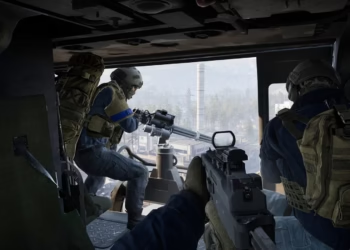
The standout recommendation is Bullet Points Monthly’s roundtable on the state of the shooter in 2026, assembled to mark the publication’s tenth anniversary. The feature gathers its editors and a broad group of contributors around a deceptively simple question: what has happened to the shooter genre over the past decade? ([bulletpointsmonthly.com](https://bulletpointsmonthly.com/2026/08/19/state-of-shooter-2026/?utm_source=openai))
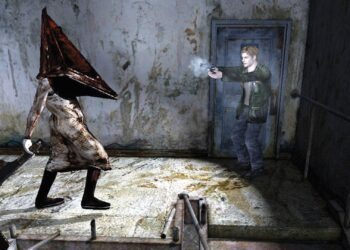
David Wolinsky’s contribution, highlighted in the roundup, takes an unusual route through that question. Rather than treating Duke Nukem Forever as merely a failed relic, it frames the 2011 release as a warning flare for an industry struggling to preserve an older model of blockbuster development. The game’s famously prolonged production became a symbol of development hell, but Wolinsky’s argument gives that history a sharper contemporary edge: perhaps the industry did not eliminate endless development so much as normalize it.
That reading turns Duke Nukem Forever into more than a punchline. Its troubled history, delayed arrival, and critical reputation are familiar, but the larger point is about expectations. Modern shooters increasingly arrive as platforms, ecosystems, or ongoing services rather than finite works. The comparison is not that every contemporary shooter resembles Duke’s misadventure, but that the genre’s relationship with completion, novelty, and risk has changed dramatically.
It is an appealingly uncomfortable argument because it resists easy nostalgia. The problem was never simply that Duke Nukem Forever took too long. The more interesting question is what the industry learned from watching a highly anticipated sequel become obsolete before release—and whether today’s model has genuinely solved that problem or merely hidden it behind roadmaps and perpetual updates.
Steam’s adult-content rules expose who really controls the storefront
Jay Castello’s Aftermath piece shifts the discussion from production to distribution, investigating the difficulty of releasing games with sexual content on Steam. The focus falls on Meredith Gran’s Perfect Tides, Heather Flowers’ 500 Finger Fillet, and Molleindustria’s Future? No Thanks!, three different projects united by the uncertainty surrounding what storefronts, platforms, payment processors, and content systems will tolerate.
The issue is not presented as a simple argument over whether explicit material belongs on a major PC marketplace. The more significant concern is the lack of stable boundaries. Developers can face scrutiny not only from storefront policy, but also from payment companies, video platforms, and automated moderation systems. The result is a distribution pipeline where a game may be technically permitted in one place while still becoming commercially hazardous everywhere else.
The example of 500 Finger Fillet needing a blood-free demo version for YouTubers is especially revealing. It demonstrates how platform policy can shape a game before players ever encounter it. Developers are not merely deciding what belongs in the finished product; they are also considering what can survive algorithmic classification, advertising restrictions, upload filters, and the risk of being made invisible by recommendation systems.
That uncertainty creates a chilling effect. Even when a game is not removed outright, developers may reasonably conclude that certain subjects are too risky to pursue. For independent creators, whose visibility depends heavily on storefronts and social platforms, moderation policy can function as an informal form of censorship without ever needing to announce itself as one.
“Search Action” is more than a replacement label
Historical Games Network’s feature by Will Butler examines the growing use of “Search Action” in place of “Metroidvania.” On the surface, this may sound like familiar genre taxonomy discourse: one label falls out of favor, another takes its place, and players argue over which games qualify. Butler’s analysis gives the debate more weight by connecting genre vocabulary to nationality, history, and cultural ownership.
“Search Action” reflects the Japanese term tansaku-gata akushon, or exploration-based action, associated with the design tradition represented by Metroid and Castlevania. The move away from “Metroidvania” can therefore be read as an attempt to loosen the genre from two heavily canonized Western-facing reference points and acknowledge the Japanese origin of the design language.
That does not make the new term automatically better. Genre names are practical tools, and players often need language that communicates structure quickly. But labels also establish which histories are treated as central. Calling an entire family of games “Metroidvania” foregrounds two series while potentially flattening the wider traditions, developers, and communities that shaped exploration-driven action games.
The most valuable part of this discussion is its refusal to treat terminology as neutral. Whether “Search Action” catches on with players is one question. What matters more is why the change is being proposed and what it reveals about the way game history is organized.
No Man’s Sky’s most impressive feature may be its player civilization
The roundup closes on a more hopeful note with Matt Wales’ look at the Galactic Hub Project, the long-running community built inside No Man’s Sky. Founded in 2016, the project grew from cooperative exploration and documentation into a network of themed colonies, social spaces, construction projects, and player-led institutions. ([nomanssky.fandom.com](https://nomanssky.fandom.com/wiki/Timeline_-_Galactic_Hub?utm_source=openai))
The examples are wonderfully specific. Tharakis specializes in dystopian city builds. Logisto focuses on factories designed to benefit other Hub players. The Lobrid Conclave is devoted to frozen ruins, while the Coalition of Dissonant Worlds emphasizes player-versus-player activity. Elsewhere, communities revolve around cooking, waterfront architecture, permadeath, or deliberately restrictive building challenges.
This is the kind of player activity that rarely appears in a conventional feature list. It is not simply multiplayer support or a collection of community-made bases. It is an attempt to give a vast, procedurally generated universe social meaning. Players are creating local identities and shared rules where the game itself provides an enormous amount of space but relatively little obligation.
That may be the clearest connecting idea across this edition of The Sunday Papers. Games are shaped not only by developers and publishers, but also by critics, platform owners, modders, communities, and the language used to describe them. From the shooter’s industrial anxieties to the Galactic Hub’s collaborative imagination, this is a roundup interested in what games become after they leave the hands of their creators.
Sources
rockpapershotgun.com
bulletpointsmonthly.com
nomanssky.fandom.com