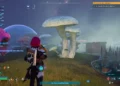

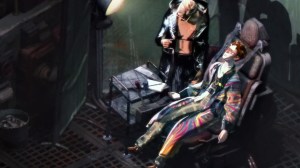
ZA/UM, the studio behind Zero Parades: For Dead Spies and Disco Elysium, has issued redundancy or “at-risk” notices to up to 32 employees just two months after releasing its latest RPG. The announcement is a sharp reminder that strong reviews do not necessarily translate into the commercial performance needed to support a modern development team.
In a statement posted to Bluesky on July 17, ZA/UM said that Zero Parades had been met with critical acclaim, but that “its commercial performance has not enabled us to sustain a studio of our current size.” The company said the notices affect staff across the RPG studio and that it has continued consulting with representatives of the ZA/UM Workers’ Alliance throughout the process.
The language is significant. These are not necessarily finalized layoffs in every case, as “at-risk” notices can form part of a consultation process before employment decisions are completed. Even so, the scale of the announcement is substantial, particularly for a studio whose worldwide workforce was previously reported to be around 100 people.
Critical praise was not enough to protect the team
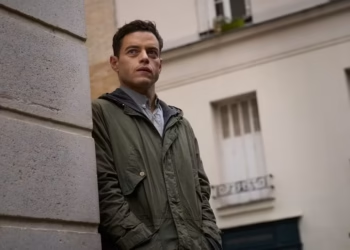
Zero Parades: For Dead Spies launched for PC on May 21, 2026, with a PlayStation 5 version still expected later this year. The isometric espionage RPG follows Hershel Wilk, an operative returning to the field while confronting the consequences of her past and the political forces surrounding the city of Portofiro.
Its reception has been generally positive, though more measured than the phrase “critical acclaim” might suggest. The game currently holds an 83 critic score on Metacritic, based on dozens of reviews, while GameSpot awarded it an 8/10. That is a respectable result for any narrative-heavy RPG, especially one arriving under the enormous shadow of Disco Elysium.
GameSpot praised the game’s detailed world, sharp writing, morally uncertain spy fiction, and ability to create intriguing character-driven situations. The review also argued that Zero Parades occasionally struggles to escape the influence of its predecessor, with some ideas feeling more imitative than fully distinct.
Other reviews reached similar conclusions. PC Gamer scored the game 66 and highlighted its painterly environments, upgraded interface, and psychological systems involving fatigue, anxiety, and delirium. However, the review criticized the game for not fully committing to its espionage premise, suggesting that its strongest sequences are often conversations and dramatic encounters rather than sustained acts of deception or covert play.
That split in critical response is worth noting. Zero Parades was not a commercial failure because critics universally rejected it; rather, it appears to have landed in the difficult space occupied by many ambitious, mid-budget RPGs: respected by reviewers, praised for its craft, but unable to generate the level of sales needed to sustain the team that built it.
A difficult follow-up to Disco Elysium
ZA/UM was facing an unusually difficult commercial challenge from the moment Zero Parades was announced. Disco Elysium became one of the most celebrated role-playing games of its generation, creating expectations that would have been difficult for almost any sequel or follow-up to meet.
Zero Parades is not a direct sequel and does not reuse Disco Elysium’s characters. Instead, it transfers ZA/UM’s interest in political tension, interior conflict, dense prose, and unusual role-playing systems into a spy thriller. That gave the studio room to pursue a different setting, but it also made comparisons nearly unavoidable.
Reviewers generally recognized that distinction while still returning to the same criticism: the new game has its own ideas, yet it sometimes appears hesitant to move completely away from the formula that made Disco Elysium famous. For players who wanted another text-rich, choice-driven RPG from ZA/UM, that familiarity may have been part of the appeal. For others, it may have made the game feel caught between homage and reinvention.
The commercial consequences of that positioning are difficult to measure without sales figures, which ZA/UM has not provided. Still, the studio’s own statement makes clear that positive reviews alone did not produce enough revenue to maintain its existing headcount.
The human cost behind a “successful” game
For players, the news creates an uncomfortable contrast. Zero Parades: For Dead Spies is a finished release that received favorable reviews and established itself as a serious narrative RPG. For the developers who worked on it, however, shipping a well-received game has now been followed by employment uncertainty.
That disconnect has become increasingly familiar across the games industry. Development teams are often built around the most demanding production phase, then forced to contract quickly when a game’s launch revenue does not meet expectations. A game can be artistically successful and still fail to provide enough financial stability for the studio behind it.
ZA/UM’s statement attempted to reassure fans that the company’s artistic direction remains intact. “This changes the shape of ZA/UM, but not its purpose,” the studio wrote, adding that its artistic standards remain unchanged. The message suggests that the company intends to continue operating, although it did not outline a new project, future roadmap, or specific plans for the affected employees.
The studio also appealed for other developers to consider hiring those impacted by the notices. That may offer some support to the workers involved, but it does not soften the broader concern: if a critically respected RPG cannot protect the team that made it, the space for ambitious single-player games continues to look increasingly precarious.
What happens next for ZA/UM?
The immediate priority will be the consultation process and the future of the employees who received redundancy or at-risk notices. The PlayStation 5 version of Zero Parades is also still pending, and its performance could become more important to ZA/UM now that the studio is reducing its size.
For the game itself, the layoffs do not automatically indicate that the planned console release has been canceled. ZA/UM has not announced such a change, and there is no confirmed information suggesting that the PS5 version will not arrive. However, any reduction in staff could create additional uncertainty around support, updates, or future content if the studio’s priorities shift.
The larger question is whether ZA/UM can survive by returning to a smaller, more focused structure. The company says its purpose remains unchanged. For the developers facing redundancy, though, the shape of that future is being defined by a commercial result that apparently fell short despite a game that critics broadly viewed as thoughtful, ambitious, and worth playing.
Sources
gamespot.com
bsky.app
metacritic.com
pcgamer.com
gamedeveloper.com