
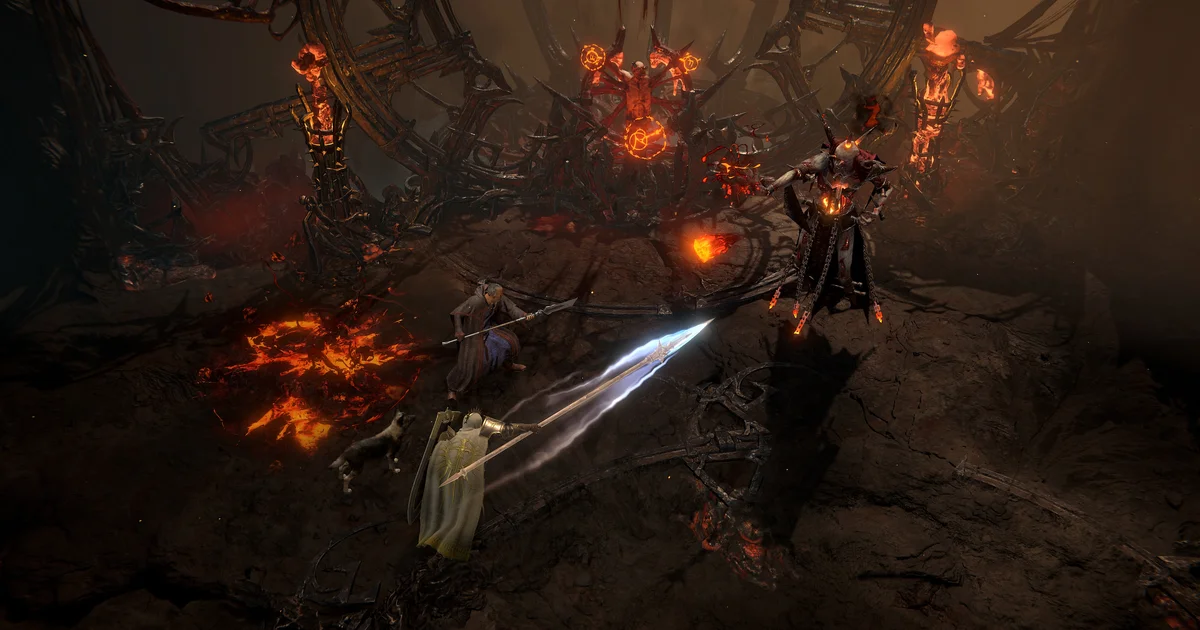
Blizzard deliberately scaled back Diablo 4’s next seasonal offering to keep the spotlight on Lord of Hatred, the game’s second major expansion. Season of Reckoning launched alongside the expansion on April 27, 2026, but unlike a typical season, it was not built around a major new gameplay gimmick or an elaborate seasonal theme.
That decision gave Blizzard room to concentrate on the expansion’s campaign, new region, class additions, and broad changes to Diablo 4’s progression systems. For players who usually return to Sanctuary for every seasonal reset, however, Season of Reckoning represented a noticeably different proposition: a familiar seasonal framework wrapped around an expansion-sized update rather than a separate seasonal experiment.
A lighter season built around the expansion
Season of Reckoning still included the expected seasonal structure. Players could pursue Season Rank rewards, collect Smoldering Ashes, advance through chapter objectives, and unlock Season Blessings. The season also arrived with a Battle Pass featuring four Reliquaries, with one available for free and the remaining options tied to paid access.
What it did not provide was the sort of standalone seasonal mechanic that has become central to Diablo 4’s live-service cycle. There was no major temporary power system or new theme designed to redefine how players approached the season. Instead, Blizzard positioned the expansion itself as the main event.
That distinction matters because Diablo 4’s seasonal resets typically rely on a fresh hook to encourage players to roll new characters and rebuild their progression. Season of Reckoning offered the familiar reward chase, but much of the motivation to return came from Lord of Hatred’s permanent additions rather than the season’s own mechanics.
Lord of Hatred changes more than the seasonal loop
Lord of Hatred expanded Diablo 4 with a new campaign set around the ongoing conflict with Mephisto, alongside the Skovos region and two new playable classes. Blizzard also used the launch to reshape hero progression, add new tools for character customization, and introduce wider changes to itemization and endgame play.
Several of those additions were made available across the game rather than being locked exclusively to expansion owners. Blizzard confirmed that features such as the loot filter, map overlay, and broader progression updates would be part of the overall launch update, while expansion owners received access to the new campaign and expansion-specific content.
The result was a season that functioned less like a traditional content capsule and more like a bridge into the next phase of Diablo 4. Players who were primarily interested in fresh seasonal mechanics had less to chase than usual, but those invested in the expansion received a much larger set of permanent changes to explore.
Reviews point to a stronger version of Diablo 4
Critical reaction to Lord of Hatred was broadly positive, particularly regarding the expansion’s combat, character-building options, and narrative direction. PC Gamer highlighted the expansion’s more flexible buildcrafting, improved loot chase, and Diablo 2-inspired Horadric Cube crafting system, while also praising the way its new systems made character customization feel more meaningful.
GameSpot similarly described the expansion as a major step forward for Diablo 4, pointing to its emotionally charged storytelling, new classes, and quality-of-life improvements. The reception was not without reservations: some criticism focused on the scale and complexity of the wider game, along with concerns that Diablo 4’s long-term live-service structure could become increasingly difficult to navigate as more systems are added.
That tension helps explain Blizzard’s seasonal approach. Building a full seasonal mechanic on top of an expansion that already introduces new classes, regions, progression tools, crafting options, and endgame objectives could have made the launch harder to follow. A lighter season allows the expansion’s permanent features to carry the experience instead of asking players to learn another temporary system at the same time.
What happens after Season of Reckoning?
Blizzard has indicated that future seasons will return to the more familiar format, suggesting that Season of Reckoning is an exception rather than a permanent reduction in seasonal ambition. That should reassure players who prefer Diablo 4’s rotating mechanics and themed progression systems over expansion-focused updates.
For now, the key takeaway is that Season of Reckoning was never intended to compete with Lord of Hatred. The season supplied the expected battle pass, rank progression, and rewards, while the expansion handled the substantial gameplay refresh. Whether that trade-off works depends largely on what players want from Diablo 4: a new seasonal playground every few months, or a more fundamental overhaul of the game’s campaign and endgame foundations.
Lord of Hatred’s strong critical response suggests Blizzard’s gamble paid off in the short term. The more difficult test will be whether the next traditional seasons can build on those improvements without burying Diablo 4 under another layer of temporary systems.
Sources
vg247.com
blizzard.com
pcgamer.com
gamespot.com