

Valve is taking an unusual approach with the Steam Machine: rather than use a console-exclusive game to sell its new living-room PC, the company believes the entire Steam catalog is strong enough to serve as its launch attraction. That decision reveals what Valve thinks the Steam Machine really is—not a closed console competing directly with PlayStation or Xbox, but a new front door to the wider PC ecosystem.
In an interview with Bloomberg, Valve engineers Yazan Aldehayyat and Pierre-Loup Griffais explained that the company has no plans to create a game exclusive to the Steam Machine. Griffais said Valve is more interested in treating “the whole PC catalog” as its “launch exclusive,” arguing that restricting games to a particular piece of hardware is not the company’s preferred model.
Valve is selling access, not exclusivity
That philosophy separates the Steam Machine from the traditional console playbook. A major first-party release can give a console a clear identity, whether that means Nintendo’s first-party franchises, Sony’s prestige single-player games, or Microsoft’s broader ecosystem strategy. Valve, however, is betting that the appeal of PC gaming itself is the product.
For new PC players, that proposition is undeniably attractive. The Steam Machine is positioned to offer access to an enormous existing library rather than asking customers to wait for a handful of hardware-specific releases. That includes years of PC games, indie projects, strategy titles, role-playing games, competitive experiences, and older releases that would never fit neatly into a conventional console launch lineup.
The trade-off is that the device lacks the immediate headline software that can make a new platform feel essential. Rumors about a new Half-Life game have repeatedly fueled speculation around Valve hardware, but the company’s comments do not suggest that an upcoming Valve title will be locked to the Steam Machine. If a major release does arrive, Valve’s stated preference is for it to remain part of the broader PC ecosystem.
An open platform by design
Valve’s argument goes beyond avoiding exclusivity. Aldehayyat said the company wants other manufacturers to be able to produce Steam Machine-style hardware with different performance levels or feature sets. That would be difficult to encourage if Valve treated its own box as the only legitimate way to access key software.
It is a familiar strategy for Valve. The Steam Deck helped establish SteamOS as a more console-like way to use a PC, but the wider idea has always been bigger than one device. A successful Steam Machine could encourage other manufacturers to develop compact gaming PCs aimed at television setups, while Valve benefits whenever those machines lead users back to Steam.
Griffais described that as a long-term ecosystem play. Hardware makers could introduce useful innovations that eventually become common across PC gaming, improving the experience for everyone and potentially leading to more game purchases. In that sense, Valve is less interested in controlling every piece of hardware than in making Steam the software layer that connects them.
The hardware has to justify the living-room pitch
That strategy puts more pressure on the Steam Machine itself. Without an exclusive game, Valve must convince buyers that the device offers a better living-room experience than a traditional desktop, a console, or a competing handheld connected to a television.
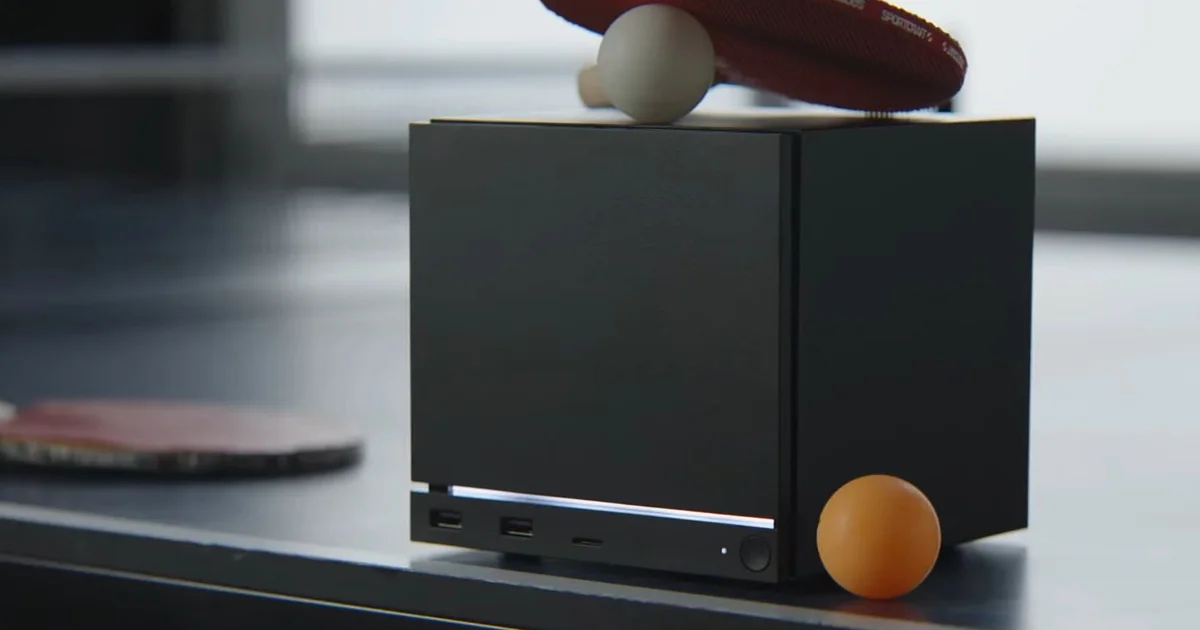
Valve’s official specifications position the Steam Machine as a compact but serious gaming PC. The system uses a modified AMD Zen 4 processor with six cores and twelve threads, a modified RDNA 3 graphics processor, 16GB of DDR5 system memory, and 8GB of GDDR6 VRAM. Storage options include 512GB and 2TB NVMe models, with a microSD card slot available on both versions.
The machine also includes features intended to make PC gaming feel more at home in a living room, including HDMI-CEC support, wireless connectivity, an internal power supply, and dedicated support for the Steam Controller. Valve lists output support up to 4K at 120Hz through HDMI 2.0, while DisplayPort provides higher refresh-rate and resolution options for compatible displays.
Those specifications do not make the Steam Machine a console in the conventional sense. They make it a tightly designed PC that attempts to remove some of the friction associated with building, configuring, and maintaining a gaming computer. That distinction will matter most to players who already want PC game access but do not want a large desktop tower beside their television.
Price could be the real barrier
The biggest challenge may not be the lack of exclusives, but the cost. Recent reporting on Valve’s interviews with hardware outlets places the entry-level Steam Machine at $1,049, a figure heavily influenced by rising memory and storage costs. Valve engineers have acknowledged that pricing conditions have become more difficult and that retail component availability can lag behind bulk supply by several months.
At that price, the Steam Machine is not competing with consoles on sticker price alone. It is competing with gaming PCs, mini-PCs, and the value of an existing Steam library. Valve’s case is that buyers are paying for a compact design, a streamlined software experience, and hardware capable of handling a broad range of PC games without building the machine themselves.
That may appeal strongly to PC enthusiasts who want a cleaner television setup, especially those already invested in Steam. It is a harder sell for console players who expect a lower upfront cost, a simple hardware generation, and exclusive games that cannot be played elsewhere.
Valve’s bet is bigger than one box
The Steam Machine’s lack of exclusives is not an omission Valve appears embarrassed about. It is central to the company’s strategy. Rather than create an artificial reason to buy one particular device, Valve wants the hardware to make the existing PC catalog more approachable from the sofa.
Whether that is enough will depend on price, performance, availability, and how convincingly SteamOS handles the messy variety of PC gaming. But Valve’s position is clear: the Steam Machine is not meant to win an exclusives war. It is meant to expand the number of places where the PC catalog can be played—and make Steam the common thread holding that ecosystem together.
Sources
rockpapershotgun.com
tomshardware.com
store.steampowered.com
pcgamer.com