
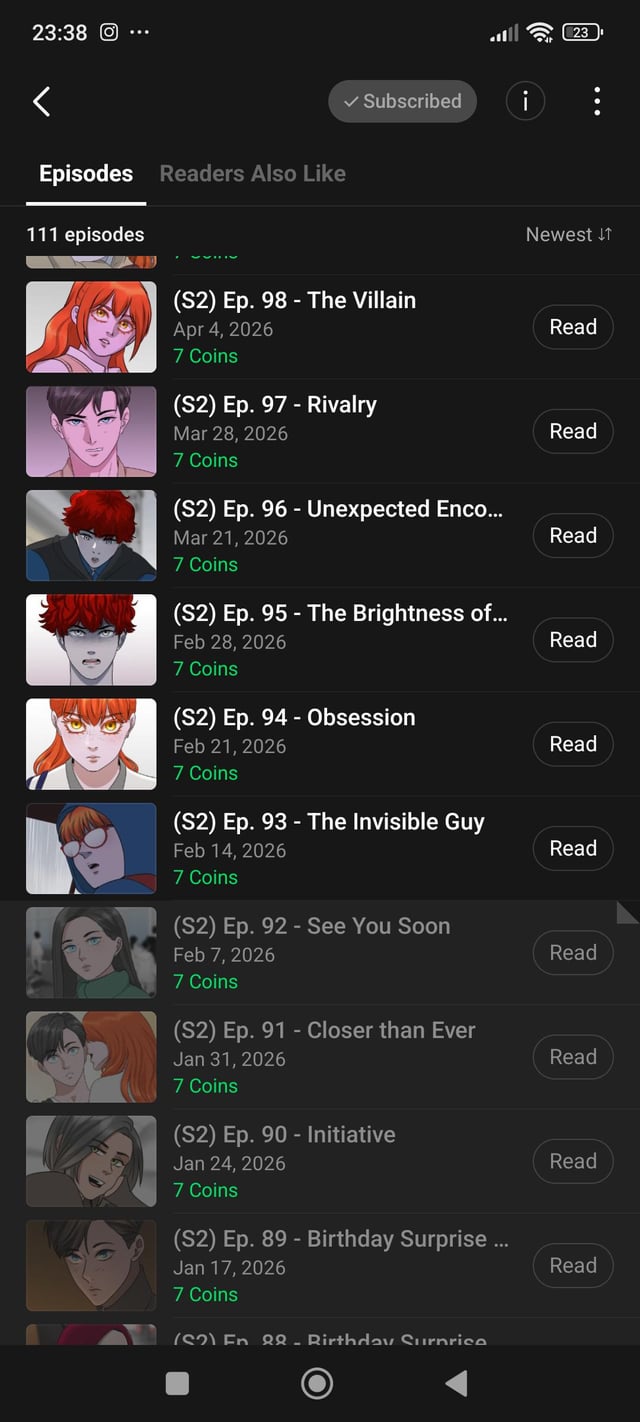
A reader’s routine catch-up session turned into a frustrating dead end after a webtoon chapter suddenly appeared behind a paywall. In a post on Reddit’s r/webtoons, user Broken_life_7694 said they could no longer continue the series because access had changed without warning—a small platform moment that captures one of the biggest tensions in digital comics: readers want consistency, while publishers increasingly rely on paid access, coins, advertisements, and early-release systems to support ongoing serialization.
The post does not identify the series, creator, or exact platform, so the discussion is not about a particular title’s story, artwork, or publishing history. Its focus is the reading experience itself. A reader who had already invested time in catching up suddenly found the next chapter unavailable, creating the familiar feeling that a series had changed rules in the middle of the relationship.
When a Free Reading Habit Changes Overnight
Webtoon readers are accustomed to staggered access. Depending on the service, a series may offer free episodes on a delay, ad-supported unlocks, daily passes, coin purchases, or premium early access. Those systems can be manageable when they are clearly explained, but they become especially disruptive when a reader encounters them unexpectedly while moving through a personal reading list.
That surprise is central to the Reddit post. The complaint is not simply that paid chapters exist; it is that the change appeared to happen “out of nowhere.” For serialized comics, access is part of the audience’s relationship with a title. A sudden barrier can interrupt momentum just as effectively as a hiatus, delayed update, or abrupt season break.
There is also a practical problem. Readers often follow several webtoons at once, using a platform’s library or subscription tools to remember where they left off. When one of those titles changes from freely readable to paid access, the reader may not have planned for the additional cost—or may not know whether the restriction is permanent, temporary, ad-based, or part of an early-release window.
The Comment Section Reveals a Larger Platform Debate
Responses to the post quickly moved beyond the unidentified series. One commenter asked whether an option to watch advertisements was available, suggesting that some readers understand ad-supported unlocking as a reasonable alternative to direct payment. Another commenter argued that such options have disappeared from many comics, leaving coins as the only way to read immediately.
Those comments should be treated as individual reader impressions rather than proof of a universal platform-wide policy. Still, they show why monetization changes can produce such strong reactions. For some readers, watching an advertisement preserves the feeling of free access. For others, repetitive ads, limited unlocks, and coin systems all feel like variations of the same paywall.
The conversation also reflects a broader concern about fragmentation. Readers may be willing to support official releases, but following multiple series across different services can make the total cost difficult to predict. A single chapter purchase may seem minor, yet the expense becomes more noticeable when several favorite titles use separate currencies, subscription plans, or premium-release schedules.
Why the Timing Matters in Vertical-Scroll Comics
Access interruptions can be particularly damaging in webtoons because the format is built around serialized momentum. A vertical-scroll episode often ends on a reveal, emotional pause, or cliffhanger designed to encourage the next tap. When the next episode is suddenly locked, the story’s intended rhythm collides with the platform’s business model.
From an editorial perspective, the reader’s frustration is understandable even without knowing the series. The issue is not that creators should work without compensation. Artists, writers, translators, editors, and platform staff all contribute to a digital comic’s production and distribution. The challenge is communicating changes clearly enough that readers do not feel they have been caught by surprise after building a long-term reading habit.
Transparent labels could make a significant difference. A platform can distinguish between an episode that is permanently premium, one available for free after a delay, one unlockable through advertisements, and one temporarily restricted as part of a launch promotion. Those distinctions matter because each creates a different expectation for the reader.
A Frustration Without a Series Name
Because the original post does not name the webtoon, it is impossible to evaluate whether the title itself is worth purchasing or whether the change came from a creator, publisher, licensing arrangement, or platform experiment. There is no verified information in the post about the series’ genre, creators, publication status, episode count, or future availability.
What can be assessed is the reader’s reaction to a familiar digital-comics problem: discovering that “catching up” no longer means simply opening the next episode. For fans, the decision becomes a calculation involving money, waiting, advertisements, and attachment to the story.
The most revealing part of the discussion is that no one needs to know the title to recognize the situation. A reader opens an app expecting continuity and instead encounters a locked chapter. In the increasingly sophisticated world of webtoon publishing, that moment may be ordinary business—but to the person holding the phone, it can feel like the story ended before the final panel.
Sources
- reddit.com