

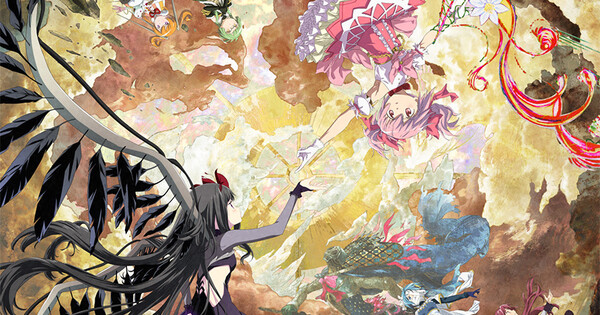
Puella Magi Madoka Magica the Movie: Walpurgisnacht: Rising opened at No. 1 in Japan, giving the long-running magical-girl franchise a commanding return to theaters. The official sequel to Puella Magi Madoka Magica the Movie Part 3: Rebellion sold 535,000 tickets and earned 939,647,100 yen—approximately US$5.95 million—during its first three days.
The result places the latest Madoka Magica film ahead of Chiikawa the Movie: The Secret of Mermaid Island, which fell to No. 2 during its sixth weekend despite adding another 547,161,400 yen to an already enormous Japanese box-office total.
Madoka Magica Returns With a Familiar Creative Team
Walpurgisnacht: Rising, known in Japan as Gekijōban Mahō Shōjo Madoka Magica: Walpurgis no Kaiten, opened in Japan on August 28, 2026, including IMAX screenings from its first day in theaters. The film is positioned as a direct continuation of Rebellion, making it one of the most significant theatrical returns for the franchise since that film’s 2013 release.
Much of the original creative identity remains intact. Akiyuki Simbo returns as chief director, Gen Urobuchi of Nitroplus is credited with the screenplay, and Ume Aoki once again provides the original character designs. Animation character design is handled by Junichirō Taniguchi, while Yuki Kajiura returns to compose the music and Gekidan Inu Curry continues its work on the series’ distinctive alternate-space designs.
Yukihiro Miyamoto directs the new film at SHAFT. Miyamoto previously worked on the original Puella Magi Madoka Magica anime and the Magia Record: Puella Magi Madoka Magica Side Story project, making his involvement especially meaningful for viewers who have followed the franchise across multiple formats.
The film also introduces new magical-girl characters voiced by Shion Wakayama and Tomoyo Kurosawa. Wakayama voices Shichōka, while Kurosawa plays Selma Therese. FictionJunction performs the theme song “Kanata,” adding another collaboration with Kajiura’s musical world.
Why the No. 1 Opening Matters
The opening weekend is notable not simply because Madoka Magica topped the rankings, but because the franchise is returning with an original theatrical continuation rather than a compilation film or side story. The official project has been promoted as a new chapter following Rebellion, a film whose intentionally unresolved conclusion has kept audiences debating the future of Madoka, Homura, and the magical-girl system for more than a decade.
That history gives Walpurgisnacht: Rising a different position from many anime movies competing in Japan. It is not merely an accessible franchise entry built around familiar characters; it is a continuation aimed at viewers who already understand the emotional and metaphysical stakes of the previous television series and films.
From an adaptation perspective, the film also demonstrates the lasting commercial power of anime properties that began as television projects. Madoka Magica has expanded through films, manga adaptations, games, merchandise, and the Magia Record universe. The new movie’s opening suggests that the series’ visual language and character relationships still have enough cultural weight to draw audiences back to theaters years after its last major film.
Chiikawa Remains Japan’s Biggest Box-Office Story
Although Chiikawa: The Secret of Mermaid Island dropped one place, its performance remains extraordinary. The first anime film based on Nagano’s Chiikawa manga has sold approximately 8.49 million tickets and earned 12,228,816,100 yen—around US$77.51 million—in total.
The film opened on July 24 and ranked at No. 1 during its first weekend, selling 1,508,500 tickets and earning 2,240,333,500 yen in its first three days. Its opening-day total alone reached 990 million yen, a remarkable start for a property built around short-form manga and animated stories featuring Chiikawa, Hachiware, and their friends.
The movie adapts the manga storyline often called the “Siren Arc” or “Island Arc,” which was posted on X from March through November 2023. The story follows Chiikawa and Hachiware after they receive an invitation promising rewards, inexpensive food, and easy hunting opportunities on a mysterious island. Suspicious of the offer, Rakko joins them, setting up an adventure that expands the normally compact world of the original manga into a feature-length theatrical journey.
Under Nagano’s supervision, Kei Oikawa directs at Cygames Pictures, with QTORY inc. managing production and TOHO distributing the film. The movie will also receive 4DX screenings beginning September 5, followed by special cheering screenings on September 11 and penlight screenings on September 23.
Crayon Shin-chan and Kingdom Hold Their Ground
Crayon Shin-chan The Movie Super Strange! My Yōkai Monster Vacation remained at No. 5 during its fifth weekend. The 33rd 2D theatrical film in the Crayon Shin-chan series earned 133,316,300 yen over the weekend and has reached a cumulative 2,528,229,550 yen, or approximately US$16.02 million.
The film sends the Nohara family to Hiroshi’s hometown of Akita for a summer fireworks festival. When yōkai escape from their realm, Shin-chan and his family become involved in an adventure that combines supernatural chaos with the series’ familiar family comedy. Masaki Watanabe directs, Yoshiko Nakamura writes the script, and TOMOO performs the theme song “Otona ni Nattara.”
Meanwhile, Kingdom: Tamashii no Kessen stayed at No. 7 in its seventh weekend. The fifth live-action film based on Yasuhisa Hara’s Kingdom manga has earned 6,391,349,700 yen—about US$40.51 million—to date. The film opened on July 17 and earned 2.064 billion yen during its first four days when the Marine Day holiday was included.
The live-action film based on Muneyuki Kaneshiro and Yūsuke Nomura’s BLUE LOCK manga left the top 10 in its fourth weekend. Taken together, the rankings show a particularly broad Japanese movie market: an experimental magical-girl sequel, a family-friendly character brand, a long-running children’s comedy, a historical action franchise, and a sports manga adaptation all competing for theatrical attention.
A Crowded Anime Movie Landscape
Walpurgisnacht: Rising now has the immediate advantage of a No. 1 opening, but Chiikawa remains the dominant long-run performer. The contrast is revealing. Madoka Magica is drawing audiences through continuity, atmosphere, and unresolved character drama, while Chiikawa has turned a deceptively simple manga world into a mass-market theatrical event.
For anime and digital-comics fans, the weekend is another reminder that adaptation success can take several forms. Some properties thrive by expanding a carefully constructed mythology, while others succeed by preserving the charm of short, repeatable stories on a much larger screen. In both cases, the strength of the original format remains central to the film’s appeal.
With its returning staff, IMAX presentation, and direct connection to Rebellion, Puella Magi Madoka Magica the Movie: Walpurgisnacht: Rising has made the strongest immediate statement at the Japanese box office. The next question is whether it can maintain that momentum against Chiikawa’s exceptional staying power and the steady performance of Japan’s established theatrical franchises.
Sources
- animenewsnetwork.com
- madoka-magica.com
- crunchyroll.com