
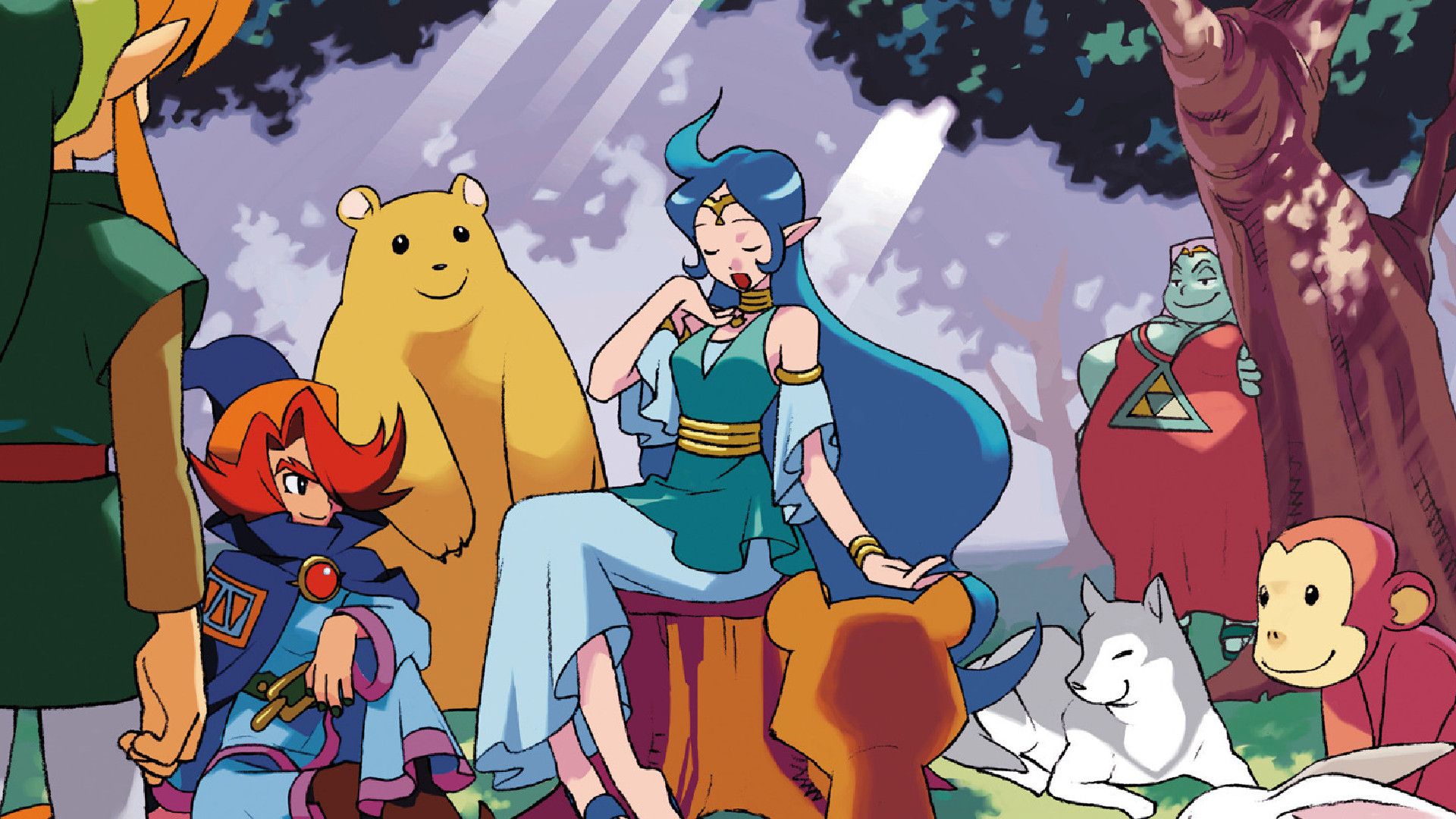
Before The Legend of Zelda: Oracle of Seasons and Oracle of Ages became two of the Game Boy Color’s most respected adventures, the project reportedly began with a much more direct ambition: Capcom wanted to remake the original The Legend of Zelda for Nintendo’s handheld. When Nintendo hesitated, Capcom producer Yoshiki Okamoto claims he gave Shigeru Miyamoto an ultimatum—approve the project, or Capcom would make an identical game with different characters and release it under another name.
That is an audacious threat in any era. In the late 1990s, however, it was aimed at Nintendo, one of the most protective companies in the games industry and the owner of one of its most recognizable franchises. Somehow, the confrontation appears to have helped turn a stalled pitch into a major collaboration between Nintendo and Capcom.
A Zelda remake that grew far beyond the original pitch
Okamoto’s partnership with Nintendo was built around his admiration for the series. The Capcom veteran, known for producing games including Final Fight and Street Fighter II, reportedly wanted to bring the original Zelda to Game Boy Color before using that experience as the foundation for a trilogy of new games.
According to a 1999 interview with the German magazine Total, recently translated by Did You Know Gaming and reported by GamesRadar+, Okamoto said Nintendo would not port the original game to Game Boy Color. He claimed that he told Miyamoto Capcom would produce the game itself, but negotiations failed to reach an agreement.
That was when Okamoto allegedly escalated the discussion. His reported warning was blunt: if Nintendo would not cooperate, Capcom would make an identical game with different characters and simply call it something else. Whether Miyamoto regarded the statement as a joke, a negotiating tactic, or a genuine challenge, the result was that the conversation finally moved forward.
There is an important distinction here. Okamoto’s quote does not mean Capcom was ever seriously positioned to release a legally identical Zelda clone. Nintendo owned the relevant characters, world, branding, and protected creative elements. The threat worked more as a provocative bargaining position—and perhaps as a way of communicating just how strongly Okamoto wanted the project to exist.
The trilogy was reduced to two unusually ambitious handheld games
The original plan reportedly involved four games in total: a remake of the NES original followed by a trilogy of new adventures. Development problems eventually caused the remake to be cancelled, and the trilogy was reduced to the two games released in 2001: Oracle of Seasons and Oracle of Ages.
Both games were developed by Capcom’s Flagship team under Nintendo’s supervision and launched for the Game Boy Color. Although they share a visual foundation and much of the same core structure, they are not simply alternate versions of the same adventure.
Oracle of Seasons focuses on the land of Holodrum, where Link must rescue Din, the Oracle of Seasons, after she is kidnapped by the General of Darkness, Onox. Its signature concept is the ability to shift between the four seasons, changing the environment and opening different routes through the world.
Oracle of Ages sends Link to Labrynna, where the Oracle Nayru has been taken over by Veran, Sorceress of Shadows. Its central mechanic involves travelling between the past and present, with changes in one era affecting the other. Nintendo describes the two adventures as separate journeys that can be linked to unlock additional content and expand the overall story.
That linked structure was one of the project’s most interesting ideas. Players could begin with either game, then use a password system to carry certain consequences, characters, and story developments into the other. Completing both adventures also provided a more substantial conclusion than either game offered on its own.
Why the Oracle games still feel like a successful experiment
The two games occupy an unusual place in Zelda history. They were not developed internally by Nintendo, yet they were designed closely enough to the established formula that they rarely feel like outsider interpretations. GameSpot’s review of Oracle of Ages praised the games for preserving the familiar mixture of dungeons, puzzles, items, exploration, and boss battles while adding distinct identities to each adventure.
GameSpot also awarded both games a 9.2 out of 10, highlighting the difference between their design priorities. Oracle of Seasons leans more heavily toward action, while Oracle of Ages emphasizes puzzles and problem-solving. That division gives players a meaningful reason to experience both rather than treating one as a disposable companion version.
Their relationship with Link’s Awakening is equally important. The controls, presentation, and compact overhead world make the Oracle games feel like natural descendants of Nintendo’s earlier Game Boy classic. At the same time, the season-shifting and time-travel systems let Capcom push the handheld format in directions that a straightforward remake may never have achieved.
That is arguably the great irony of the project. Okamoto wanted to recreate the original Zelda, but the failed remake ultimately cleared the way for two original games with their own mechanical identities. Instead of delivering a portable version of Nintendo’s first adventure, Capcom helped produce a pair of games that expanded the traditional Zelda formula without abandoning its fundamentals.
A strange threat that led to a lasting partnership
In hindsight, the most remarkable part of Okamoto’s story is not that Capcom considered making a Zelda-like game. Developers have borrowed from successful formulas for decades. It is that the person making the threat was speaking directly to Miyamoto, the designer most closely associated with the franchise’s early identity, and apparently did so with enough confidence to keep the negotiation alive.
The collaboration did not end with the Oracle games. Capcom and Nintendo later worked together on The Legend of Zelda: The Minish Cap, another handheld Zelda adventure developed by Flagship. That follow-up suggests the relationship survived the Oracle project’s troubled beginnings and became one of the more productive third-party partnerships in Zelda history.
The Oracle games are now available through Nintendo Switch Online, giving modern players a straightforward way to revisit the experiment. Their legacy is not simply that Capcom made two excellent Game Boy Color games. It is that a cancelled remake, a frustrated producer, and one remarkably aggressive negotiation produced a Zelda partnership that Nintendo might never have approved under safer, more conventional circumstances.
Sources
gamesradar.com
nintendo.com
gamespot.com