
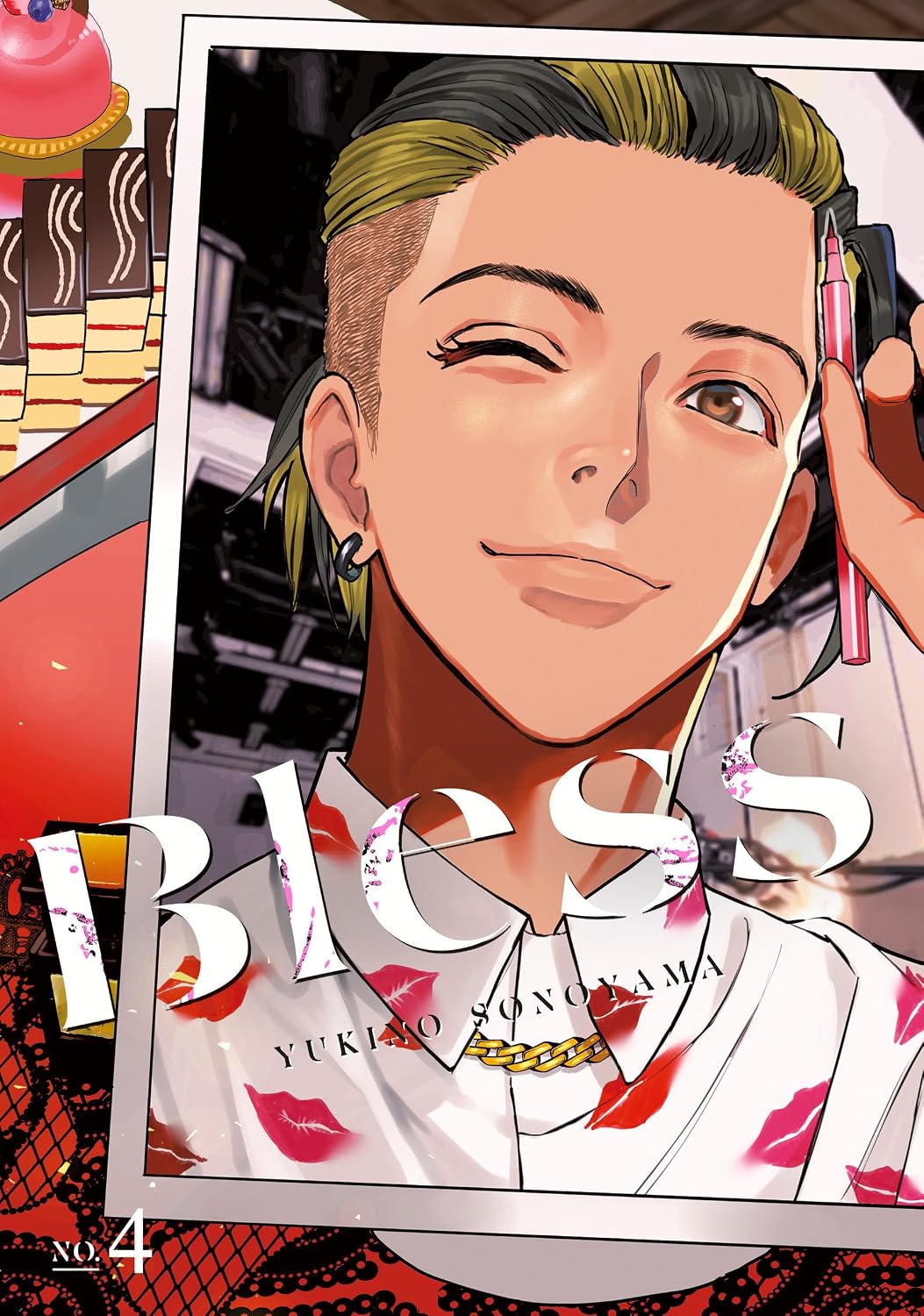
Yukino Sonoyama’s Bless is heading to television in 2027, with A-1 Pictures producing the anime adaptation. That announcement gives the fashion-focused manga an extra spotlight just as its English release reaches a particularly intense stretch, with Volumes 4 and 5 pushing aspiring makeup artist Aia Utagawa into some of his toughest personal and professional challenges yet.
The series follows Aia, a young man recognized for his modeling potential but determined to build a future as a makeup artist, and Jun, an aspiring model who has struggled with other people’s judgment. Their partnership has always been one of the manga’s greatest strengths, balancing creative ambition with a more personal story about confidence, identity, and finding the courage to step outside expectations.
The newly announced TV anime is scheduled for 2027 and will be produced by A-1 Pictures. The studio’s official staff listing names Shotaro Kitamura as director, with Fukuro Kamiza handling series composition and script, Honoka Yokoyama providing character designs, and Ryo Yoshimata composing the music. No cast, episode count, streaming service, or more specific broadcast date has been announced yet.
Aia’s confidence takes a serious hit
Volume 4 begins on a relatively celebratory note. Jun invites Aia to the bar where she works to mark her casting call for a modeling job, giving Aia the chance to meet Jun’s mother, Yoriko. The gathering also offers more insight into Jun’s family, particularly her late father, whose independent spirit and refusal to live by other people’s rules have clearly influenced her own outlook.
Jun’s future is beginning to open up, including the possibility of traveling overseas for more modeling opportunities. That development is exciting, but it also creates a small emotional distance between the two friends. Aia is happy for her, though he is understandably surprised that he was not told sooner.
Meanwhile, Aia is struggling to keep pace with the talented people around him at MIRROR. His preparation for the U21 Hair and Makeup Competition is going badly, and the more he observes his peers, the more he compares himself against them. His admiration gradually curdles into jealousy, leaving him unable to see that the people surrounding him have complicated feelings about his own abilities as well.
That insecurity becomes the central conflict when stylist Oya challenges the MIRROR group to create a proposal centered on a set of vivid new lipsticks from a major cosmetics brand. Aia loves makeup, but passion alone is not enough to help him find the right idea. Even Oya’s guidance fails to give him the answer he is looking for, and Aia begins to feel as though everyone else has a natural talent that he will never possess.
Volume 5 expands the rivalry
Volume 5 continues Aia’s professional crisis while giving more attention to the people he is competing against. Akiharu, established as Aia’s biggest rival, receives a backstory that makes their conflict more meaningful than a simple contest between talented young artists.
The volume also spends time with Hajime, better known by his nickname M.M. As the oldest member of the MIRROR group, Hajime is not eligible for the U21 competition, but that restriction only makes him work harder whenever another opportunity presents itself. His age and experience give him a different perspective from the younger competitors, who are often pulled into a much more cutthroat atmosphere.
That makes Hajime an especially valuable presence for Aia. He is able to recognize the bitterness and panic that Aia cannot articulate, offering the kind of grounded advice that Aia needs even when he is not ready to hear it. These character-focused chapters are among the strongest parts of the two-volume run, adding depth to what could otherwise have been a straightforward rivalry arc.
A strong arc with an uneven balance
There is plenty to admire here, but these volumes also highlight a structural weakness. Jun is largely pushed into the background while the manga concentrates on Aia’s struggles and the growing cast at MIRROR. That shift is understandable, especially as Sonoyama develops Akiharu, Hajime, and the wider creative environment, but it leaves the central partnership feeling less balanced than before.
Jun remains important to Aia emotionally, and her encouragement is still crucial to him. However, the newer characters do not quite occupy the same role in his life. Without Jun’s presence, Aia feels increasingly unstable, which is clearly intentional, but the story would benefit from giving both halves of the duo more equal attention.
Volume 4 also feels unusually slight despite its listed 162 pages. The main storyline concludes around page 117, with the remaining material devoted to a bonus story about how Jun’s parents met. That extra chapter is enjoyable and connects neatly to Jun’s family history, but readers may still feel that the main plot has not advanced as far as expected across the two books.
Kodansha’s English editions continue to be translated by KPS Products Corp and lettered by Nicole Roderick, with both volumes reading smoothly. The lack of additional extras is disappointing, particularly given how quickly the main story moves through Volume 4.
For readers tracking the Japanese publication, the manga remains ongoing, and Volume 8 was released in Japan on March 9, 2026. Kodansha’s English catalog currently lists seven available volumes, leaving the English edition relatively close to its Japanese counterpart.
Volumes 4 and 5 are not the series at its most evenly structured, but they remain worthwhile for anyone invested in Aia and Jun’s journey. With the anime now on the horizon, it is worth keeping an eye on how future manga volumes restore that balance—and which parts of this ambitious fashion drama will eventually make the jump to television.
Review copies were supplied by Kodansha through Diamond Book Distributors UK.
Sources
a1p.jp
kodansha.us
kodansha.co.jp