
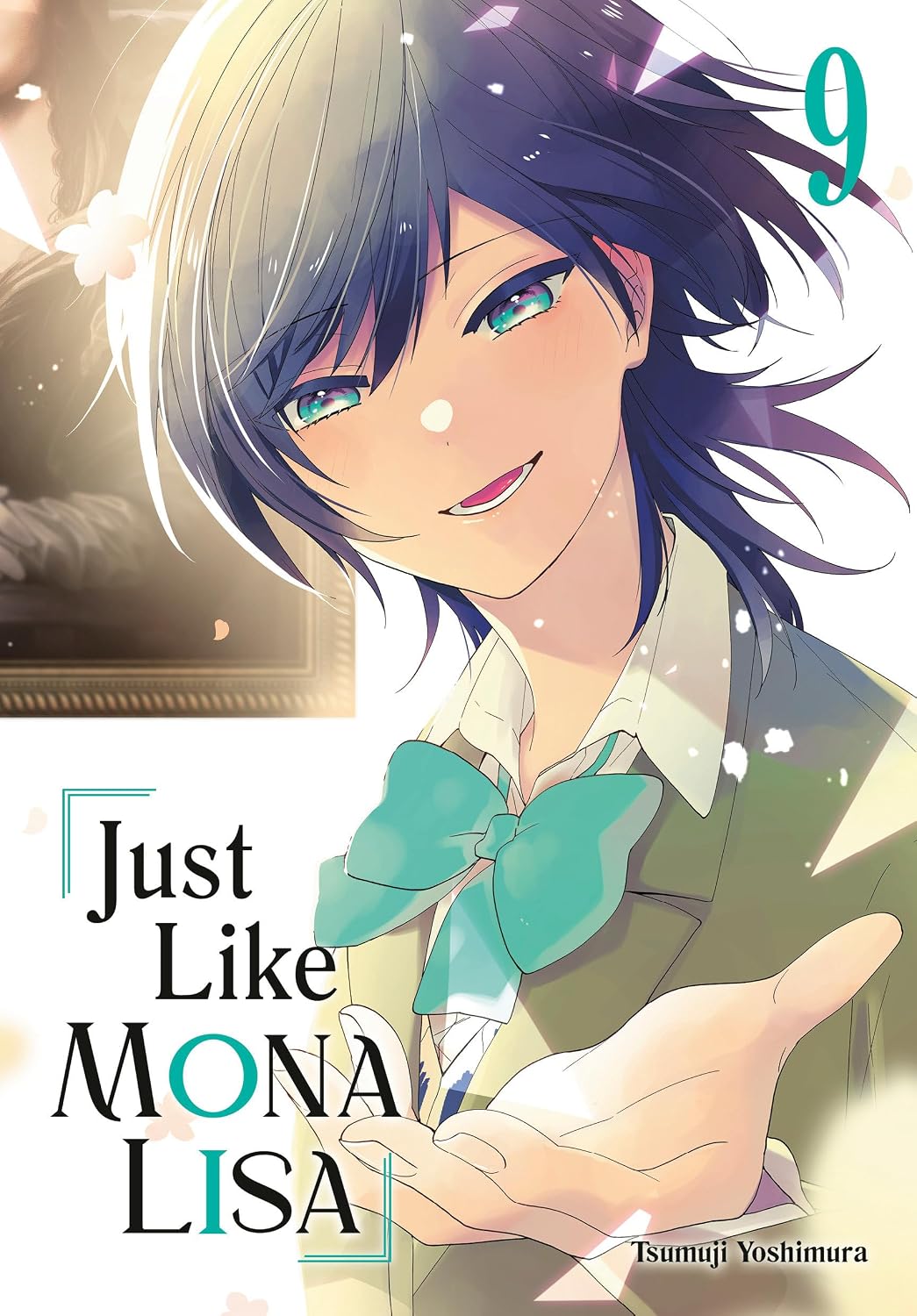
Just Like Mona Lisa refuses to settle for a single answer. Tsumuji Yoshimura’s gender-focused romance manga concludes with two additional volumes that imagine different futures for Hinase, turning the ending into something closer to a “choose your own path” finale.
Square Enix Manga released Volumes 9 and 10 in English on May 19, 2026. Both books pick up after the main story’s Volume 8 endpoint, where Hinase reaches the point of choosing a gender but the series deliberately leaves the final decision open.
Rather than presenting one definitive future, Yoshimura uses the final pair of volumes to explore two possibilities. Volume 9 follows Hinase after choosing to become a woman, while Volume 10 looks at life after Hinase becomes a man. Each book also revisits Hinase’s relationships with Ritsu and Shiori, along with storylines involving the wider cast.
Two endings, two different futures
The official premise for Just Like Mona Lisa is built around a world where people are born without a gender and their bodies begin changing toward their desired gender at the age of twelve. Hinase remains without a gender through high school, even as Ritsu and Shiori both confess their feelings. That unusual setup gives the manga room to explore identity, romance and social expectations without forcing Hinase into a conventional love-triangle conclusion.
Volume 9’s version of the future sees Hinase living as a woman. The volume moves through several chapters covering Hinase’s relationships with both Shiori and Ritsu, including a summer trip to a hot spring and the complications of being perceived as a same-sex couple. The Ritsu storyline has the stronger emotional rhythm, particularly because it spends more time considering what the relationship means in everyday life.
Volume 10 takes the opposite route, following Hinase as a man. Once again, the story examines possible romances with Ritsu and Shiori, but the emotional emphasis shifts as Hinase deals with body changes, insecurity and the pressure that comes with being seen differently by others. The result is not simply a gender-swapped repeat of Volume 9; the relationship dynamics change in noticeable ways.
That structure is reflected in Square Enix’s official descriptions, which frame the books as “possible” futures rather than a single canonical answer. Volume 9 focuses on Hinase finding happiness as a woman, while Volume 10 explores new doubts after Hinase becomes a man.
Hinase’s future goes beyond romance
One of the most welcome elements in Volume 10 is the chance to see Hinase as an adult. Hinase eventually works as a school nurse, helping young people who are struggling with questions surrounding gender. It is a fitting direction for a character whose own life has been defined by uncertainty, and it allows the series to show Hinase supporting others rather than simply resolving their own identity crisis.
That adult perspective also helps the final volume feel broader than a collection of romantic what-ifs. The series has always been interested in the way gender expectations shape friendships, self-image and everyday choices, and Hinase’s career provides a natural extension of those ideas.
The supporting cast receives attention as well. Volume 9 includes side stories involving Azusa and Rui, while Volume 10 returns to Shirogane’s unresolved feelings for Kurokawa. These chapters help tie up character threads that might otherwise have been left behind once Hinase’s main story reached its branching point.
Should you read both volumes?
Absolutely. It may be tempting to choose Volume 9 or Volume 10 based on which future feels more appealing, but the books work best as a pair. Each one contains material that goes beyond Hinase’s gender choice, and the side stories are important to the sense that the entire cast is moving forward.
Neither ending is presented as the only correct answer. Yoshimura’s approach suggests that Hinase’s future cannot be reduced to one outcome, especially when the character’s identity has never fit neatly into the expectations of the people around them. The manga instead leaves room for readers to imagine other possibilities.
That openness is also the series’ greatest strength and, at times, its biggest challenge. Readers looking for a tightly definitive resolution may find the branching format frustrating. However, the final volumes remain consistent with the manga’s central message: gender does not have to dictate a person’s interests, relationships or sense of self.
Square Enix Manga’s English editions include colour pages showcasing Hinase’s appearances in both futures. The books are available in trade paperback and digital formats, with both listed as Older Teen titles in the publisher’s catalogue. Leo McDonagh handled the translation, while Kyla Aiko provided the lettering.
For longtime readers, these volumes offer a thoughtful way to revisit the questions that made Just Like Mona Lisa distinctive in the first place. The story may be finished, but Yoshimura leaves Hinase’s future deliberately larger than any single ending—a choice that feels appropriate for a series built around possibility.
Fans who have followed the manga through Volume 8 should keep both books on their reading list. Volume 9 and Volume 10 are not competing answers so much as companion views of the same character, and together they provide the fullest picture of where Hinase—and the people around them—might go next.
Sources
squareenixmangaandbooks.square-enix-games.com
square-enix.com