
Masahiro Ito, the artist whose creature designs helped define the first three Silent Hill games, has suggested that dedicating himself so completely to Pyramid Head and the rest of Team Silent’s nightmare fuel may have come at a personal cost.
In a post reported on September 4, 2026, Ito reflected on the eight years he spent working on Silent Hill, Silent Hill 2, and Silent Hill 3 at Konami. He said he gave up on pursuing relationships during that period, never going on a date, sacrificing days off, and even sleeping on cardboard on the floor while working.
His most striking comment was also his most straightforward: Ito said he sometimes thinks he would have been happier if he had protected his personal life, found a girlfriend, and married earlier. It is a painful bit of hindsight from an artist whose professional legacy is almost absurdly influential.
The man behind gaming’s most recognizable nightmare
Ito served as a creature and background designer on the original Silent Hill, then became art director and a key monster designer for Silent Hill 2 and Silent Hill 3. His work helped establish the series’ distinctive visual language: bodies that look damaged without becoming cartoonish, industrial spaces that feel physically hostile, and monsters that suggest psychological meaning without explaining themselves too neatly.
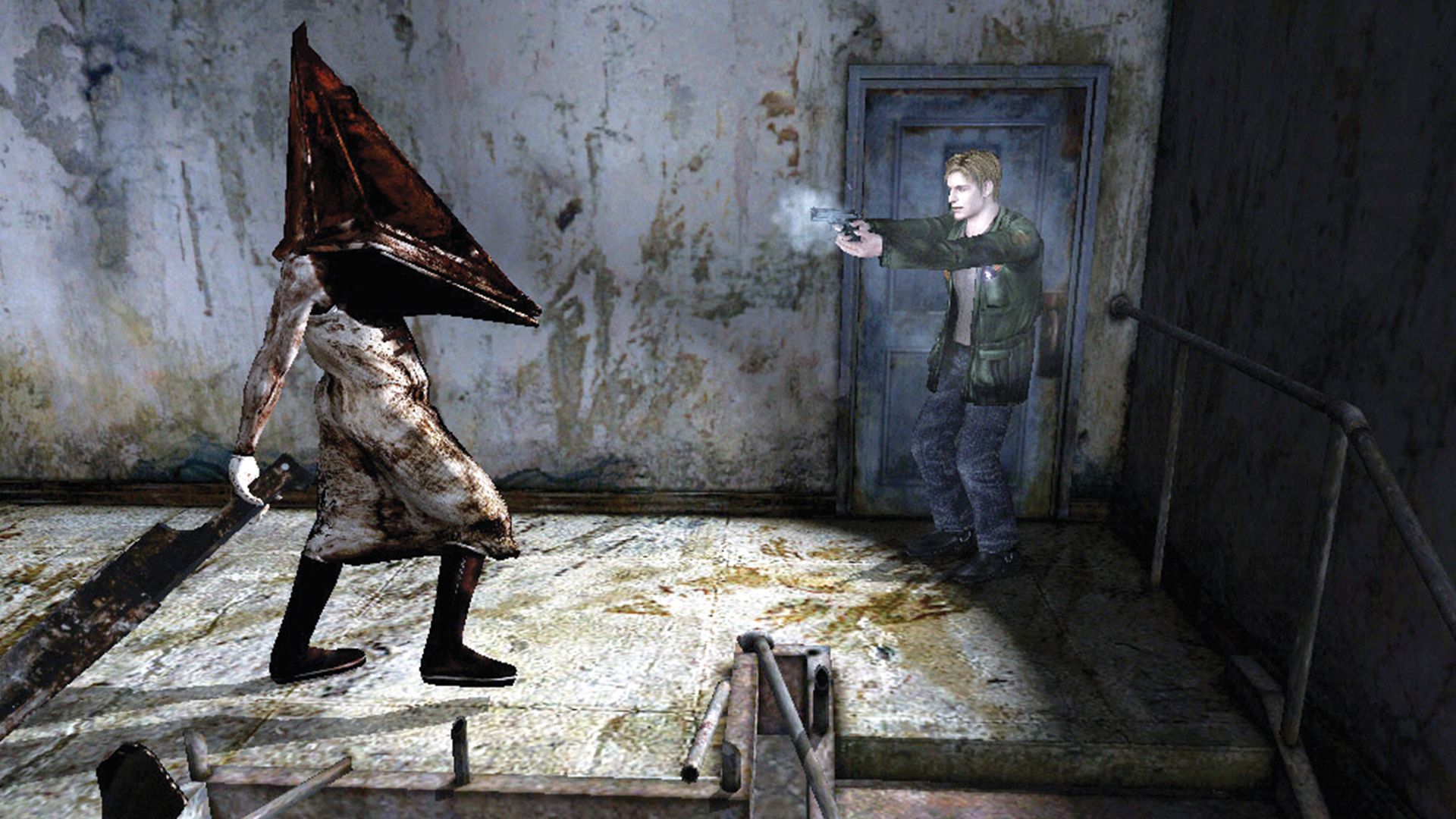
Pyramid Head remains the clearest example. The figure’s rusted, oversized helmet, enormous blade, and brutally deliberate movement made him instantly memorable, but his role in Silent Hill 2 was more specific than simply being a frightening mascot. He embodied the game’s themes of guilt, punishment, and self-destruction, which is why the character has remained so closely associated with James Sunderland’s story.
That success also created a strange burden. Pyramid Head became one of horror gaming’s most marketable images, even though the character’s original power came partly from how carefully the game used him. Ito’s design was not just a cool monster concept; it was a visual tool built around the emotional logic of one particular story.
A candid reminder of what game development can demand
It would be easy to romanticize Ito’s account as the familiar story of a brilliant creator suffering for art. The results were extraordinary, but the working conditions he describes are less glamorous: missed personal milestones, exhausted schedules, and a willingness to treat rest as something expendable.
The games industry has long celebrated all-consuming dedication, especially when it produces a beloved classic. Developers are often praised for crunch after the fact, once the finished game has become part of gaming history. Ito’s comments cut through that mythology by acknowledging that a successful career does not automatically make every sacrifice worthwhile.
His words should not be read as a rejection of the work itself. Ito has every reason to be proud of his contribution to the series, and his continued connection to Silent Hill—including involvement with the Silent Hill 2 remake—shows that the franchise remains an important part of his creative identity. The regret is more personal than professional: the games succeeded, but time spent making them could not be recovered.
The uncomfortable question of alternate lives
Fans responded to Ito’s post with encouragement, and understandably so. There is no way to know whether a different balance between work and personal life would have produced the happiness he imagines. A relationship or marriage is not a guaranteed solution to loneliness, just as a celebrated career cannot guarantee contentment.
Still, the thought experiment is compelling because Ito’s legacy is so closely tied to a specific period of intense creative labor. Without his contribution, Silent Hill 2 would almost certainly look different. Without Pyramid Head, the game’s visual identity and much of its cultural afterlife would be difficult to imagine in the same form.
That does not make the sacrifice noble by default. It simply reveals the complicated trade-off behind an iconic piece of art. Players experience the finished work as a complete object, while the people who made it remember the years, missed opportunities, and physical exhaustion required to bring it into existence.
His legacy is bigger than Pyramid Head
It is tempting to reduce Ito’s career to one character, but his influence reaches well beyond Pyramid Head. The creatures and environments of the early Silent Hill games helped move survival horror away from straightforward monsters and toward imagery that feels symbolic, intimate, and deeply uncomfortable.
That approach continues to shape horror games today. Contemporary developers still chase the same uneasy mixture of ambiguity and physical grotesqueness: enemies that appear to represent something, even when the game refuses to spell out exactly what that something is.
Fans can be grateful for what Ito created without treating his personal sacrifices as the price of great art. The most humane reading of his comments is not that he should have worked less or designed fewer monsters, but that creative ambition should not require someone to abandon the rest of their life.
Pyramid Head may remain one of gaming’s definitive symbols of guilt and punishment. Ito’s latest reflection adds another layer to that legacy—one that is less about fictional torment and more about the very real cost of devoting everything to a career.
Sources
gamesradar.com
konami.com
masahiro-ito.net
silenthillmemories.net