
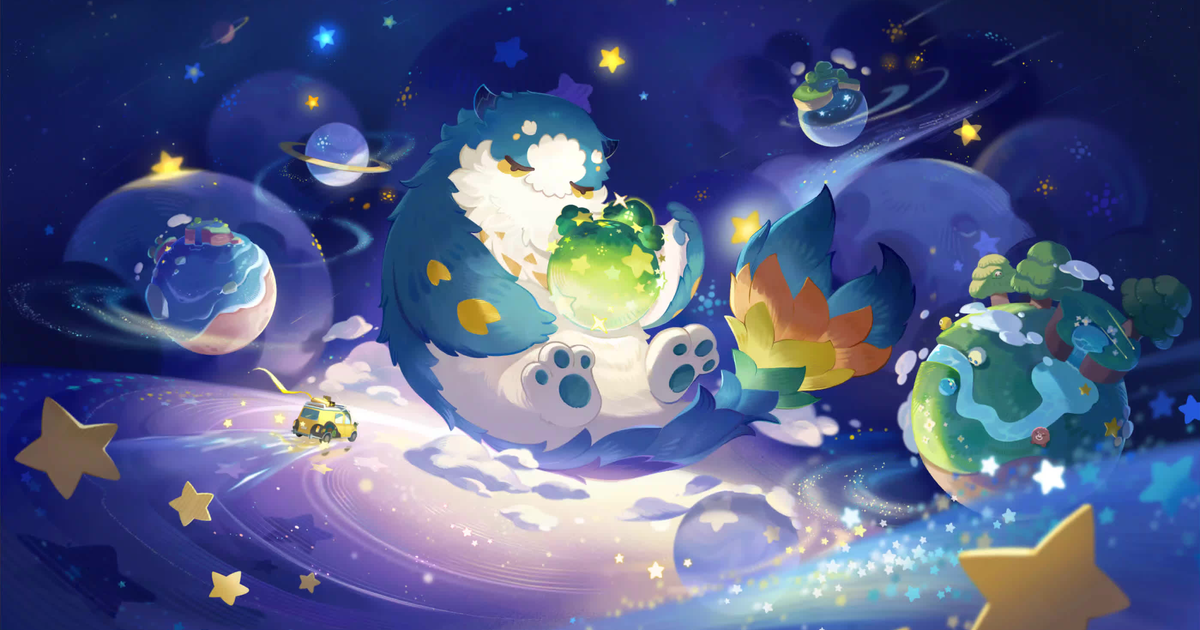
HoYoverse’s first family-focused game, Petit Planet, has entered its second closed beta, and its ambitions are immediately clear: take the familiar comfort of Animal Crossing, move it into a bright sci-fi setting, and wrap the whole thing in HoYoverse’s polished live-service presentation. That makes it an intriguing change of direction for the studio—but also places the game under intense scrutiny.
After years of action RPGs such as Genshin Impact, Honkai: Star Rail, and Zenless Zone Zero, HoYoverse is stepping into the cozy life-sim market with a game built around planting, crafting, decorating, collecting, and building relationships with charming animal neighbors. The foundation is appealing. The harder question is whether Petit Planet has enough personality to justify another long-term commitment from players who already have established virtual homes to maintain.
Animal Crossing in space is the pitch—and the problem
Petit Planet makes no real attempt to hide its biggest influence. Players create a character, arrive on a small celestial homestead, gather resources, catch fish and insects, plant crops, craft items, expand the settlement, and befriend anthropomorphic residents. Even some of the early activities and character roles feel immediately recognizable to anyone who has spent time with Animal Crossing: New Horizons.
That familiarity gives Petit Planet an inviting opening. The game understands the rhythm of a cozy life sim, and its colorful presentation makes the first few hours easy to settle into. There is a clear pleasure in shaking fruit from trees, collecting materials, helping neighbors, and gradually turning an empty patch of space into somewhere that feels lived in.
The issue is that familiarity can quickly become imitation when a game does not establish its own identity. The desert planet setting is a promising visual twist, but so far it functions more as a backdrop than a transformative idea. Replacing an island with a planet changes the scenery, yet it does not fundamentally alter the familiar routine underneath.
A polished comfort game with a checklist-driven rhythm
That routine is competent, but Petit Planet sometimes seems more interested in directing the player than letting them simply exist in the world. Early progress is shaped by objectives, tutorials, resource requests, and a steady stream of tasks. Instead of wandering until inspiration strikes, players are often nudged toward the next activity or upgrade.
Several preview impressions have identified this as one of the game’s defining tensions. The systems are approachable and well presented, but the overall structure can feel closer to a mobile progression loop than the slower, more open-ended cadence associated with Animal Crossing. The result is a game that looks relaxing while occasionally feeling like another job to manage.
That does not make the design inherently bad. Players who enjoy routine, optimization, and a constant sense of forward movement may find Petit Planet more satisfying than Nintendo’s famously hands-off approach. The concern is that the busier structure could undermine the genre’s most valuable quality: the freedom to do very little and still feel that the game is rewarding your time.
Character customization also appeared limited at the beginning of the second beta, with more options seemingly tied to progression. That may ultimately create a stronger sense of development, but it also means the opening moments can feel less expressive than expected from a game centered on personalizing a home and avatar.
The neighbors may be Petit Planet’s real strength
If the activities are familiar, the cast of residents could become the feature that gives Petit Planet a reason to exist. HoYoverse has considerable experience building games around character attachment, and early impressions suggest that its animal neighbors are more than decorative quest dispensers.
Residents such as Mobai, Glenn, and Yunguo help establish the tone of the settlement, while their stories and personalities provide a more directed alternative to Animal Crossing’s looser social interactions. The game’s writing can be overly chatty and the opening pace is slow, but the characters appear to be doing much of the emotional heavy lifting.
That emphasis may also help Petit Planet appeal to younger players and families. The art direction is bright without being aggressively noisy, the activities are non-combat focused, and the game’s central fantasy is easy to understand: care for a tiny world and the people who live there. The challenge for HoYoverse will be keeping that accessible presentation from becoming a gateway into overly aggressive live-service habits.
Monetization remains the biggest unanswered question
The second beta offered no in-game purchases, meaning the final business model remains unclear. That is particularly notable because gacha monetization is central to HoYoverse’s established portfolio. A seasonal pass or subscription-style system appears easier to imagine than a character-draw economy, but nothing in the available test material confirms how the finished game will be funded.
For a title aimed explicitly at a family audience, this uncertainty matters. A cozy game can be structurally generous and still become uncomfortable if limited-time rewards, premium currencies, or social pressure dominate the experience. Parents may be more receptive to Petit Planet precisely because it lacks the obvious combat and character-collection hooks of HoYoverse’s RPGs, making transparency around purchases even more important.
The game also includes a social hub known as the Galactic Bazaar, where players can interact, participate in activities, and encounter Nalo, an AI-powered conversational character. The idea is ambitious, but the beta’s implementation reportedly produced dialogue that felt less revolutionary than advertised. It is an interesting experiment, although the novelty will depend on whether conversations become genuinely meaningful rather than a more elaborate version of a scripted chat system.
Petit Planet needs more than polish to survive
There is a solid game here. Petit Planet is cute, readable, polished, and clearly made by a studio that understands how to build attractive long-term ecosystems. The space setting gives it a pleasant visual identity, while the cast and progression systems provide enough structure to keep players moving from one task to the next.
But the crowded life-sim market is not short on charming alternatives. Animal Crossing remains the obvious comparison, while Stardew Valley, Disney Dreamlight Valley, Heartopia, and a growing number of smaller social and farming sims already compete for the same limited pool of player attention. A new game cannot simply offer the familiar loop; it needs a compelling reason to become someone’s primary digital home.
Petit Planet may eventually find that reason through its characters, multiplayer features, or the way it develops the planetary setting. At this stage, though, it feels more like a careful foundation than a confident reinvention. HoYoverse has proven that it can turn familiar ideas into major successes, but this particular project will need to show more of itself before it can escape the shadow of Animal Crossing.
For now, Petit Planet is best understood as a promising cozy life sim rather than a genre challenger. Its second beta demonstrates that HoYoverse can step outside the RPG space without losing its sense of presentation and polish. Whether it can create a world players genuinely miss when they are away will depend on the details still hidden behind that unfinished, carefully controlled test.
Sources
vg247.com
hoyoverse.com
hoyolab.com
pcgamer.com
beebom.com
theouterhaven.net
pockettactics.com
digitalchumps.com
mmorpg.com