

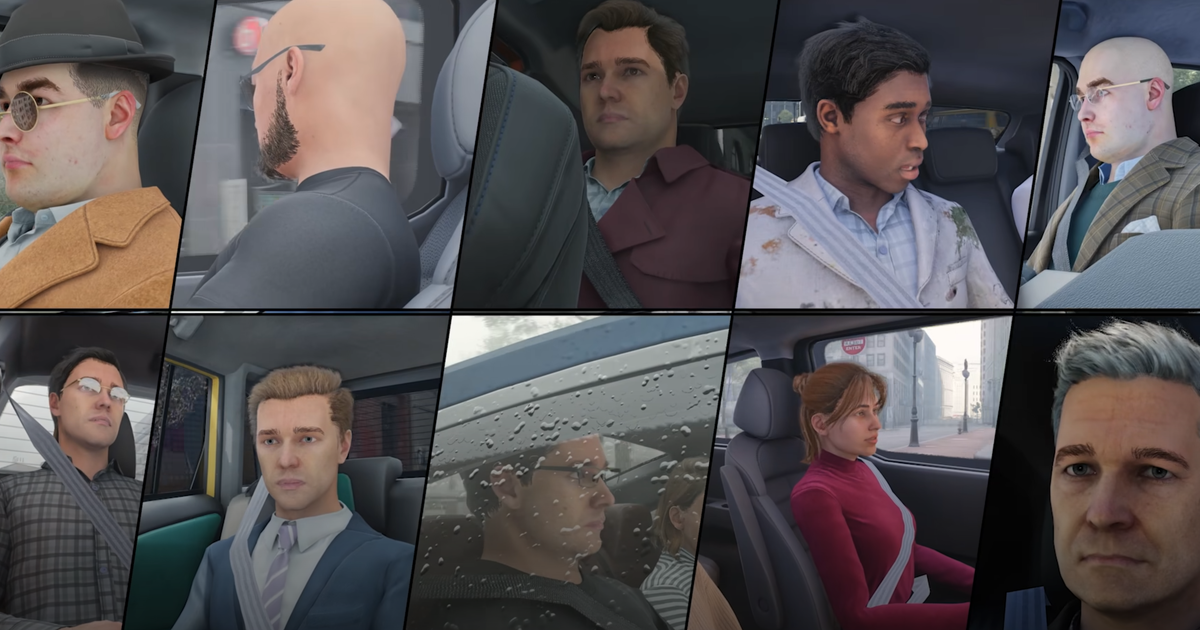
Saber Interactive has added an AI disclosure to the Steam page for Rideshare “Stimulator”, days after a public dispute between CEO Matthew Karch and former writer Stella Sacco brought the project’s use of generative tools into the spotlight. The update gives players a clearer picture of where AI appears in the game—but it also raises uncomfortable questions about transparency, authorship, and how publishers communicate experimental technology.
The disclosure was missing when the game first became available to wishlist on July 30. Karch initially said the Steam page would be updated once the game’s AI-related features were finalised, but Saber has now published a much more specific explanation than the CEO’s first comments suggested.
The main campaign is described as human-written
According to the updated Steam information, the main campaign’s story, characters, and dialogue were written by human writers. AI tools were nevertheless used for voice generation and some localisation, meaning the campaign is not entirely free of generated content even if its central script was produced by a human writing team.
The game also includes a separate optional Free Ride mode. This mode generates passenger missions and localised dialogue with AI, and can be skipped by players who only want to experience the human-written campaign narrative.
That distinction is important. Karch had previously described the AI-powered mode as an unrelated experiment rather than the foundation of the game’s core experience. Saber’s disclosure now makes clear that players will be able to encounter AI-generated narrative content, but that it is being kept apart from the primary campaign.
AI-generated music will also appear on the radio
The disclosure confirms another use of generative technology: the in-game radio will feature a mix of human-made and AI-generated music. Saber says stations containing AI-generated tracks will be clearly labelled, giving players the option to identify that content while playing.
For a game built around rides and passenger encounters, the appeal of an experimental system is easy to understand. A conventional campaign can rely on a finite collection of authored conversations, while a mode designed around unpredictable passengers may require a much larger pool of dialogue, scenarios, and audio. Karch argued that the team needed two writers and multiple programmers to make the system produce an acceptable result, and claimed that incorporating it ultimately cost more than leaving it out.
That argument does not settle the creative debate, however. The question for many players is not simply whether AI makes development cheaper or more expensive. It is whether generated dialogue, voices, music, and localisation add something meaningful to the experience—or merely create more content without the same level of intent and editorial control.
A public argument made the disclosure unavoidable
The Steam update follows a dispute between Karch and Sacco, who previously worked as a writer on the project. Sacco claimed that she had been replaced by ChatGPT during development, while Saber denied that the game’s main story had been handed over to AI.
Karch’s response intensified the controversy. He said he would have been happy to replace Sacco with AI in retrospect and characterised the wider dispute as a publicity stunt. He also pointed to the growth of Saber’s writing staff since Sacco left the company three years ago.
Saber’s position is therefore twofold: the company denies that AI replaced the human authors of the main campaign, while openly defending the use of generative tools in other parts of the project. Karch has since apologised privately to Sacco, and she has accepted the apology, indicating that the personal dispute may finally be winding down even as the industry discussion continues.
Why Steam transparency matters to players
Valve’s Steamworks system asks developers to disclose generative AI used to create content shipped with a game or consumed by players. The disclosure framework covers areas such as artwork, sound, story, and localisation, as well as AI content generated during play.
That makes Rideshare “Stimulator” a particularly visible test case. Its updated wording does not hide the technology behind vague references to “automation” or “procedural systems.” Instead, it identifies the specific areas affected: voice generation, localisation, passenger missions, radio music, and the optional Free Ride mode.
For consumers, that level of detail is more useful than a broad warning alone. Some players may be comfortable with AI-assisted localisation but not AI-generated music. Others may accept generated background conversations while avoiding live-generated story content. A disclosure cannot resolve those preferences, but it can at least allow players to make informed decisions before buying.
The bigger issue is trust, not just technology
Rideshare “Stimulator” is being developed by Unigine Studio and published by Saber Interactive, a company with a portfolio that includes Warhammer 40,000: Space Marine 2, World War Z, SnowRunner, and other original and licensed projects. That broader profile gives this relatively unusual driving game more industry significance than its premise might initially suggest.
The project is not the first game to use AI-assisted content, nor is it necessarily the most ambitious example. What makes the situation notable is the sequence of events: allegations from a former staff member, an unusually combative executive response, the absence of an initial Steam disclosure, and a later update that spells out a much wider range of AI use.
That sequence may leave players wondering whether the disclosure would have appeared as quickly without the public dispute. Saber says the feature set was still being finalised, but the timing inevitably makes the update look reactive rather than routine.
The eventual quality of the game will determine how much of this controversy follows it into release. If the Free Ride mode produces genuinely entertaining, varied encounters and the AI-generated audio is clearly controlled and labelled, some players may view the experiment as a worthwhile optional feature. If the dialogue feels repetitive, the voices sound artificial, or the generated content overwhelms the authored material, the controversy will become part of the game’s critical reception.
For now, the most important change is that prospective players have more information than they did when Rideshare “Stimulator” first appeared on Steam. That is a modest step, but in an industry still struggling to define acceptable AI use, clarity remains one of the few standards everyone can reasonably demand.
Sources
eurogamer.net
pcgamer.com
gamesradar.com
saber.games
steampowered.com