
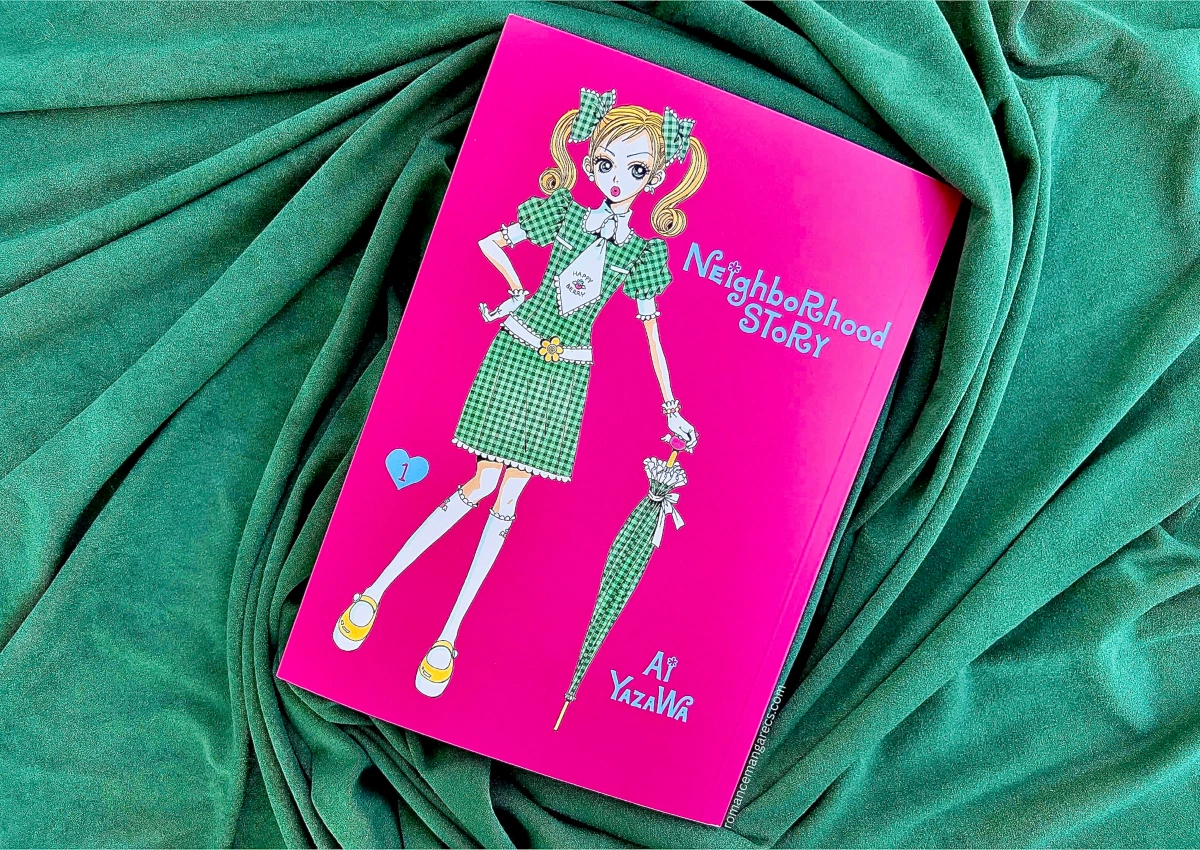
Ai Yazawa’s Neighborhood Story—known in Japan as Gokinjo Monogatari—turns fashion school, childhood friendship, and romantic confusion into a bright but surprisingly sharp coming-of-age drama. With VIZ Media’s English edition now available as a complete four-volume series, the manga offers readers a lively entry point into the creator’s interconnected world before Paradise Kiss and Nana.
For webtoon and digital-comics readers accustomed to fast hooks and highly stylized character casts, Neighborhood Story is an especially interesting read. It is not a webtoon in the vertical-scroll sense, but its bold visual identity, episodic emotional turns, and fashion-driven storytelling give it the kind of immediate personality that translates easily to modern manga fandom.
A Fashion Dream Complicated by Old Feelings
The story follows Mikako Koda, an ambitious student at Yazawa Arts Academy who dreams of creating her own fashion label. Mikako is imaginative, energetic, and fiercely protective of her creative independence, but her personal life becomes less easy to organize when her lifelong neighbor and childhood friend, Tsutomu Yamaguchi, suddenly attracts attention at school.
Tsutomu’s resemblance to a popular rock singer makes him unexpectedly famous among his classmates. His growing popularity—and his romantic life—forces Mikako to confront feelings she has been avoiding. What begins as a familiar childhood-friends romance gradually becomes a broader story about jealousy, identity, self-expression, and the frightening process of growing beyond the person others expect you to be.
VIZ’s official synopsis emphasizes Mikako’s fashion ambitions and the creative club she forms with Tsutomu and their friends. That artistic setting gives the series a strong framework, but the manga is ultimately more interested in the people behind the designs than in the technical details of fashion production.
Where Romance Meets Coming-of-Age Drama
The central relationship between Mikako and Tsutomu is the manga’s greatest strength. Their shared history creates an intimacy that does not need to be explained, while their changing circumstances make that familiarity increasingly complicated. They know each other well, but that does not mean they understand what the other person wants—or what they want themselves.
Yazawa handles their romantic development with a balance of comedy, awkwardness, and emotional frustration. The relationship does not feel artificially rushed, yet it also avoids becoming a story where every meaningful development is postponed indefinitely. Instead, Mikako and Tsutomu mature through a series of misunderstandings, difficult choices, and moments when affection has to compete with pride.
That emotional structure makes Neighborhood Story more than a straightforward school romance. Mikako’s growth is tied to both her creative ambitions and her emotional honesty. She has to learn that self-expression is not only about clothes, performance, or artistic style; it also involves admitting fear, accepting vulnerability, and deciding what kind of future she wants.
The supporting cast expands that theme. Friends and rivals often represent different approaches to love, popularity, ambition, and adulthood. Some characters are sympathetic but frustrating, while others initially seem shallow before revealing more complicated motivations. This unevenness is part of the manga’s appeal, although not every character arc lands with equal force.
Ai Yazawa’s Most Playful Visual Era
Yazawa’s artwork is instantly recognizable, but Neighborhood Story showcases a particularly colorful and playful stage of her artistic development. The characters have elongated silhouettes, expressive faces, dramatic eyes, distinctive hairstyles, and outfits that communicate personality before a character says a word.
The fashion is not simply decoration. Mikako’s clothing experiments and the group’s design projects become visual extensions of their changing identities. Characters are constantly trying on new looks, social roles, and emotional attitudes. The manga understands that style can be armor, performance, rebellion, or an invitation to be seen.
Readers who prefer understated character designs may need time to adjust to Yazawa’s tall, angular figures and exaggerated proportions. For fans of expressive shoujo art, however, the style remains one of the series’ strongest selling points. The hairstyles are especially memorable, from sculpted curls to dramatic silhouettes that would be impossible to mistake for anyone else’s work.
The visual comedy also deserves attention. Yazawa frequently pushes expressions and reactions beyond realism, using exaggerated poses, playful interruptions, and occasional fourth-wall humor to keep the drama from becoming too heavy. That tonal flexibility helps distinguish Neighborhood Story from more solemn romance manga.
What Has Aged Well—and What Has Not
Neighborhood Story is often lighter and more openly comedic than Yazawa’s darker or more bittersweet works, but it still includes illness, hospitalization, suggestive material, partial nudity, and mature romantic situations. The main cast may be young, yet the story places them in emotionally complicated circumstances that sometimes feel more adult than their age would suggest.
The manga’s treatment of romance can also be frustrating. Several characters are intensely focused on finding love, and the plot frequently returns to jealousy, miscommunication, romantic competition, and uncertainty. Readers who prefer romance with minimal melodrama may find some of these conflicts repetitive.
Some character labels, jokes, and relationship dynamics also reflect attitudes from the era in which the manga was created. The series can be thoughtful about stereotypes and self-expression while still relying on dated or uncomfortable framing in places. Those elements do not erase the manga’s strengths, but they are worth acknowledging rather than smoothing over.
Mariko Nakasu is a particularly revealing example. She begins as a character with the potential to challenge assumptions about wealth, popularity, gyaru fashion, and dating, but parts of her later characterization lean into the very stereotypes the setup seems prepared to question. Her storyline remains interesting precisely because it is imperfect, though some readers may wish Yazawa had taken it in a more subversive direction.
Who Should Read Neighborhood Story?
This is a strong recommendation for readers who enjoy fashion-centered romance, character-driven drama, childhood-friends stories, and ensemble casts with exaggerated personalities. Fans of Paradise Kiss will likely appreciate the creative-school setting and the way clothing becomes part of the emotional storytelling, while Nana readers may enjoy seeing Yazawa work in a brighter, more playful register.
It is also a useful choice for readers exploring classic shoujo manga beyond modern releases. The story’s concerns—creative ambition, insecurity, social judgment, and the struggle to define happiness—remain accessible even when some of its language and romantic conventions feel dated.
VIZ publishes the English edition through its Shojo Beat imprint, with four paperback volumes completing the series. The Japanese publisher Shueisha identifies the work as a fashion-focused high-school story originally associated with Ribon, and the property has also received an anime adaptation. For readers interested in Yazawa’s larger body of work, reading I’m No Angel, Neighborhood Story, and Paradise Kiss in publication order can provide a stronger sense of the recurring creative and character connections across her manga universe.
Neighborhood Story is not a flawless romance, and it is not primarily a detailed fashion-industry narrative. Its real appeal lies in the combination of colorful design, unruly personalities, romantic tension, and a sincere interest in how young people learn to become themselves. That makes it an energetic, emotionally messy, and still highly distinctive classic for Ai Yazawa fans.
Sources
- romancemangarecs.com
- viz.com
- shueisha.co.jp
- thestorygraph.com