

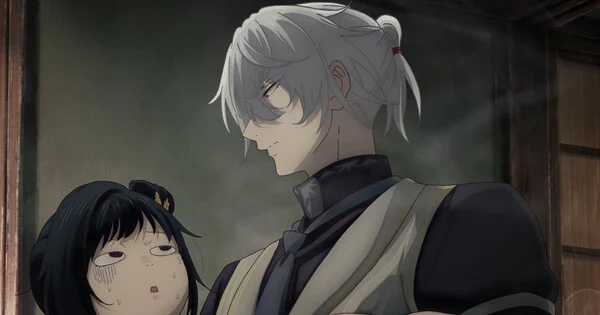
Sparks of Tomorrow reaches a major thematic crossroads in Episode 4, pairing Kyoto Animation’s expressive visuals with a storyline about grief, family, and the invention of the telephone. The anime’s latest chapter is important for webtoon and digital-comics fans because it shows how a visually ambitious serialized story can still stumble when its emotional ideas do not match the consequences of its characters’ actions.
Officially titled Nijuuseiki Denki Mokuroku: Eureka・Evrika in Japan, Sparks of Tomorrow is based on Hiro Yuki’s light novel and produced by Kyoto Animation. The series is streaming worldwide on Netflix, following Kihachi and Inako as they pursue the mysterious 20th Century Electrical Catalog in an alternate early-20th-century Kyoto where steam technology developed instead of electricity.
Episode 4 Finds Its Strongest Material in Inako’s Grief
The episode opens with a flashback that deepens Inako’s relationship with her late mother. A new opening-animation sequence reinforces that bond, giving the installment an immediate emotional focus before the plot returns to the larger struggle over the “real” Electric Catalog.
That structure is promising. Inako’s grief is not presented as an isolated character trait but as part of the history that shapes her choices, her faith, and her connection to other people. The episode understands that mourning can create recognition between strangers, especially when someone is willing to acknowledge another person’s pain without trying to solve it immediately.
Unfortunately, Sparks of Tomorrow moves away from that more thoughtful idea once Kihachi’s group encounters a traditional textiles shop in crisis. The shop’s heir is reduced to repeating “Mommy” and “Daddy,” while his mother, devastated by the sudden death of her husband, refuses to leave her room. The situation has the makings of a quiet, character-driven story about a family struggling to continue its work after a devastating loss.
The Telephone Plot Creates an Uncomfortable Ethical Problem
Spoiler warning for Episode 4: Inako learns that the proprietress has a connection to her own experience with bereavement. By speaking honestly about losing someone she loved, Inako succeeds in getting the woman to leave her room. That moment is arguably the episode’s most convincing emotional breakthrough because it comes from empathy rather than invention.
Then the story complicates that progress. Inako asks Kihachi to create a device that will let the woman speak with her dead husband. Kihachi develops a rudimentary telephone, and the woman’s son pretends to be his late father on the other end of the line. The conversation encourages the proprietress to reopen the shop.
The problem is not simply that the characters use a deception. The episode frames the deception as an uncomplicated act of kindness, even though the woman is being encouraged to believe that she has genuinely communicated with the dead. That choice gives the conclusion a troubling moral weight, particularly because the story has already shown that sincere human connection was enough to reach her.
As Anime News Network’s review argues, the episode comes dangerously close to presenting exploitative chicanery as a practical solution to grief. In the real world, fraudulent mediums and similar schemes have profited from bereaved families by promising access to deceased loved ones. A story does not need to avoid difficult ideas about spiritual belief, but it does need to recognize when hope can become manipulation.
A Better Use for Kihachi’s Invention Was Within Reach
The episode could have preserved the telephone’s importance without relying on false hope. Rather than allowing the son to impersonate his father, the device could have enabled a more transparent conversation between family members separated by circumstance. The proprietress might have spoken with her son about the shop, her husband, and the fear of carrying on without him.
That version would still connect technological progress to emotional recovery, but it would make the invention a tool for community rather than a prop in an elaborate lie. It would also better support the series’ stated interest in regeneration: rebuilding does not mean pretending that loss has been reversed. It means finding a way to live with the absence while accepting help from the people who remain.
This distinction matters in serialized storytelling. A weekly episode often has limited time to establish a moral premise, develop a crisis, and deliver a satisfying resolution. When the resolution depends on deception, the surrounding narrative needs to acknowledge the danger. Episode 4 largely skips that examination, making the conclusion feel less like a complicated act of compassion and more like a convenient way to restore productivity.
Kyoto Animation’s Visuals Still Carry the Episode
Even with its thematic missteps, the episode remains visually striking. Kyoto Animation continues to use expressive character acting, atmospheric backgrounds, and inventive mechanical imagery to give the alternate-history setting a distinct identity. The contrast between smoke-filled streets, traditional textile spaces, and the fragile early telephone helps the world feel shaped by both industrial ambition and personal memory.
The visual presentation is especially effective when the episode focuses on quiet emotional details: Inako’s memories of her mother, the stillness surrounding the proprietress, and the nervous physicality of characters attempting to communicate across grief. These scenes suggest a more considered drama than the plot ultimately delivers.
For viewers who enjoy webtoons and manhwa, the appeal is easy to recognize. Although Sparks of Tomorrow is an anime rather than a vertical-scroll comic, its serialized rhythm depends on strong visual hooks, recurring inventions, emotional reveals, and a steadily expanding ensemble. Readers who value expressive art and character-centered fantasy may find plenty to appreciate, while those who prioritize careful ethical storytelling may come away frustrated by Episode 4’s central decision.
Should You Keep Watching?
Episode 4 is best approached as a flawed but revealing chapter. It strengthens Inako’s emotional background, expands the series’ relationship with grief, and introduces a significant invention, yet it also exposes a gap between the show’s apparent compassion and the consequences of its storytelling choices.
Fans of Kyoto Animation’s visual craft, alternate-history settings, and emotionally charged adventure will likely still find reasons to continue. However, the episode raises a serious question about what kind of progress Sparks of Tomorrow wants to celebrate. If the series can return to the genuine empathy found in Inako’s conversation and treat grief as something communities endure together, its larger themes may yet recover their spark.
Sources
- animenewsnetwork.com
- denkimokuroku.jp
- netflix.com