

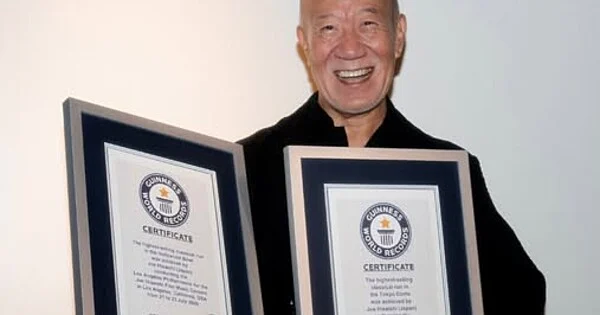
Joe Hisaishi, the composer whose music has helped define Studio Ghibli’s emotional vocabulary, has received three Guinness World Records. The honors recognize the extraordinary ticket-selling performance of his concert runs at Tokyo Dome, the Hollywood Bowl, and New York City’s Radio City Music Hall—an achievement that matters well beyond classical-music circles because it reflects the enormous global reach of anime film music.
For webtoon and manhwa readers accustomed to seeing comics expand into anime, dramas, games, and live events, Hisaishi’s milestone offers another reminder that a story’s world does not end on the page or screen. In the case of Hayao Miyazaki’s films, the music has become almost as recognizable as the animation itself.
Three Records Across Three Major Venues
Hisaishi announced the Guinness World Records on Tuesday, according to reporting from Anime News Network. His honors are for the “most tickets sold by a classical composer at the Tokyo Dome (single run),” the “highest-selling classical run in the Hollywood Bowl,” and the “longest residency by a classical composer at Radio City Music Hall (single run).”
The records cover three of the most prominent concert venues associated with his recent international performances. Hisaishi’s official concert schedule lists a Los Angeles engagement at the Hollywood Bowl from July 21 to July 23, 2026, followed by a seven-night New York residency at Radio City Music Hall from August 11 to August 17.
That scale is significant because these are not simply concerts built around a famous composer’s name. Hisaishi’s programs draw heavily from film music, including scores connected to Studio Ghibli, making them crossover events for animation fans, soundtrack collectors, classical audiences, and families who may not normally attend orchestral performances.
The Sound of Studio Ghibli
Hisaishi has composed the scores for Hayao Miyazaki’s Studio Ghibli feature films from Nausicaä of the Valley of the Wind in 1984 onward. That long-running creative partnership includes some of the most recognizable music in animated cinema, with his compositions helping shape the atmosphere, pacing, and emotional identity of films such as My Neighbor Totoro, Princess Mononoke, Spirited Away, and Howl’s Moving Castle.
For readers who follow webtoon adaptations, Hisaishi’s work is a useful example of how music can function as narrative architecture. A memorable theme can signal a character’s inner life, turn a location into an emotional landmark, or make a quiet scene feel larger than its dialogue. In a vertical-scroll comic, that effect might be created through panel spacing, color, or a carefully timed reveal; in animation, Hisaishi often achieves it through melody and orchestration.
His association with Ghibli is extensive but not limited to Miyazaki. Hisaishi also composed the score for Isao Takahata’s 2013 film The Tale of the Princess Kaguya, another work in which music plays a central role in establishing mood and emotional movement.
From Screen Scores to Live Performance
The Guinness recognition also highlights the unusual trajectory of Hisaishi’s film music. Scores originally written to support animated images now command large-scale live productions, where audiences gather to hear the music as the main event rather than as part of a movie screening.
That transition changes how the material is experienced. In a film, a cue is inseparable from editing, character performance, color, and movement. In concert, the orchestra brings those emotional patterns forward on their own, allowing listeners to focus on the structure of the music and the way familiar themes develop across a full performance.
Hisaishi’s 2026 schedule reflects that concert-focused approach. The Radio City Music Hall performances were presented with the Orchestra of St. Luke’s, conducted by Hisaishi, while the Hollywood Bowl concerts involved the Los Angeles Philharmonic. The venues themselves add another layer of spectacle, turning the music into a shared cultural event rather than a private soundtrack experience.
A Career Already Recognized in Japan
The three Guinness World Records add to Hisaishi’s long list of professional distinctions. In November 2023, the Japanese government honored him with the Order of the Rising Sun, Gold Rays with Rosette, recognizing his significant contributions to Japan.
His work has also extended beyond composing film scores. Hisaishi served as executive producer for the stage version of My Neighbor Totoro at London’s Barbican Centre in 2022, helping demonstrate how Ghibli’s storytelling can be reimagined in a live theatrical setting.
That broader creative range makes the new records feel especially fitting. Hisaishi is not being recognized only for writing beloved melodies, but for helping carry the emotional language of Japanese animation into concert halls, theatrical spaces, and some of the world’s largest entertainment venues.
For fans of anime, webtoons, and other serialized visual storytelling, the achievement is a reminder that adaptation works in more than one direction. Stories can move from comics to screens, from screens to stages, and from film scenes into concert programs. Hisaishi’s music has made that journey repeatedly—and these three records show just how far that audience now reaches.
Sources
- animenewsnetwork.com
- joehisaishi.com
- msg.com