
Apocalypse’s Four Horsemen are among the most visually distinctive concepts in X-Men history, combining corrupted hero designs, dramatic power upgrades, and some of Marvel’s strongest tragedy-driven storytelling. For collectors, they also represent an unusually deep display theme: the same character can appear as a classic team member, a transformed Horseman, and—depending on the era—several different versions of both.
With Apocalypse returning to the spotlight through X-Men ’97 Season 2, the timing is ideal to revisit seven X-Men heroes whose time as Horsemen left a lasting mark on the franchise. Some were manipulated, some volunteered, and others were simply exploited at their most vulnerable. Together, they form one of the most compelling villainous sub-collections in the broader X-Men lineup.
Gambit: Death With a Poisoned Hand
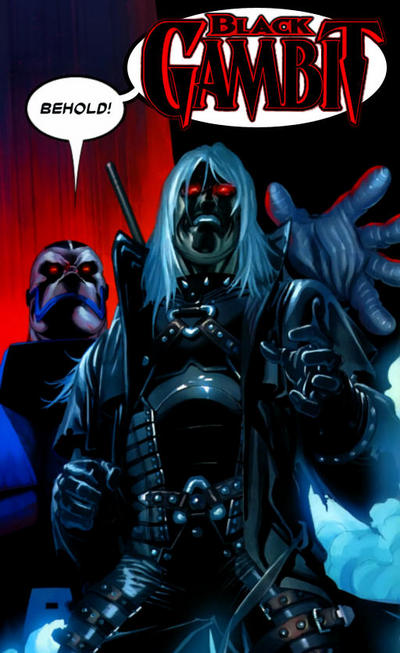
Gambit’s transformation into Death remains one of the most collector-friendly Horseman concepts because it radically changes nearly every element of his usual presentation. The familiar pink-and-black costume is replaced by a darker, more sinister design, while his skin turns black and his hair becomes stark white. The result is instantly recognizable as Gambit, but with the visual language of Apocalypse layered over the character.
In the comics, Remy LeBeau willingly offered himself to Apocalypse because he believed the ancient mutant could help save mutantkind after the devastation of House of M. Apocalypse’s process did far more than enhance Gambit’s abilities. It corrupted his personality, gave him lethal new applications of his kinetic powers, and made his playing cards feel less like props and more like weapons of biological destruction.
For collectors, Death Gambit works especially well as a contrast piece beside classic Gambit, Rogue, or other members of the 2000s X-Men. The design also has the kind of sharp silhouette that translates well to action figures and statues, particularly when the pose emphasizes the extended coat, white hair, and charged cards.
Wolverine: Apocalypse’s Most Personal Failure
Wolverine’s relationship with the Death identity is one of the most important threads in Apocalypse’s history. In the late 1990s, Apocalypse attempted to turn Logan into his Horseman of Death, promising to restore the adamantium skeleton that had been removed from him. The process was interrupted, but the story still established how effectively Apocalypse could weaponize Wolverine’s pain, rage, and sense of sacrifice.
Logan’s near-transformation is particularly significant because it treats the adamantium skeleton as more than a visual trademark. Its restoration becomes part of Apocalypse’s temptation, offering Wolverine the return of something he had lost while threatening to erase the person beneath it. The subsequent revelations involving a Skrull impersonator only made the storyline more psychologically complicated for the X-Men.
From a display perspective, a Horseman-era Wolverine is a natural companion to Archangel and Apocalypse. It also gives collectors a chance to build a darker Wolverine shelf without relying exclusively on alternate-universe costumes or weapon variants. Compared with many Horseman designs, the appeal here is less about an extreme costume overhaul and more about the character’s corrupted status.
Angel and Archangel: The Blueprint for the Modern Horsemen
Warren Worthington III was the first modern X-Man to become one of Apocalypse’s signature Horsemen. After losing the use of his wings, Angel was offered a restoration that promised not only recovery but an evolution into something far more dangerous. He emerged as Archangel, Death, with metallic wings, razor-edged feathers, and a new identity that would haunt him for decades.
Archangel remains the definitive Horseman design. The metallic wings provide enormous visual presence, while the contrast between Warren’s familiar heroic image and his new weaponized form gives the character unusual emotional weight. This is one of those transformations that works equally well as a comic-book costume, a premium statue centerpiece, or a highly articulated action figure with broad wing engineering.
Collectors should also view Archangel as the anchor for a larger Horsemen display. His history connects directly to Psylocke, Wolverine, Apocalypse, the Apocalypse Twins, and the broader evolution of the Horseman concept. If a collection includes only one Apocalypse-related hero, Archangel is arguably the most essential choice.
Polaris: Pestilence After M-Day
Polaris became Pestilence after losing her mutant powers in the aftermath of Scarlet Witch’s reality-altering actions. Apocalypse exploited that moment of vulnerability, restoring Lorna’s abilities while reshaping her into one of his most unsettling servants. Her Pestilence design combines medieval torture imagery with a biological-threat aesthetic, creating a look that is considerably more disturbing than a simple armor upgrade.
The character’s power set was also reinterpreted in a way that separated Pestilence from Polaris’s usual magnetic identity. Rather than focusing on metal manipulation, Pestilence could command diseases, turning the title into a literal expression of contagion and decay.
For collectors, Polaris is one of the more unusual members of the lineup. Her Horseman identity is less commonly represented than Archangel or Gambit, which can make her especially appealing to completionists. She also brings welcome variety to a display that might otherwise lean too heavily toward armored figures and winged characters.
Psylocke: A Dark Extension of the Archangel Story
Psylocke’s time as Death is inseparable from her relationship with Archangel. During the Uncanny X-Force era, Betsy Braddock tried to help Warren confront the psychological damage left by Apocalypse’s control. Instead, she became entangled in the same darkness, serving as another example of how Apocalypse’s influence could spread through personal connections as much as through physical transformation.
The appeal of Death Psylocke is obvious from a visual standpoint. The character already has one of the strongest silhouettes in X-Men collecting, and the Horseman treatment pushes that design toward a more aggressive, militaristic presentation. Psychic weapons, sharp armor lines, and a darker palette make her an effective companion piece for Archangel without simply duplicating his look.
She is also an important choice for collectors building an X-Force display rather than a traditional X-Men shelf. Death Psylocke connects the Horsemen mythology to one of Marvel’s more mature team eras, where moral compromises and psychological consequences were central to the storytelling.
Banshee: The Most Thematically Appropriate Death
Banshee’s appointment as Death has a pleasing mythological logic. In Irish folklore, a banshee is associated with death and its warning cries, making Sean Cassidy an immediately fitting choice for the title. His Horseman tenure came through the Apocalypse Twins, who assembled a team that included Daken, Grim Reaper, and Sentry.
Although Banshee’s Horseman appearance has not received the same level of mainstream attention as Archangel or Wolverine, it is a compelling deep-cut option. The character’s sonic powers already carry an aggressive visual identity, and a darker Death treatment offers manufacturers and customizers plenty of room to emphasize torn fabric, armored elements, and energy effects.
For experienced collectors, Banshee is the kind of inclusion that adds credibility to a display. He may not be the first figure casual fans expect to see, but his presence demonstrates that the collection reaches beyond the most familiar Apocalypse storylines.
Sunfire: Famine With a Firestorm
Sunfire became Famine after suffering serious injuries in battle, including the loss of his legs. Apocalypse offered to restore his strength, and Shiro Yoshida accepted the bargain. Like Gambit and Polaris, Sunfire was recruited during the post-House of M period when mutantkind was particularly vulnerable.
Thematically, Famine is an unusual assignment for a character whose powers are based on bio-atomic fire. That mismatch is part of the character’s appeal. Sunfire’s Horseman identity shows that Apocalypse is not always interested in creating elegant thematic pairings; sometimes the title is simply another layer of control imposed on a powerful mutant.
In a collection, Famine Sunfire adds color and energy to a lineup dominated by black armor, silver metal, and gothic detailing. He is also a strong choice for collectors who want to represent the full 2006 Horsemen roster alongside Gambit and Polaris.
Building a Horsemen Display
The strongest Apocalypse display does not need to include every character who has occupied a Horseman role. A focused arrangement featuring Apocalypse, Archangel, Death Gambit, Pestilence Polaris, Famine Sunfire, and Death Psylocke immediately communicates the breadth of the concept while maintaining a cohesive visual theme.
Collectors working in mixed scales should consider grouping by era rather than forcing every figure into a single lineup. Archangel and classic Apocalypse can serve as the central premium display, while Gambit, Sunfire, Polaris, and Psylocke can form a secondary comic-era shelf. Wolverine works well either way, linking the classic X-Men mythology to the darker Horseman stories that followed.
It is also worth remembering that the Horsemen are not limited to these seven heroes. Colossus has served as War in an alternate future, while characters such as Hulk, Spider-Man, and Deadpool have also occupied Horseman roles in various stories. That makes Apocalypse one of the rare Marvel villains capable of generating an entire alternate-costume collection across multiple teams and timelines.
Collector verdict: The Horsemen concept is best suited to collectors who enjoy character transformations, darker X-Men eras, and display themes built around narrative connections. Archangel is the essential centerpiece, but Death Gambit, Pestilence Polaris, Famine Sunfire, and Death Psylocke offer the visual variety needed to turn a single villain design into a genuinely distinctive shelf.
Sources
- sideshow.com
- marvel.com