
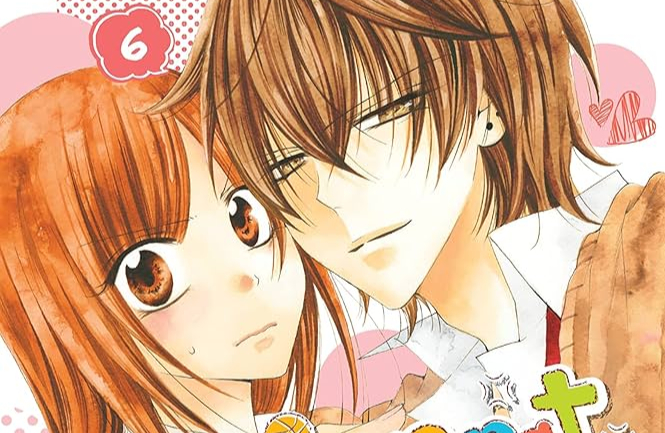
Cheeky Brat is a completed shoujo basketball romance by Mitsubachi Miyuki, originally published in Japan as なまいきざかり。 The series pairs a tightly wound basketball manager with the shameless underclassman who seems determined to crack her carefully controlled exterior. For romance readers who enjoy teasing, slow-burn chemistry, and a relationship that continues beyond high school, it offers a long-form alternative to the usual confession-and-finale structure.
The manga is complete in Japan at 23 volumes. Yen Press publishes the English edition under the title Cheeky Brat; Volume 16 was released on February 24, 2026, while Volume 17 is scheduled for October 27, 2026. The English release is categorized as older-teen romance and comedy, making the series easy to find for readers looking for a finished-length shoujo romance that still has additional translated volumes on the way.
A Straight-Faced Manager Meets Her Favorite Menace
Yuki Machida is a second-year high school student and the manager of her school’s basketball team. As the oldest sibling in a chaotic household, she has trained herself to remain calm, responsible, and as expressionless as possible. Yuki calls this state “normal,” but her composure becomes increasingly difficult to maintain after Shou Naruse joins the team.
Naruse is a first-year basketball player with a relaxed attitude, a sharp tongue, and an apparent talent for finding exactly the reaction Yuki does not want to show. His early behavior leans heavily into sexual humor and provocation, which may be off-putting for readers who prefer gentler romantic leads. However, the story gradually reveals that his teasing is tied to genuine interest, jealousy, and a surprising willingness to support Yuki when she is vulnerable.
The premise begins with Yuki nursing an unrequited crush on the team captain, Kido. After Kido gets a girlfriend, Naruse discovers Yuki’s feelings and begins pursuing her himself. From there, the series develops through awkward confessions, emotional resistance, misunderstandings, and the friction between Yuki’s strict ideals and Naruse’s insistence on being emotionally direct.
Why Yuki and Naruse’s Chemistry Works
The central relationship is the strongest reason to read Cheeky Brat. Yuki and Naruse are not simply opposites who argue until they fall in love. Both characters are relatively restrained in public, but their interactions expose the feelings they try to hide. Yuki’s deadpan disapproval gives the romance much of its comedic rhythm, while Naruse’s casual confidence becomes more endearing as his attachment to her becomes clearer.
Yuki is particularly appealing because romance does not erase her personality. She remains responsible, blunt, hardworking, and easily irritated even as she starts to understand her feelings. Rather than instantly becoming passive around a pushy love interest, she pushes back, questions Naruse’s behavior, and tries to preserve the principles that define her.
That resistance also creates room for character growth. Yuki’s “emotionless” persona gradually gives way to a more honest version of herself, while Naruse learns that wanting someone is not the same as always getting his way. Their development is not perfectly smooth, but the long serialization gives the relationship time to move from flirtation and tension into something more emotionally substantial.
The series also benefits from continuing beyond the high school setting. Much of the story is rooted in school life and basketball culture, but the couple eventually enters their college years. That additional time allows the manga to explore how the relationship changes when the characters face new responsibilities, different environments, and the challenges of growing up.
A Basketball Romance Rather Than a Sports Manga
Basketball is central to the characters’ lives, but Cheeky Brat is primarily a romance. The manga touches on training, teamwork, dedication, rivalry, and the pressure surrounding school competitions, yet it does not usually devote extended sequences to detailed play-by-play action.
Readers expecting a sports series with the competitive intensity of a dedicated basketball manga may find the games comparatively light. The sport works more effectively as a setting for character interaction: practices create opportunities for Yuki and Naruse to be around each other, team rivalries generate romantic tension, and basketball gives Naruse a meaningful arena in which to mature.
Visually, Mitsubachi Miyuki’s artwork blends a modern shoujo look with traces of older romance-manga styling. Naruse’s design in particular has a slightly classic feel, while expressive reactions and comedic timing help sell the couple’s banter. Some character faces occasionally drift toward the pointed-chin aesthetic associated with traditional shoujo art, but the overall presentation remains appealing and consistent.
Where the Series May Frustrate Readers
Content note: The manga includes references to adult magazines, sexual humor, mature material, censored nudity, and scenes that some readers may interpret as sexual assault or nonconsensual behavior.
The most significant concern is the way the series handles boundaries. Naruse’s early advances can be intrusive, and other male characters also engage in pushy behavior. The story often frames these moments as romantic comedy or dramatic tension, but readers who are especially sensitive to consent issues may find them uncomfortable rather than playful.
Love rivals become another recurring source of frustration. One rival in particular repeatedly pursues Yuki after she is already involved with Naruse and shows little respect for boundaries. These scenes can feel less like meaningful romantic conflict and more like interruptions to the central couple’s development. The main relationship is strong enough to carry the series, but the supporting romantic complications are not always equally compelling.
The romance also takes time to become official, with the main couple not fully getting together until around Volume 6. That makes the series a slow burn, although the manga continues to provide plenty of flirtation and emotional tension before the relationship changes. Readers who prefer a fast-moving romance may need patience, while fans of gradual emotional payoff will likely find the wait worthwhile.
Who Should Read Cheeky Brat?
Cheeky Brat is best suited to readers who enjoy bickering couples, teasing love interests, tsundere-adjacent heroines, yearning, and romance that continues after the initial confession. It is also a good choice for readers who like seeing a couple grow over many volumes rather than reaching their emotional endpoint as soon as they start dating.
The series is less suitable for readers seeking a consent-forward romance, a deeply tactical sports story, or a plot free of persistent love-rival drama. Even so, its central pairing has enough warmth, humor, and emotional progression to make the complete Japanese run appealing to dedicated shoujo fans.
Ultimately, Cheeky Brat succeeds because Yuki and Naruse remain entertaining together. Their relationship is messy, funny, occasionally frustrating, and increasingly affectionate as the story moves forward. For readers willing to work around its dated romantic-comedy conventions, Mitsubachi Miyuki’s manga offers a lively long-form romance with a distinctive basketball backdrop and a couple whose chemistry keeps the series moving.
Sources
- romancemangarecs.com
- yenpress.com
- hakusensha.co.jp