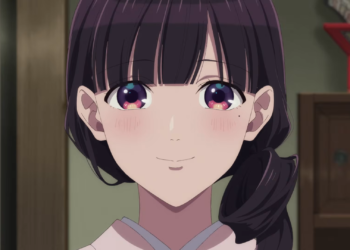


Kocha Agasawa’s You and I Are Polar Opposites turns the familiar “opposites attract” setup into something broader: a high-school romance manga where multiple couples learn how personality, insecurity, and past experience shape the way people connect. Originally serialized on Shueisha’s Shonen Jump+ and published in English by VIZ, the completed eight-volume series stands out less for elaborate romantic drama than for its careful attention to emotional growth.
At the center are Miyu Suzuki and Yusuke Tani, but the manga’s supporting relationships are just as important to its identity. Yamada and Nishi provide a particularly charming contrast, while Azuma and Taira offer a quieter, more complicated study of people learning to stop protecting themselves in unhealthy ways.
Yamada and Nishi Make the “Opposites Attract” Formula Feel Fresh
Yamada and Nishi could easily have become a collection of familiar character types. Yamada is energetic, direct, and cheerfully unfiltered, while Nishi is extremely shy and often struggles to communicate even through text. Yet the series avoids turning either character into a one-note joke.
Yamada’s goofy personality is especially refreshing because the manga does not rely on the usual shortcuts. He is not portrayed as obnoxious, perverted, or unintelligent simply because he is the comic-relief character. His straightforward approach to affection creates a lively contrast with Nishi’s hesitation, but his willingness to respect her feelings keeps their relationship from becoming frustrating.
Nishi, meanwhile, is allowed to be anxious without being treated as incompetent. Her progress comes gradually, helped by Honda’s not-so-gentle encouragement and Yamada’s remarkably nonjudgmental attitude. Rather than forcing Nishi into an abrupt personality change, the story shows her taking small risks and becoming more comfortable with her own feelings.
That balance is one of the manga’s major strengths. Yamada’s openness gives Nishi room to grow, while Nishi’s sincerity encourages Yamada to engage with romance more thoughtfully. The result is a relationship that feels cute without becoming weightless, and funny without making either character the target of the joke.
Other reviews have similarly highlighted the pair’s chemistry, particularly the contrast between Yamada’s easygoing confidence and Nishi’s slower, more anxious emotional rhythm. Their romance also develops at a different pace from Suzuki and Tani’s, helping the ensemble avoid the sense that every relationship is following the same blueprint (The Fandom Post).
Azuma and Taira Are the Series’ Most Complicated Pairing
If Yamada and Nishi represent an obvious personality contrast, Azuma and Taira embody a more internal version of the “polar opposites” idea. Their differences are not simply outgoing versus shy or cheerful versus stoic. They approach relationships from opposite directions, and both approaches have left them isolated.
Azuma has become accustomed to shallow friendships and unhealthy romantic experiences. She often accepts poor treatment as something unavoidable, failing to protect herself even when other people’s intentions are clearly harmful. That history gives her a cynical edge, but it also makes her more perceptive about the emotional problems affecting those around her.
Taira, on the other hand, protects himself by withdrawing. He is anxious about social hierarchies, quick to assume the worst, and deeply self-deprecating. Even when people show sincere interest in becoming his friends, he tends to retreat into his own thoughts before a genuine connection can develop.
Their dynamic works because neither character is presented as entirely innocent or entirely at fault. Taira has experienced bullying and social trauma, but he also recognizes that his fear and suspicion have prevented him from giving new relationships a fair chance. Azuma has been mistreated by others, yet she must also confront the ways she has allowed those patterns to continue.
In that sense, they become a source of safety for one another. Taira challenges Azuma to stop dismissing harmful behavior as inevitable, while Azuma’s kindness helps Taira recognize that not every interaction is a trap or a judgment. Their progress is subtle: sharing more time together, speaking more honestly, and making small efforts to participate in the lives of other people.
Recent commentary on the series has also emphasized that Azuma and Taira expand the manga beyond conventional young-love storytelling. Their relationship is about learning how to interpret other people more generously, but also about accepting responsibility for the walls they have built around themselves (Crunchyroll News).
A Romance Manga That Understands Friendship
One reason You and I Are Polar Opposites feels more substantial than a standard school rom-com is that it treats friendship as a meaningful emotional destination in its own right. The manga does not measure every relationship by whether it becomes officially romantic. Some connections are valuable because they help characters become healthier, more honest, or more willing to trust.
That approach is particularly important for Azuma and Taira. Their bond often feels more like a friendship than a conventional romance, and that ambiguity gives their scenes a different emotional texture from the more openly romantic pairings. Their relationship is built around mutual recognition before it is built around attraction.
Still, the manga’s handling of their future can be bittersweet for readers who wanted a clearly confirmed romantic payoff. The story gives Azuma and Taira meaningful development and shows that their bond remains strong beyond high school, but it leaves enough room for interpretation that some readers may feel the romantic thread is unresolved.
Spoiler warning: The extra story confirms that Azuma and Taira remain close after graduation, but it does not remove every question about whether their connection has become romantic. That open-ended quality is consistent with the series’ interest in emotional progress over neat labels, though readers invested in the pairing may understandably want a more direct confirmation.
Why the Ensemble Cast Carries the Manga
Agasawa’s series succeeds because its couples are not interchangeable. Suzuki and Tani explore the tension between social anxiety and personal honesty. Yamada and Nishi turn outgoing confidence and shyness into a gentle, character-driven comedy. Azuma and Taira focus on self-protection, past hurt, and the difficult work of allowing other people to matter.
That variety also gives the manga a strong recommendation profile. Readers looking for heavy melodrama may find the story too gentle, but fans of character-focused romance, low-stakes humor, and gradual emotional development should find plenty to appreciate. The English edition is available from VIZ, which identifies Agasawa as both writer and artist and lists the series’ final volume as Volume 8.
Ultimately, You and I Are Polar Opposites is at its best when it treats romance as one part of growing up rather than the finish line. Its most memorable relationships are not defined only by who ends up together, but by how each character learns to communicate, set boundaries, accept kindness, and stop assuming that closeness will inevitably end badly.
Sources
- romancemangarecs.com
- viz.com
- shonenjumpplus.com
- crunchyroll.com
- fandompost.com
- anime-planet.com