
Chainsmoker Cat, the dark comedy anime about nicotine-dependent cat girls, has reportedly been removed from several streaming services in Hong Kong after authorities identified the series as potentially violating the city’s rules on smoking-product advertisements. The restriction appears limited to Hong Kong, creating a notable clash between the adaptation’s deliberately unglamorous depiction of addiction and the way smoking imagery can be regulated in digital entertainment.
The anime adapts Chainsmoker Cat, the manga by NyanNyanFactory, also known in Japan as Yani Neko. Directed by Taku Kimura and animated by Bibury Animation Studios, the series has attracted attention for turning cigarettes, withdrawal, irresponsible behavior, and other forms of self-destruction into the raw material of an aggressively strange comedy.
Why Chainsmoker Cat Was Removed in Hong Kong
Animation Crazy, the official streaming service operated by Taiwanese internet forum Bahamut, announced that Chainsmoker Cat had been suspended in Hong Kong. According to a statement shared by the Animation Crazy Hong Kong page, the platform received a letter from Hong Kong’s Department of Health alleging that the anime violated Sections 13B and 14 of the city’s Smoking (Public Health) Ordinance concerning the online dissemination of “advertisements for smoking products.”
Animation Crazy apologized for the interruption and advised Hong Kong viewers to seek refunds through the available channels if they believed their consumer rights had been affected. The platform’s Taiwan service continued to list the anime, indicating that the removal was regional rather than a worldwide withdrawal.
The reported penalty attached to a Section 13B violation can reach a maximum fine of 50,000 Hong Kong dollars. In the case of a continuing offense, the ordinance may also impose an additional penalty of 1,500 Hong Kong dollars for each day the alleged violation continues.
That distinction matters for streaming audiences. The anime itself has not been described as globally canceled, and the action does not appear to affect every licensed platform. The series reportedly remains available on Netflix, while it also appears to have disappeared from the Ani-One Asia YouTube channel in Hong Kong. Availability can differ by territory, so viewers should check their local service listings rather than assume that a regional removal applies everywhere.
A Comedy Built Around Addiction, Not Tobacco Glamour
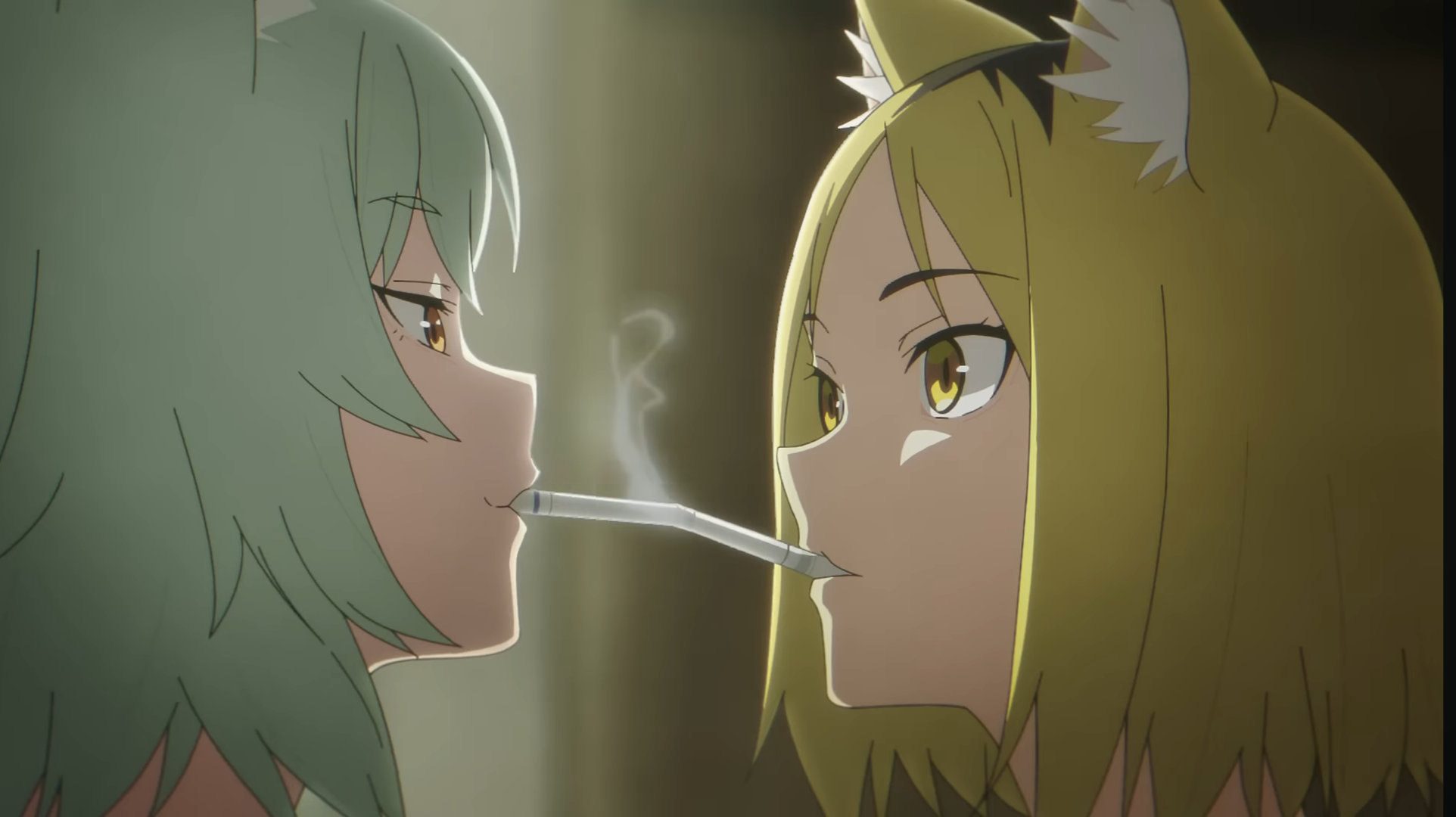
At the center of Chainsmoker Cat is a cast of anthropomorphic cat girls whose lives are shaped by cigarettes, alcohol, illegal drugs, financial problems, and everyday dysfunction. The humor is intentionally abrasive. Characters smoke several cigarettes at once, struggle with withdrawal, and repeatedly make decisions that are terrible for their health, relationships, and ability to function.
Those images are certainly conspicuous, but the series’ approach is notably different from a conventional tobacco advertisement. Smoking is not presented as elegant, rebellious, or aspirational. Instead, it is tied to dependency, mess, irritability, poor judgment, and the inability to break destructive routines. The joke is often that the characters are not cool smokers at all; they are exhausted, broke, unpleasant, and trapped by their habits.
That tension sits at the heart of the Hong Kong controversy. A work can depict smoking critically while still featuring repeated, visually memorable images of cigarettes. From a regulatory perspective, the distinction between condemnation and promotion may not be straightforward when the material is distributed online and presented through an entertaining animated format.
For viewers, the dispute also raises a broader question about how authorities evaluate fictional depictions of harmful behavior. If a story shows addiction as ugly and damaging, should it be treated differently from content that celebrates smoking? The Hong Kong action does not settle that debate, but it shows how quickly dark comedy can become a regulatory issue when its central visual motif is a controlled product.
The Manga and Anime’s Unusual Position
Chainsmoker Cat began as a manga written and illustrated by NyanNyanFactory and published in Kodansha’s Weekly Young Magazine. The English edition is licensed by Seven Seas Entertainment, giving international readers a legal route to the original material alongside the anime adaptation.
The manga’s premise is intentionally narrow but flexible: follow characters whose attempts to manage ordinary life are repeatedly derailed by cigarettes, chemical dependency, money troubles, and chaotic personal choices. That setup allows the series to work as a gag comedy while also exposing the less amusing mechanics of addiction. The characters’ habits are not isolated quirks; they shape their homes, employment prospects, friendships, and family relationships.
The anime is directed by Taku Kimura at Bibury Animation Studios. The adaptation’s production gives the manga’s visual jokes a more immediate rhythm, particularly when cigarette use, physical discomfort, and sudden behavioral collapse become animated actions rather than still-panel punchlines.
That transition is part of what makes the controversy especially striking. Manga readers can move through a page at their own pace, while animation repeats smoking imagery through timing, motion, sound, and performance. Even when the underlying joke remains critical, the adaptation may make the behavior more vivid and more difficult for regulators to treat as simply incidental background detail.
Japan’s Debate and the Series’ Growing Visibility
In Japan, Chainsmoker Cat was reportedly discussed during a recent session of the Broadcast and Human Rights/Other Related Rights Organization, commonly known as BPO. The anime was not named directly in the session, but the discussion was widely believed to concern the series. Critics reportedly objected to its depictions of smoking and illegal drugs, while the committee member responsible for the matter considered the work to fall within the bounds of permissible freedom of expression.
The contrasting responses illustrate how differently the same material can be interpreted. One reading sees a risky accumulation of drug imagery. Another sees a deliberately unpleasant satire of dependency that would lose much of its point if the characters were cleaned up or made more respectable.
At the same time, the manga has benefited from the attention surrounding the anime. Every volume was reportedly scheduled for reprinting after sales increased following the adaptation’s positive reception. That development suggests the Hong Kong removal has arrived during a period of heightened visibility for the franchise rather than in isolation.
For webtoon and digital-comics readers accustomed to regional licensing differences, Chainsmoker Cat is another reminder that adaptation availability is shaped by more than production schedules and platform deals. Local law, content standards, and the interpretation of fictional imagery can determine where a series appears—and where it suddenly vanishes.
For now, the reported suspension appears confined to Hong Kong services, while the anime and manga remain part of the wider international conversation. Whether viewers see Chainsmoker Cat as sharp anti-smoking satire, reckless provocation, or simply an unusually filthy comedy may depend on where they draw the line between depicting harmful behavior and advertising it.
Sources
- animecorner.me