
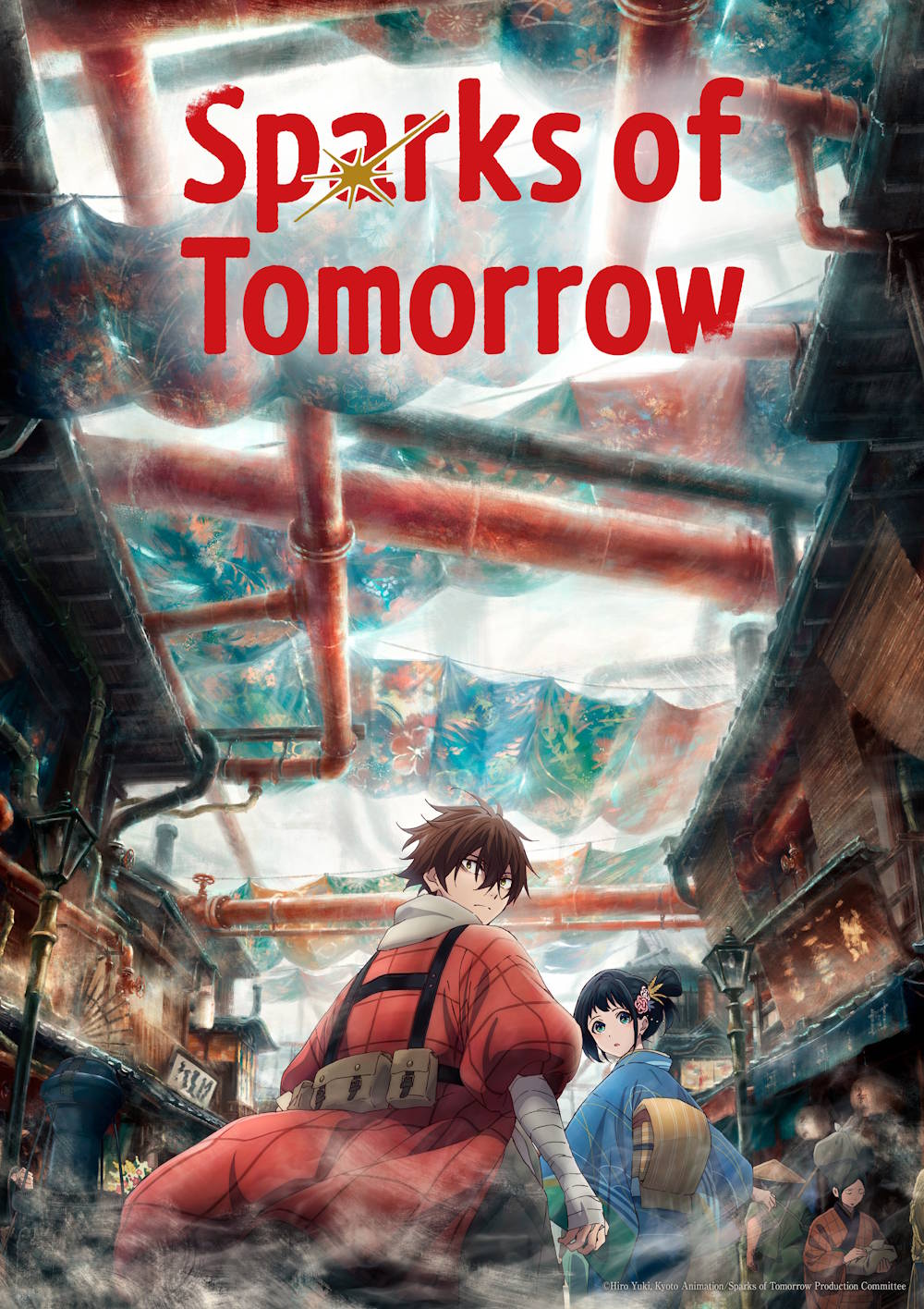
Kyoto Animation’s new TV anime Sparks of Tomorrow has arrived on Netflix, bringing viewers into an alternate early-20th-century Kyoto where steam power dominates and electricity remains an almost impossible dream. Ahead of the series’ release, director Minoru Ota spoke about the project’s unusual setting, the mysterious 20th Century Electrical Catalog, and the challenge of moving from animator to series director.
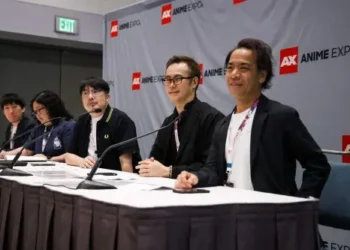
The interview took place at the world premiere hosted by Anime Limited and MCM Comic Con London. Ota attended the event alongside Kyoto Animation producer Ryona Kuyama, offering a behind-the-scenes look at one of the studio’s most distinctive recent productions.
Sparks of Tomorrow premiered on Netflix on July 5, 2026. The series is based on Hiro Yuki’s novel 20 Seiki Denki Mokuroku, published by Kyoto Animation’s KA Esuma Bunko imprint, and is being directed by Ota in his series directorial debut.
A Kyoto Where Electricity Never Took Over
The anime imagines a version of Kyoto shaped by advanced steam technology rather than electrical power. That premise gives the show a steampunk flavor, but Ota explained that the aesthetic was never intended to overwhelm the characters or the drama.
Instead of filling every scene with enormous industrial structures and pipes stretching into the sky, the production team focused on making the world feel lived in. The inventions created by protagonist Kihachi are ordinary to modern audiences—light bulbs, for example—but become extraordinary when placed in a society that has never embraced electricity.
That meant the design team had to think carefully about how familiar objects would look and function in this alternate setting. Ota said the challenge was not simply placing everyday inventions into a steampunk world, but deciding how those inventions would naturally belong there.
The director also pointed out that steam technology could theoretically support more modern conveniences than viewers might expect. Vacuum cleaners, refrigerators, air conditioning, and similar devices could all exist in a highly developed steam-powered society. The major loss, in his view, would be long-distance communication: Ota said he would miss phones, while also admitting that an air purifier would be useful in Kyoto’s smoke-filled streets.
The Catalog That Connects the Characters
At the center of the story is the 20th Century Electrical Catalog. While the catalog contains secrets, Ota emphasized that its most important function is bringing the main characters together.
Netflix describes the story as following a boy and a girl whose dreams are pulled back into focus when the catalog reappears. Kihachi Sakamoto has been affected by the loss of his older brother and the collapse of their shared vision of an “Age of Electricity.” He eventually crosses paths with Inako Momokawa, a deeply devout girl who keeps her own hopes and regrets hidden.
Their search for the catalog places them in opposition to Yosuke Mizoe, the heir to a powerful steam conglomerate. The mystery surrounding the object is therefore tied not only to technology, but also to grief, ambition, and the possibility of rebuilding a future that once seemed lost.
Ota described the series as fresh in its visuals, characters, and storytelling, while warning viewers that it is designed to keep changing direction. His message to new audiences was simple: try to predict what will happen next, then see whether the story proves you right.
From Animator to Series Director
For Ota, the production represented a major shift in responsibility. He began his career as an animator and has previously worked as a musical-instrument animation director and prop designer. Those experiences helped him develop the close attention to detail needed for Sparks of Tomorrow, particularly in the characters’ performances, the world-building, and the small visual choices that make the setting convincing.
However, becoming a series director meant communicating with far more people than the artists working at their desks. Ota said he was comfortable speaking with animators because he understood their creative process, but found it more difficult to explain ideas to producers, promoters, and other members of the wider production team.
His approach often relies on feelings and intuition rather than theory, which created a new challenge as he learned to communicate across the business and production sides of the anime industry. That broader involvement was demanding, but Ota also found it motivating and said he was able to use what he learned in the series itself.
He also praised the impact of the background art, suggesting that the visual environments are a major part of what makes the anime stand out. The production’s balance between detailed invention design and character-focused storytelling will be worth keeping an eye on as the story moves beyond its opening episodes.
Ota teased that the prop designs become even more imaginative from episode 3 onward, with oriental and fairy-tale influences joining the series’ mechanical ideas. For viewers discovering Sparks of Tomorrow on Netflix, the biggest surprise may be how far the show expands its visual language once its alternate Kyoto has been established.
With its smoke-covered setting, mysterious catalog, and Kyoto Animation production, Sparks of Tomorrow is positioning itself as a story about invention, loss, and starting again. The early episodes introduce the rules of its world, but Ota’s comments suggest that the series’ most striking ideas are still to come.
Sources
otakunews.com
netflix.com
media.netflix.com
kyotoanimation.co.jp
crunchyroll.com