
Kaiju Girl Caramelise takes the familiar awkwardness of teenage romance and gives it a spectacularly literal consequence: when Kuroe Akaishi’s emotions become too intense, she transforms into a Godzilla-like kaiju. The anime adaptation of Spica Aoki’s manga has arrived on Crunchyroll with a premise that sounds like a gag but quickly reveals a thoughtful story about body image, social pressure, and the fear of being seen.
Based on the manga serialized in KADOKAWA’s Monthly Comic Alive, the television adaptation combines romantic comedy, science fiction, supernatural drama, and kaiju spectacle. Its first three episodes establish a series that is funny and visually distinctive, but also considerably more emotionally complicated than its title may suggest.
A Romance Where Every Crush Could Cause a Catastrophe
Kuroe is a withdrawn high-school student who has spent much of her life trying to avoid attention. She is uncomfortable with her appearance, distrustful of her classmates, and deeply aware of the social rules she cannot seem to follow. Her situation becomes impossible to ignore after she develops feelings for Arata Minami, one of the most popular boys at school.
The central joke is also the show’s most effective storytelling device: Kuroe’s romantic feelings trigger a transformation into a giant monster. A blush, a rush of excitement, or an overwhelming emotional response can push her closer to becoming a kaiju, turning the ordinary hazards of teenage courtship into a potential urban disaster.
That premise gives Kaiju Girl Caramelise an immediate comedic hook, but the writing does not treat Kuroe’s anxiety as a disposable punchline. The series understands that embarrassment, self-consciousness, and fear of rejection can feel physically enormous to a teenager. Kuroe’s monstrous form externalizes those emotions without reducing her to them.
Kuroe and Minami Make the Emotional Stakes Work
The early episodes are built around romantic miscommunication, but the relationship between Kuroe and Minami is more balanced than the basic “awkward girl meets popular boy” setup might suggest. Kuroe initially assumes that Minami is confident, socially secure, and untouched by the insecurities that dominate her own life. The story gradually complicates that impression.
Minami has his own anxieties and private discomforts, making him less a perfect romantic ideal than another teenager trying to survive school without exposing too much of himself. Their connection works because both characters are misreading one another while quietly recognizing familiar vulnerabilities.
The third episode, in particular, highlights how quickly hurt feelings can grow when neither person knows how to communicate honestly. Kuroe’s behavior is understandable from her perspective, while Minami’s reaction remains sympathetic even when he does not know the full story. That emotional duality gives the romance more weight than a sequence of predictable pratfalls.
Yuniko Ayana, known for her work on the BanG Dream! franchise, serves as series composer. The fit is notable: the show’s strongest dramatic scenes depend on teenagers making messy decisions for emotionally understandable reasons. The result is a romance that can be silly one moment and surprisingly painful the next.
The Kaiju Design Turns Insecurity Into Spectacle
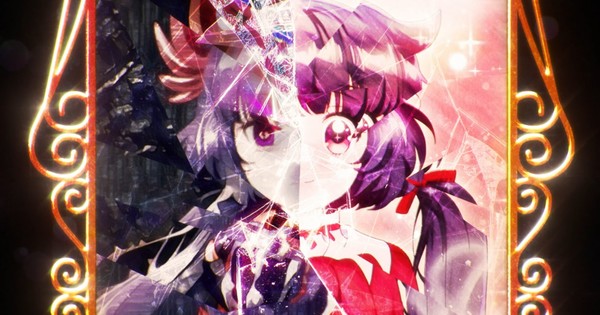
Visually, the anime embraces the contrast between Kuroe’s small, guarded human form and her enormous kaiju body. Her human design already hints at the creature within her, from the angular shape of her hair to the horn-like silhouettes created by her twin-tails. In kaiju form, those ideas expand into claws, scales, wings, and a distinctly Godzilla-inspired profile.
The design’s most memorable detail is the contrast between destructive monster imagery and overtly romantic motifs. Heart shapes appear in Kuroe’s eyes and on her wings, producing a form that is both intimidating and unmistakably tied to shoujo romance aesthetics. The visual gag is deliberately audacious, but it also communicates the story’s central contradiction: Kuroe’s feelings are tender, frightening, embarrassing, and powerful all at once.
The anime’s violet-heavy palette further reinforces Kuroe’s perspective. Her world often feels muted or hostile when she is overwhelmed by self-loathing, while emotional breakthroughs bring stronger color and visual intensity. One early review also noted the production’s use of grayscale and color to reflect Kuroe’s changing emotional state, an approach that helps the transformation sequences feel like character moments rather than simple effects showcases (Kaiju United).
The adaptation also benefits from expressive reaction shots. Kuroe’s shocked faces and panicked physical comedy keep the series from becoming too solemn, while the animation allows her human awkwardness to remain just as visually important as her giant-monster form.
More Than a Monster Metaphor
At its most compelling, Kaiju Girl Caramelise uses monstrosity as a metaphor for social alienation. Kuroe is not merely afraid of transforming; she is afraid that other people already see her as strange, unpleasant, or unacceptable. The judgment surrounding her becomes part of the force that drives her further away from everyone else.
That theme gives the series particular resonance for readers who have experienced body dysmorphia, gender dysphoria, bullying, or the pressure to perform a socially approved version of femininity. The story repeatedly connects Kuroe’s physical discomfort with the broader demands placed on girls to look, behave, and express emotion in supposedly correct ways.
The symbolism can also be read through a transgender lens, especially in Kuroe’s alienation from her body, her desire to hide, and her fear of being identified as something other than what society expects. That interpretation is an editorial reading rather than an explicitly confirmed statement about the character, but it helps explain why the premise has connected so strongly with some viewers.
The show’s sympathy is not limited to Kuroe. Minami’s insecurities demonstrate that social pressure affects boys as well, even when it takes a different form. The series suggests that the “popular boy” and the “weird girl” are not opposites so much as teenagers responding to the same impossible expectations from different positions.
Why the Anime Is Worth Watching
Kaiju Girl Caramelise is a strong recommendation for viewers who enjoy romance with an unusual supernatural mechanism, character-driven comedy, and stories about people learning to live in bodies they do not fully understand. It should also appeal to kaiju fans who are open to a quieter, more emotional interpretation of monster fiction.
The supporting cast adds to the series’ appeal. Kuroe’s archaeologist mother, Rinko, brings an energetic blend of eccentricity and authority, while Manatsu’s enthusiastic fascination with kaiju offers a funny inversion of the usual monster-girl dynamic. Kotono Mitsuishi’s casting as Rinko adds extra appeal for anime viewers familiar with her work in Sailor Moon and Neon Genesis Evangelion.
Crunchyroll is streaming the anime with subtitles, and its English dub began on July 16, 2026. The official cast includes Hikari Senga as Kuroe, Daishi Kajita as Arata, Akira Sekine as Manatsu, and Kotono Mitsuishi as Rinko; the English dub features Nia Celeste as Kuroe and Jacob Hopkins as Arata (Crunchyroll; Official Anime Website).
The first three episodes make a convincing case for the adaptation. Beneath the giant claws and city-leveling imagery is a warm, uncomfortable, frequently hilarious romance about people who believe they are too strange to be loved. Kuroe may fear that her feelings will destroy everything around her, but the series’ real strength comes from showing that vulnerability can also become the beginning of connection.
Sources
- animenewsnetwork.com
- crunchyroll.com
- otomekaiju.com
- kaijuunited.com
- butwhytho.net