
After a fire kills his parents and destroys a nearby welfare facility, young carpenter Shigeji inherits a struggling family construction business, a mountain of debt, and an unexpected responsibility for a group of displaced children. Abrams’ Kana imprint brings Minetaro Mochizuki’s Chiisakobee Volume 1 to English readers on August 11, 2026, offering a manga that finds drama not in spectacle, but in the difficult, often unglamorous work of rebuilding a life.
That makes Chiisakobee an unusual recommendation for readers accustomed to high-concept manga, superhero comics, or action-driven graphic novels. Its central conflict is practical and immediate: Shigeji must secure new construction jobs, purchase materials, pay workers, and somehow keep the family business alive while refusing financial charity. Yet the book’s real subject is recovery after tragedy—and the complicated ways people accept, reject, or quietly provide help.
A story about rebuilding more than a business
Shigeji’s problems are severe, but the manga does not present them as a conventional business thriller. The construction work gives the story a tangible framework, allowing Mochizuki to explore debt, labor, responsibility, and pride without turning the book into a procedural account of running a company.
Shigeji’s refusal to ask for assistance extends beyond professional dealings. He is equally resistant to accepting help inside his own home, where his childhood friend Ritsu has taken on the role of housekeeper. Ritsu, in turn, arrives with a group of children from the destroyed welfare facility and insists that they remain under Shigeji’s roof rather than enter the child-services system.
The arrangement is difficult, messy, and occasionally absurd, but it also creates the emotional engine of the volume. Neither Shigeji nor Ritsu is especially comfortable with charity. What they gradually encounter instead is a broader idea of community: kindness that does not always come with paperwork, repayment, or public recognition.
That distinction gives the book much of its quiet power. Help may come from a neighbor, a business contact, a child, or someone simply willing to perform an ordinary kindness at the right moment. The story understands that accepting support can be as difficult as offering it, particularly for people who believe independence is the only reliable form of dignity.
Mochizuki lets the characters breathe
Chiisakobee Volume 1 introduces a sizable and eccentric cast, yet the book rarely feels crowded. Mochizuki allows individual characters to remain partially unknowable, presenting their habits and reactions before fully explaining their histories. That approach gives the volume a sense of lived-in mystery. The characters are emotionally present without constantly narrating their feelings.
The pacing is deliberately measured. Major developments are surrounded by domestic routines, work-related frustrations, uncomfortable conversations, and moments of unexpected humor. Readers looking for rapid escalation may find the book slow-going, but that restraint is central to its identity. The emotional weight comes from accumulation rather than melodrama.
Even the more comical sequences are carefully placed. One particularly strange episode involves a suggestive set of photographs offered to Shigeji by an overly leering local father. The scene is funny because it breaks through the manga’s otherwise sober atmosphere, but it never transforms the story into broad comedy. Chiisakobee remains grounded in loss, even when its people behave in wonderfully peculiar ways.
A precise, spacious visual style
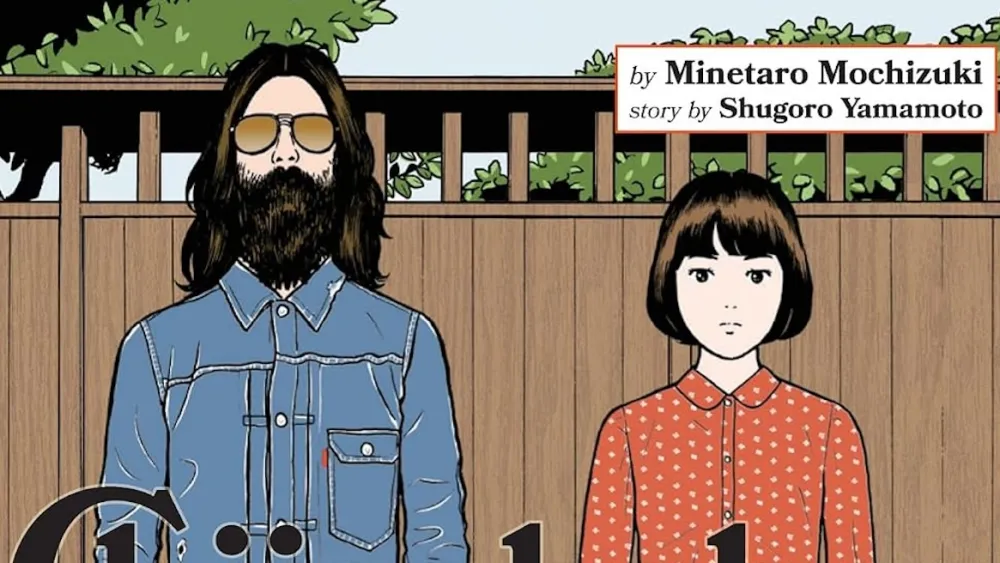
Mochizuki’s artwork is one of the volume’s major attractions. His figures are cleanly drawn and exceptionally controlled, but the pages are not overloaded with detail. Instead, he often gives the characters room to exist within the panel, emphasizing posture, gesture, clothing, and small physical habits.
That spaciousness creates an intimate reading experience. A character’s stance can reveal stubbornness, fatigue, embarrassment, or uncertainty without requiring a heavy caption or explanatory exchange. The art pays attention to small personal quirks—the angle of a head, the way someone occupies a room, or the quiet space between two people.
The result has a restrained clarity that may appeal to readers of literary comics and understated slice-of-life manga. There is a distant resemblance to the clean, observational linework associated with Adrian Tomine, though Mochizuki’s sensibility remains distinctly his own. His pages are not empty; they are selective, directing attention toward the details that make a household feel inhabited and a community feel specific.
The English edition is presented in black and white with a four-page full-color insert. Abrams lists Andria McKnight as translator and Hai Nguyen Le Manh as letterer, with the paperback running 212 pages. Those production details matter here because the book’s quiet rhythm depends heavily on clear lettering, uncluttered layouts, and the visual texture of Mochizuki’s line.
A modern adaptation with literary ambitions
Chiisakobee is adapted from the classic novel by Japanese writer Shūgorō Yamamoto. Mochizuki relocates the story’s concerns into a modern setting while preserving its interest in compassion, duty, and the bonds formed between people who might otherwise remain strangers.
That adaptation gives the manga a distinctive balance. It feels contemporary in its treatment of work, housing, social responsibility, and chosen family, yet it also carries the deliberate moral focus of a literary work. The book is less interested in delivering easy lessons than in watching people struggle to live according to principles they do not always understand how to practice.
For collectors, the English-language release also offers a new opportunity to explore a major work by Mochizuki, whose other acclaimed manga include Dragon Head and Isle of Dogs. Abrams describes Chiisakobee as a four-volume series, giving readers a clear long-form arc to anticipate rather than a standalone experiment with no continuation.
The first volume closes with its characters still guarded and incompletely revealed. That may frustrate readers seeking immediate emotional resolution, but it is also why the book lingers. Shigeji, Ritsu, and the children are not reduced to tidy symbols of resilience. They are people trying to function after disaster, often badly, and discovering that survival may depend on accepting the very connections they once rejected.
Chiisakobee Volume 1 is a thoughtful, visually assured manga for readers who enjoy stories that trust silence, routine, and understatement. It is emotional without becoming manipulative, funny without losing sight of grief, and refreshingly different from the genre-heavy manga that dominates much of the English-language market. Its rewards are gradual, but for readers willing to settle into its pace, the result is an absorbing and quietly distinctive beginning.
Sources
aiptcomics.com
abramsbooks.com