
For readers ready to move beyond romance-heavy manga, this horror recommendation list offers five very different ways to get unsettled. From Mokumokuren’s acclaimed supernatural mystery The Summer Hikaru Died to Junji Ito’s surreal short stories and the claustrophobic deep-sea nightmare of 6000, these picks favor atmosphere, psychological tension, and strange ideas over simple shock value.
The selection is especially useful for horror newcomers. None of these series relies on exactly the same kind of fear, and several balance disturbing material with mystery, dark humor, folklore, or emotional drama. Readers should still check individual content warnings, however, as the list includes gore, body horror, gruesome deaths, nudity, paranoia, and unsettling imagery.
Two supernatural favorites worth revisiting
Before turning to the newer recommendations, two previously featured titles deserve a quick mention. Ghost Hunt remains a memorable supernatural horror manga for readers who enjoy ghost investigations, eerie locations, and a strong ensemble dynamic. It is a particularly approachable choice for anyone looking for a story built around paranormal cases rather than graphic violence.
Phantom Tales of the Night offers a darker fantasy approach. Its beautifully illustrated collection of disturbing stories frequently explores cruelty, strange bargains, and body horror. The series is less interested in conventional jump scares than in creating a lingering sense that something beautiful and otherworldly is fundamentally wrong.
The Summer Hikaru Died turns grief into a horror premise
Created by Mokumokuren, The Summer Hikaru Died follows Yoshiki Tsujinaka, a teenager who realizes that the person wearing his best friend Hikaru Indo’s face is not actually Hikaru. The replacement has Hikaru’s appearance, voice, and memories, but something unknowable has returned from the mountains in his place.
The premise immediately creates two kinds of tension. Yoshiki must confront the supernatural danger represented by this new “Hikaru,” while also wrestling with the terrible temptation to accept a familiar presence rather than face his friend’s absence. That emotional conflict gives the horror a coming-of-age dimension, making the story about identity, grief, isolation, and the fear of change as much as it is about monsters.
The series is sometimes categorized by readers as boys’ love, but the supplied review emphasizes that its central focus is supernatural horror and mystery rather than an established romance. Queer themes and emotional tension are important to the story, yet they do not replace the unsettling questions surrounding Hikaru’s transformation.
Yen Press classifies the manga under horror, crime and mystery, drama, and dark genres. An anime adaptation produced by CygamesPictures premiered on Netflix in July 2025, making this the most immediately accessible recommendation for readers who like to compare a manga with its screen version. The adaptation also gives new viewers a way into the story, although the manga remains the better choice for readers who want to control the pace of the mystery themselves.
Pet Shop of Horrors makes every bargain dangerous
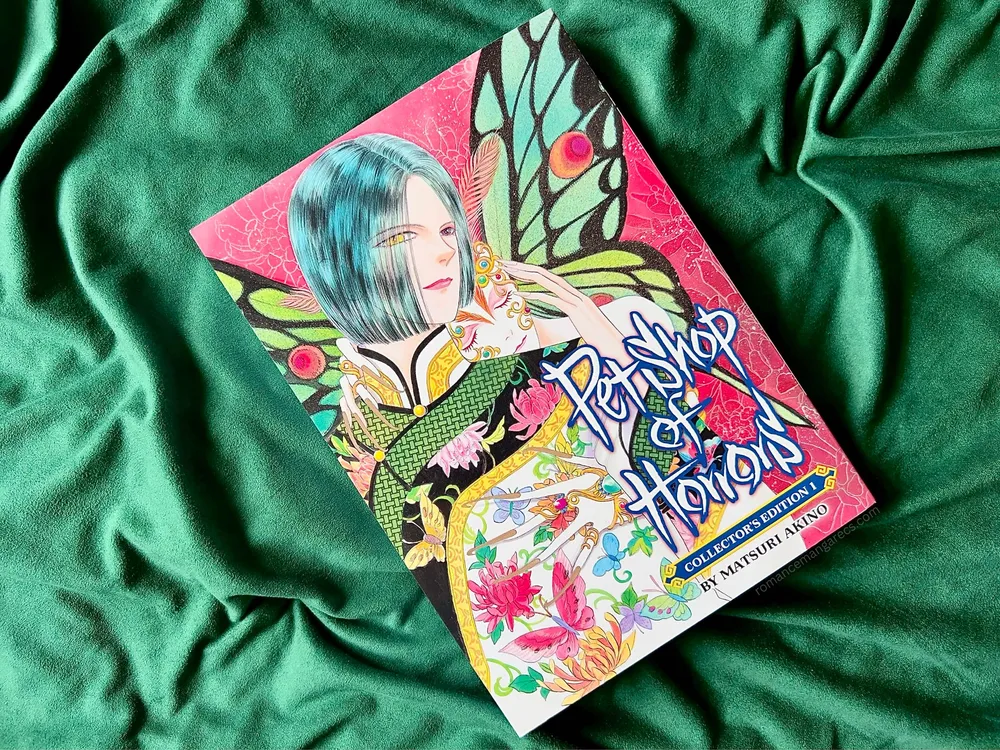
Matsuri Akino’s Pet Shop of Horrors follows Count D, the enigmatic caretaker of a strange pet shop in Los Angeles’ Chinatown. Wealthy customers visit the shop in search of rare and fantastical creatures, many of which appear almost human. Every purchase comes with three rules, and breaking those rules can have horrifying consequences.
The structure is largely episodic, with each chapter focusing on a customer, a pet, and the desire that brought them together. Detective Leon Orcot gradually connects these individual incidents, creating a loose investigative thread while also providing an unexpected source of comedy. His suspicion of Count D gives the series a playful rhythm that offsets the darker material.
Seven Seas Entertainment’s Collector’s Edition gives the classic manga a new English translation and collects the opening material in a substantial volume. The series is not always frightening in a traditional sense, but its combination of beautiful creature designs, gruesome consequences, and human selfishness makes it deeply unsettling. It is an ideal pick for readers who enjoy gothic fantasy, morality tales, and stories in which people create their own downfall.
Mermaid Saga blends folklore with brutal immortality
Rumiko Takahashi’s Mermaid Saga follows Yuta, a man who has lived for centuries after eating mermaid flesh. Rather than treating immortality as a glamorous fantasy, the manga presents it as a curse surrounded by violence, greed, obsession, and folklore.
The story is structured as connected short adventures, allowing Yuta to move through different time periods and locations. That changing setting gives the series a broad, almost legendary quality, while the later stories develop a more modern mystery atmosphere. The contrast between fairytale mythology and bloody human cruelty is one of the manga’s strongest features.
Although romance occasionally enters Yuta’s orbit, it is not the story’s driving force. His search for answers and his desire to understand the curse remain more important than romantic complications. VIZ describes the work as a classic horror series centered on mermaid flesh and immortality, making it a strong recommendation for readers who enjoy Japanese legends with a sharper, more violent edge.
Readers should also be aware that nudity and partial nudity, particularly involving female characters, appear regularly. That material is part of the manga’s older visual and storytelling sensibility, but it may not suit every reader.
Junji Ito and the horror of the inexplicable
The Liminal Zone is a collection of short stories by Junji Ito, one of manga’s most recognizable horror creators. The volume includes tales such as “Weeping Woman Way,” “Madonna,” “The Spirit Flow of Aokigahara,” and “Slumber,” each built around a bizarre image or impossible situation that gradually becomes more disturbing.
Ito’s artwork is the main event. His detailed faces, warped bodies, unnatural expressions, and carefully staged reveals create horror that is often more psychological than visceral. The stories can also be unexpectedly funny, particularly when ordinary characters respond to impossible events with confusion, irritation, or exhausted disbelief.
That tonal flexibility makes The Liminal Zone a useful introduction to Ito’s work. Some stories are eerie, some are grotesque, and others are simply strange enough to stay in the reader’s mind. VIZ presents the collection as a set of terrifying tales, but its appeal comes from more than fear: Ito’s work is also about curiosity, absurdity, and the human impulse to keep looking at something that should be impossible to understand.
6000 descends into deep-sea paranoia
Nokuto Koike’s 6000, also known as The Deep Sea of Madness, is built around one of horror’s most effective settings: an underwater facility located 6,000 meters beneath the ocean’s surface. After an unexplained accident shuts down the facility for three years, a new company sends scientists, engineers, and workers back to restart operations.
The danger comes from several directions at once. The facility is cramped, isolated, and dependent on machinery that begins to malfunction, while the workers’ conflicts over nationality, class, and authority make cooperation increasingly difficult. At the same time, nobody can agree on what happened during the original accident, leaving the new staff trapped with incomplete information and growing suspicion.
The manga’s strongest quality is its atmosphere. Dark spaces, deep-water pressure, hallucinations, corpses, and the constant possibility of mechanical failure combine into a sustained feeling of panic. The supplied review considers the opening more effective than the eventual explanation, with the later supernatural reveal feeling less satisfying than the claustrophobic build-up.
Character development is also limited, and some of the treatment of female characters is particularly disappointing. Even so, 6000 remains a distinctive recommendation for readers drawn to oceanic horror, haunted facilities, cosmic uncertainty, and stories where the environment itself feels like an enemy. The supplied source notes that an official English translation is not available, so accessibility may be a concern for English-language readers.
Which horror manga should newcomers try first?
Start with Pet Shop of Horrors if you want short stories, gothic fantasy, and dark humor. Choose The Summer Hikaru Died for an ongoing supernatural mystery with emotional and queer themes, or Mermaid Saga for folklore-driven horror with a larger historical sweep. Junji Ito’s The Liminal Zone is the best fit for readers who want surreal imagery and self-contained nightmares, while 6000 is the pick for anyone whose fear of the deep ocean is matched only by their fascination with it.
Together, these manga demonstrate how broad horror can be. Fear can come from a face that is almost familiar, a pet bought under strict conditions, a myth that refuses to die, an image that makes no sense, or a sealed facility far below the surface. For horror beginners, that variety makes this list a strong starting point.
Sources
- romancemangarecs.com
- yenpress.com
- netflix.com
- about.netflix.com
- sevenseasentertainment.com
- viz.com