
A Side Character’s Love Story—also known by its Japanese title, Mobuko no Koi—builds its romance around a premise many readers will recognize: What if the person who always feels like a background character finally became the center of her own story? Created by Akane Tamura, this gentle romance manga follows college student Nobuko Tanaka as she navigates her first serious crush, workplace nerves, and the small acts of courage required to let someone get close.
Unlike romance series driven by explosive misunderstandings or dramatic love triangles, A Side Character’s Love Story finds its emotional momentum in hesitation, routine, and gradual change. That makes it an especially appealing recommendation for readers who want a calm, character-focused love story with an adult cast and a relationship that continues beyond the initial confession.
A Romance About Taking Up Space
Nobuko is a quiet second-year college student who works part-time at a supermarket. She is shy, easily flustered, and prone to second-guessing herself, qualities that have convinced her she is more of a “mob” character than a protagonist. In Japanese pop-culture language, “mob” can refer to an unnamed background character, and Nobuko’s mistaken nickname during her job interview only reinforces the way she sees herself.
Her growing feelings for coworker Hiroki Irie force Nobuko to reconsider that self-image. Irie is not an impossibly distant celebrity or a dazzling fantasy hero; he is another young adult trying to manage work, school, and his own uncertainty. Their attraction develops through ordinary interactions, which gives the series a grounded quality that separates it from more theatrical romance manga.
The central appeal is not simply whether Nobuko and Irie will become a couple. It is watching two reserved people learn how to communicate, take emotional risks, and understand what they want from a relationship. Their romance is slow, but the story is not merely delaying a confession. It spends meaningful time on what happens afterward: dating, personal growth, career concerns, and the practical pressures of early adulthood.
Slow-Burn Romance Without Manufactured Chaos
The supplied review praises the series for its soft pacing, healthy communication, and realistic approach to conflict. Those strengths are also reflected in other critical responses. TheOASG’s review of the first volume found the manga pleasant but unusually subdued, while highlighting the expressive character work, particularly Nobuko’s facial reactions. The Bibliophibian similarly described the opening volume as an extremely slow burn, noting that the awkwardness and self-doubt are central to the early reading experience.
That division is useful because it identifies the series’ main strength and its biggest possible weakness. Readers who enjoy tiny emotional developments may find tremendous satisfaction in a meaningful glance, a carefully chosen message, or a hesitant attempt to start a conversation. Readers who prefer rapid romantic escalation may find the early chapters repetitive, especially when Nobuko and Irie become trapped in their own thoughts.
Importantly, the story does not treat conflict as an excuse for characters to stop speaking to one another indefinitely. Misunderstandings and emotional setbacks occur, but the relationship generally values honesty and consideration. The result is a romance that can feel reassuring without becoming entirely frictionless.
There are familiar genre ingredients along the way, including seasonal events, illness-related caretaking, fireworks, and other recognizable romance scenarios. These moments are not especially revolutionary, but Tamura uses them effectively because the characters’ reactions remain consistent with their personalities. The clichés become comforting milestones rather than interruptions.
Nobuko, Irie, and the Importance of Supporting Casts
Nobuko’s appeal comes from how ordinary her anxieties feel. She may describe herself as meek or forgettable, but the series gradually reveals someone capable of making brave decisions even while she remains nervous. Her development is not a sudden transformation into a confident social butterfly. Instead, she learns to act despite uncertainty, which makes her progress feel more believable.
Irie is the more immediately idealized half of the pairing. He is thoughtful, sincere, and unusually attentive to Nobuko’s feelings. That warmth makes him an appealing romantic lead, although it can also make him seem nearly too perfect during the early part of the story. The supplied review notes that his later struggles add needed complexity, but readers looking for a more visibly flawed male lead may find Nobuko’s internal conflicts more textured at first.
The coworkers and friends add welcome dimension to the series. A Side Character’s Love Story does not limit emotional support to a single best friend or a rival waiting to complicate the romance. Its workplace relationships create a broader social environment, and the positive friendships between male characters are particularly refreshing. These connections make the supermarket feel like more than a backdrop; it becomes the place where Nobuko and Irie’s personal lives begin to change.
That ensemble focus also supports the manga’s larger theme. Nobuko may believe she is an insignificant background figure, but the people around her have their own perspectives, worries, and relationships. In this world, “side character” is less a permanent identity than a limited point of view.
Simple Artwork, Strong Emotional Timing
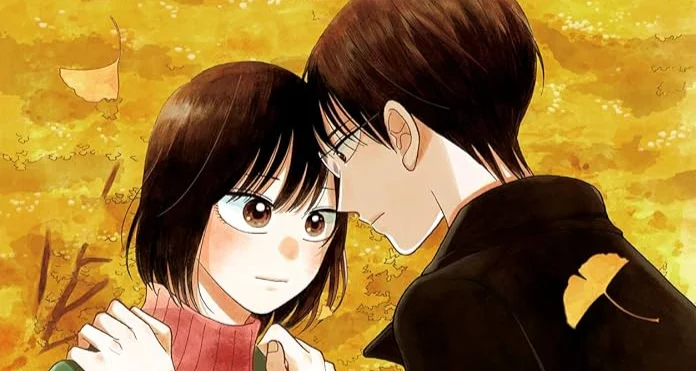
Visually, the manga favors clarity over spectacle. Tamura’s artwork is uncomplicated and approachable, with character expressions doing much of the emotional work. That simplicity fits the story’s realistic tone: the drama is found in posture, pauses, eye contact, and the distance between two people rather than in elaborate visual effects.
The art also becomes softer and somewhat more detailed as the series progresses, according to the supplied review. That gradual refinement mirrors the character development. The world does not suddenly become fantastical, but it begins to feel warmer as Nobuko and Irie become more comfortable with one another.
Although the manga is not structured like a traditional vertical-scroll webtoon, its clean paneling and emphasis on readable expressions make it accessible to digital-comics readers. The series is officially presented in English through Tapas, where the listing identifies Akane Tamura as creator and describes the story as a romance about a painfully shy college student and her coworker.
There is also a small caveat for readers sensitive to certain romance tropes. The series occasionally uses exaggerated reactions to intimacy, including comic overwhelm that may undercut otherwise tender moments. Nobuko also makes at least one later decision that can feel inconsistent with the care and commitment established elsewhere. These are relatively minor concerns, but they may affect readers who prefer romance stories with less secondhand embarrassment.
Who Should Read A Side Character’s Love Story?
A Side Character’s Love Story is best suited to readers who enjoy patient romance, slice-of-life storytelling, workplace settings, and relationships built through mutual consideration. It should appeal to fans of gentle adult romance who want to see characters deal with school, jobs, career decisions, and everyday responsibilities alongside their love lives.
It is less likely to satisfy readers seeking high melodrama, rapid pacing, or a constantly shifting romantic power dynamic. The series asks for patience, particularly at the beginning, but rewards that patience with a relationship that feels carefully observed. Rather than presenting love as a dramatic escape from ordinary life, Tamura treats love as something that grows inside ordinary life—one conversation, hesitation, and small act of courage at a time.
The manga’s reach has also expanded beyond the page. Coamix announced a live-action film adaptation starring Hiyori Sakurada and Taisei Kido, directed by Hiroki Kazama, with a Japanese theatrical release set for June 5, 2026. That adaptation further underscores the story’s cinematic appeal: two quiet people in a supermarket, separated less by grand obstacles than by the difficulty of saying what they feel.
For romance readers tired of protagonists who are instantly confident, A Side Character’s Love Story offers a softer alternative. Its premise is modest, its art is understated, and its drama is carefully measured—but that restraint is exactly what gives the series its charm.
Sources
- romancemangarecs.com
- coamix.co.jp
- tapas.io
- theoasg.com
- breathesbooks.com