
DC’s Next Level: One Shot #1 puts Deadshot at the center of a fast-moving conspiracy involving a new version of Cadmus and the future of the superhuman community. As a 48-page special designed to preview the expanding Next Level line, the issue gives readers a tour of DC’s upcoming projects while delivering a sharp, violent showcase for Floyd Lawson.
That makes the comic important beyond its standalone story. DC has positioned Next Level as the second act of its All In publishing initiative, with creator-driven books starring characters who do not always command the spotlight. The one-shot acts as both an action story and a guided tour through what comes next for the line.
Deadshot gets the mission—and the issue
The story begins when Rick Flag Jr. reaches out to Deadshot with information about a conspiracy tied to Cadmus. Flag believes the organization is pursuing a dangerous agenda involving superhumans, but he cannot investigate it himself. Instead, he gives Deadshot a list of targets and sends the assassin across the DC Universe to uncover the truth.
That structure allows the issue to move quickly from one location and character to another. Deadshot operates in the shadows, follows Flag’s trail, and cuts through a succession of threats connected to the new Cadmus. The plot has the broad, globe-hopping quality of an action movie, with each stop revealing another piece of the larger mystery.
It also gives writer Gerry Duggan an ideal lead character. Deadshot is sardonic, impatient, and entirely comfortable with violence, but he is not presented as an empty wisecracker. His ongoing death wish remains an important part of his personality, creating an uneasy contrast with the concern he shows for Flag’s mental state.
Duggan finds the humor in Deadshot’s abrasive attitude without sanding away the character’s darker edges. One of the issue’s most memorable moments comes when Deadshot pauses in Gotham for a cheesesteak, only to encounter Batman. Rather than treating the interruption as another routine superhero clash, the scene lets Deadshot be genuinely furious that his meal has been ruined. It is funny, character-specific, and perfectly in keeping with the issue’s brisk tone.
A preview reel for DC’s next wave
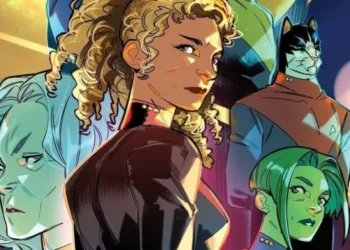
Deadshot is the through line, but much of the special’s larger purpose is introducing readers to the other corners of Next Level. Vixen is presented as a globe-trotting celebrity, the Doom Patrol are dealing with ghosts from their past, and a new generation of Teen Titans is beginning to form.
These appearances are brief—often only a page or two—and that is where the one-shot becomes less satisfying as a traditional ensemble story. The featured heroes and teams are largely glimpsed rather than explored. Their scenes function as table setting for forthcoming books, giving readers a sense of each title’s premise and tone without offering much room for development.
That approach will work better for some readers than others. Fans already interested in the Next Level lineup will likely enjoy spotting the clues and connective tissue. Readers looking for a fully developed Vixen, Doom Patrol, or Teen Titans subplot may find the cameos frustratingly slight.
Still, the issue benefits from having a clear mission. It is not trying to tell five complete stories at once. Instead, it uses Deadshot’s investigation to demonstrate the range of DC’s upcoming publishing plans, from supernatural mysteries to team books and character-focused adventures.
Big action, sharper visual choices
Artist Fernando Blanco gives the issue the scale its premise demands. Deadshot is constantly moving—leaping from buildings, setting up sniper positions, tracking targets, and fighting his way through resistance. Blanco’s layouts make those sequences feel immediate, with large images and splash pages emphasizing the force behind Deadshot’s attacks.
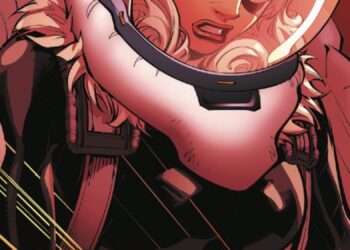
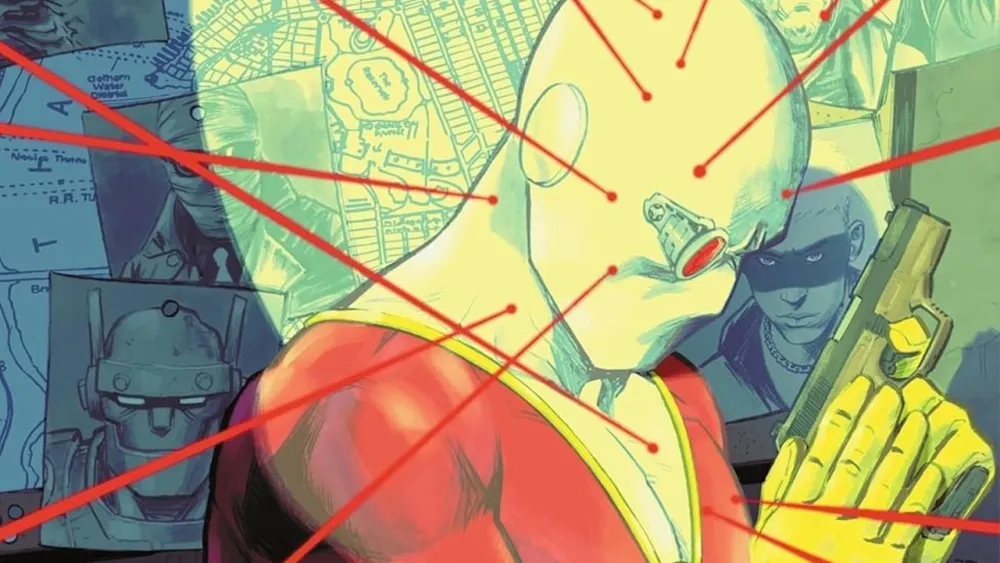
The action is especially effective when Blanco turns Deadshot’s cybernetic eye into part of the storytelling. Several panels shift into Deadshot’s point of view, filtering the DC Universe through his targeting system. Jordie Bellaire’s blood-red coloring in these moments creates a distinctive visual language, separating Deadshot’s perception from the world around him.
That red filter is more than a flashy effect. It reinforces the way Deadshot sees his surroundings: as a series of threats, trajectories, and targets. The technique also gives the issue a visual identity that helps it stand out from a standard superhero crossover preview.
Blanco’s work is at its strongest when the story narrows its focus to Deadshot. The character’s movements are readable even during chaotic fights, and the frequent shifts between wide action shots and close-up targeting imagery keep the pacing energetic. The art understands that Deadshot’s appeal comes from precision, so even the most explosive moments are built around his ability to identify and eliminate a target.
What the one-shot sets up
DC announced the special as a 48-page DC All In story written by Gerry Duggan, drawn by Fernando Blanco, and lettered by Buddy Beaudoin. It was released on August 19, 2026, with a $5.99 U.S. cover price. The issue’s broader purpose is to point toward the next phase of the Next Level initiative, which includes books centered on characters and teams such as Lobo, The Deadman, Zatanna, Firestorm, Barbara Gordon, the Teen Titans, the Doom Patrol, and the Legion of Super-Heroes.
DC has described Next Level as a line that remains in continuity while offering accessible entry points for new readers. Next Level: One Shot #1 reflects that balance. It connects to the wider DC Universe, but its central Deadshot mission is easy to follow without requiring readers to track every ongoing title.
The conspiracy itself provides the issue with forward momentum, and the ending introduces twists intended to make the coming books feel like part of a larger movement rather than isolated experiments. The special does not answer every question, but it creates enough uncertainty around Cadmus, Flag, and the superhuman community to suggest that the consequences will extend beyond this single mission.
Ultimately, Next Level: One Shot #1 works best as a Deadshot action story with an ambitious preview function attached. Duggan captures the character’s humor, volatility, and bleak worldview, while Blanco and Bellaire deliver a bold visual package built around speed, violence, and Deadshot’s blood-red targeting perspective.
The issue’s biggest weakness is also part of its design: many of the characters it introduces are glorified cameos. But if the goal is to make readers curious about DC’s next wave of books, the special succeeds. It is quick, stylish, and packed with enough mystery to make the Next Level initiative feel like more than a collection of disconnected launches.
For readers who enjoy action-heavy comics, sharp character banter, or DC’s less frequently spotlighted heroes, this is a worthwhile jump-on point—and a particularly strong showcase for Deadshot.
Sources
aiptcomics.com
dc.com